Yang Wenhui, Li Yilu, Tang Yushi, Tao Zhenxing, Yu Mengyuan, Sun Cuiping, Ye Yang, Xu Bai, Zhao Xudong, Zhang Yazhuo, Lu Xiaojie
Neuroscience Center, Wuxi School of Medicine, Jiangnan University, Wuxi, Jiangsu Province, 214122, PR China.
Department of Neurosurgery, Jiangnan University Medical Center, Wuxi, Jiangsu Province, 214122, PR China.
Stem Cell Res Ther. 2025 Feb 28;16(1):100. doi: 10.1186/s13287-025-04250-4.
Transplantation of nasal mucosa-derived mesenchymal stem cells (EMSCs) overexpressing neuropeptide S (NPS) is a promising approach for treating spinal cord injury (SCI). Despite the potential of stem cell therapy, challenges remain regarding cell survival and differentiation control. We aimed to conduct orthotopic transplantation of transected spinal cord to treat rats with complete SCI.
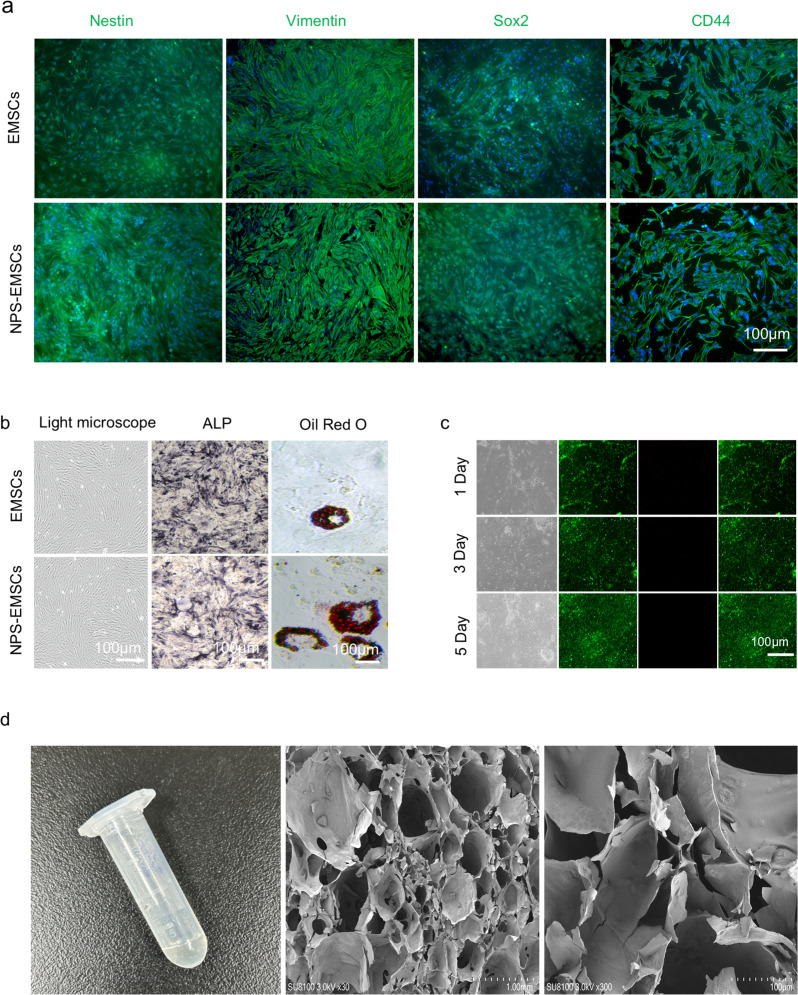
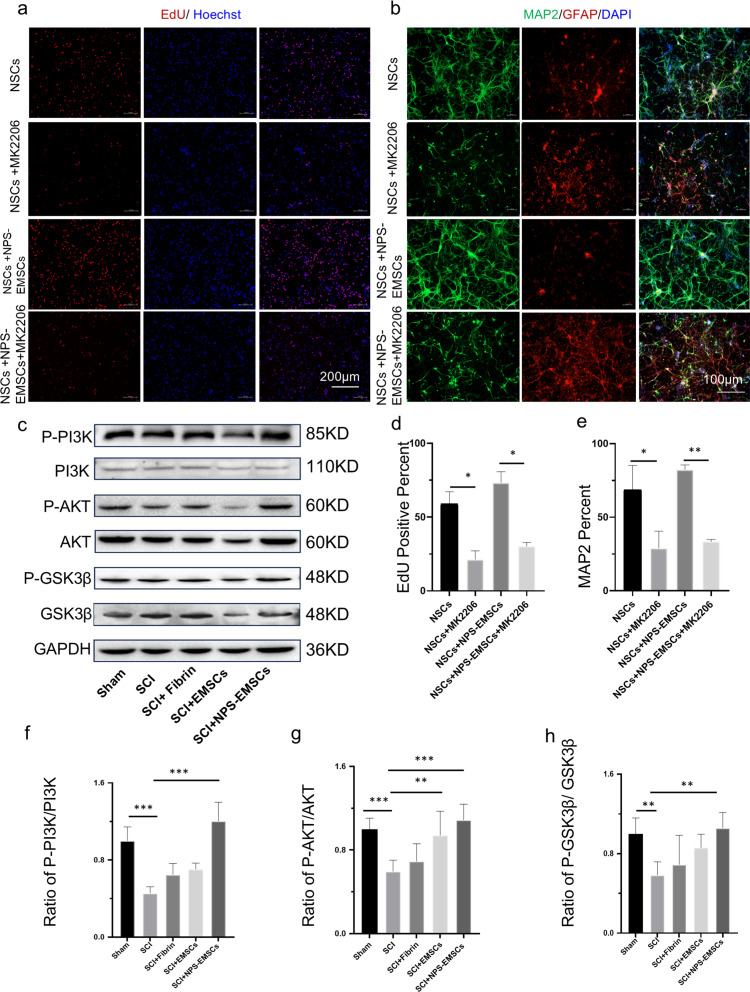
In this study, we loaded NPS-overexpressing EMSCs onto hydrogels to enhance cell survival in vivo and promote neuronal differentiation both in vitro and in vivo. However, in vitro co-culture promoted greater neuronal differentiation of neural stem cells (P < 0.01). When transplanted in vivo, NPS-overexpressing EMSCs showed greater cell survival in the transplanted area compared with stem cells without gene modification within 4 weeks after spinal cord implantation in rats (P < 0.01).
Compared with those in the other groups, stable overexpression of NPS-EMSCs in a rat model with SCI significantly improved the treatment effect, reduced glial scar formation, promoted neural regeneration and endogenous neural stem cell proliferation and differentiation into neurons, and improved motor function.
These results indicate that this effect may be achieved by the overexpression of NPS-EMSCs through the activation of the PI3K/Akt/GSK3β signaling pathway. Overall, the overexpression of EMSCs significantly improved the therapeutic effect of SCI in rats, strongly supporting the potential for gene modification of mesenchymal stem cells in clinical applications.
移植过表达神经肽S(NPS)的鼻黏膜间充质干细胞(EMSCs)是治疗脊髓损伤(SCI)的一种有前景的方法。尽管干细胞治疗具有潜力,但在细胞存活和分化控制方面仍存在挑战。我们旨在对横断脊髓进行原位移植以治疗完全性SCI大鼠。
在本研究中,我们将过表达NPS的EMSCs负载到水凝胶上,以提高其在体内的存活率,并在体外和体内促进神经元分化。然而,体外共培养促进神经干细胞的神经元分化作用更强(P < 0.01)。在大鼠脊髓植入后4周内,与未进行基因修饰的干细胞相比,过表达NPS的EMSCs在移植区域显示出更高的细胞存活率(P < 0.01)。
与其他组相比,在SCI大鼠模型中,NPS - EMSCs的稳定过表达显著改善了治疗效果,减少了胶质瘢痕形成,促进了神经再生以及内源性神经干细胞增殖并分化为神经元,还改善了运动功能。
这些结果表明,这种效应可能是通过过表达NPS的EMSCs激活PI3K/Akt/GSK3β信号通路来实现的。总体而言,EMSCs的过表达显著改善了大鼠SCI的治疗效果,有力地支持了间充质干细胞基因修饰在临床应用中的潜力。