Liu Xinyue, Chen Lele, Sun Peng, Jiang Xiaolong, Li Pengze, Xu Zichen, Zhan Zhaoshuang, Wang Jiafeng
College of Chinese Medicine, Shandong University of Traditional Chinese Medicine, Jinan, People's Republic of China.
College of Medicine, Shandong University of Traditional Chinese Medicine, Jinan, People's Republic of China.
Drug Des Devel Ther. 2025 Feb 28;19:1451-1474. doi: 10.2147/DDDT.S505248. eCollection 2025.
Atopic Dermatitis (AD) is a common continuous inflammation dermatosis requiring efficacious therapeutic intervention. Phellodendri Chinensis Cortex-Cnidii Fructus (PC) herb pair has shown effectiveness and security in traditional Chinese medicine (TCM) clinical applications, yet its pharmacological constituents and mechanisms are not fully elucidated.
This study used serum pharmacochemistry, network pharmacology, and validation experiments to examine the impact of PC in the treatment of AD.
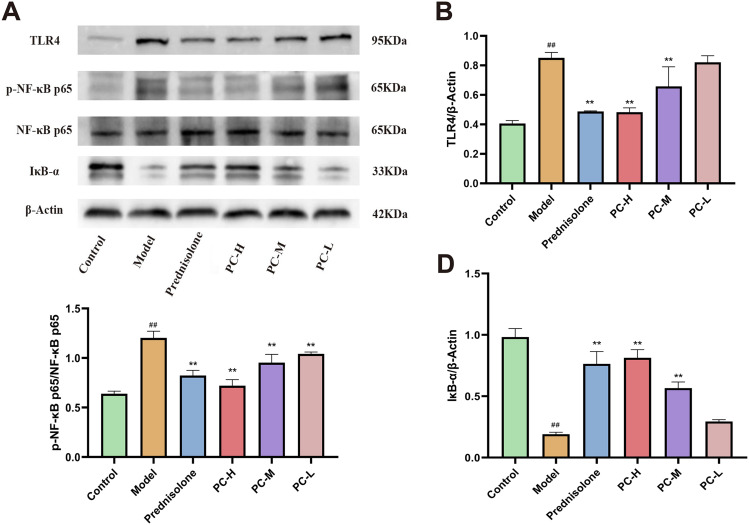
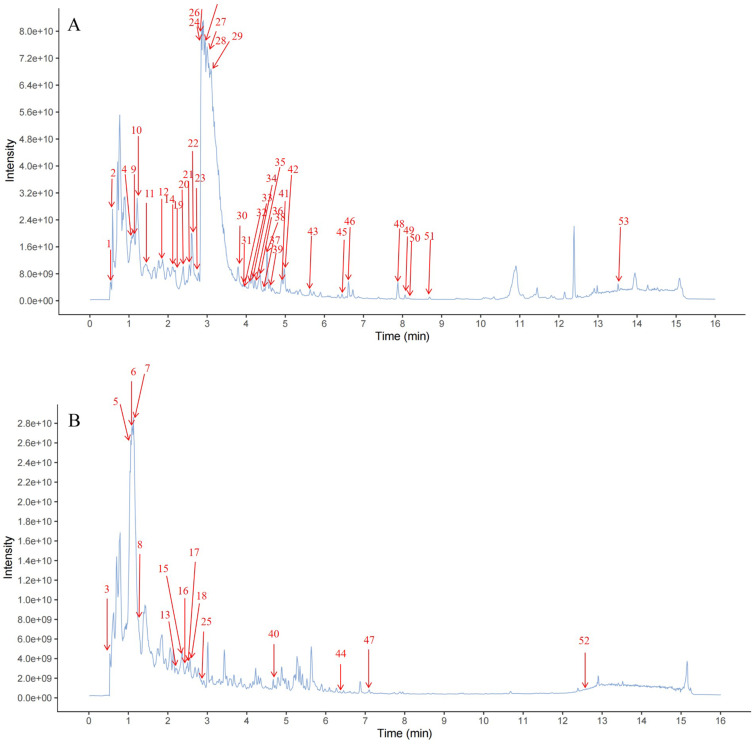
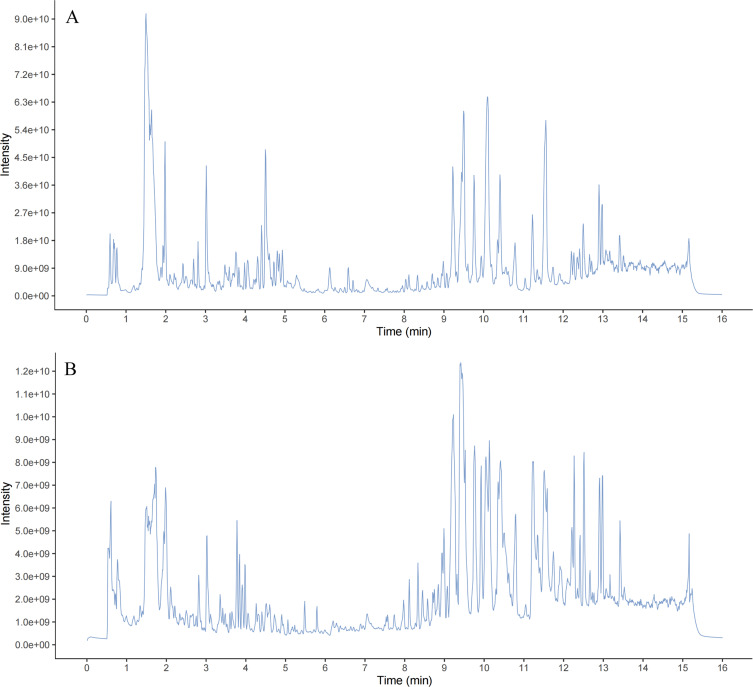
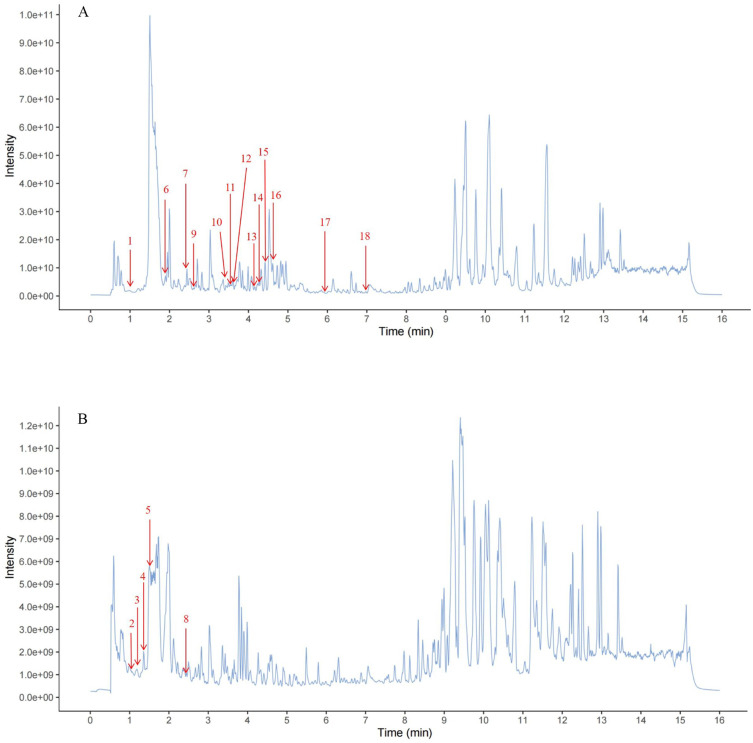
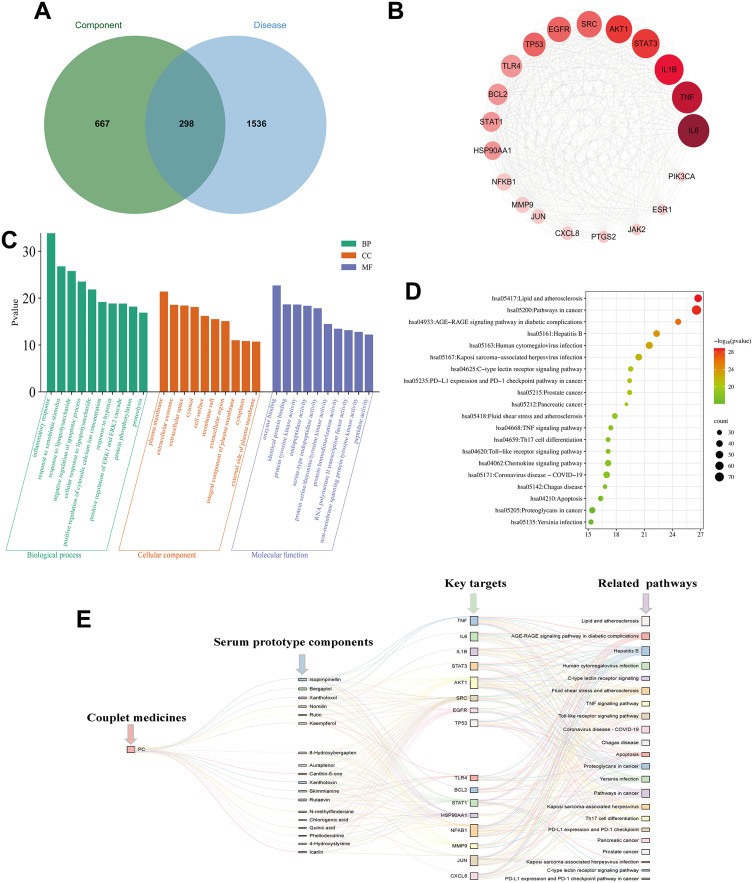
Initially, ultra performance liquid chromatography-mass spectrometry (UPLC-MS) had been applied to elucidate the components of PC that were absorbed. An integrative approach combining network pharmacology and in vivo research (general index observation, skin pathological tissue staining, ELISA, immunohistochemistry, immunofluorescence, and Western blotting) was employed to validate PC's mechanism in action after 2,4-dinitrochlorobenzene (DNCB) was used to create a mouse model of AD.
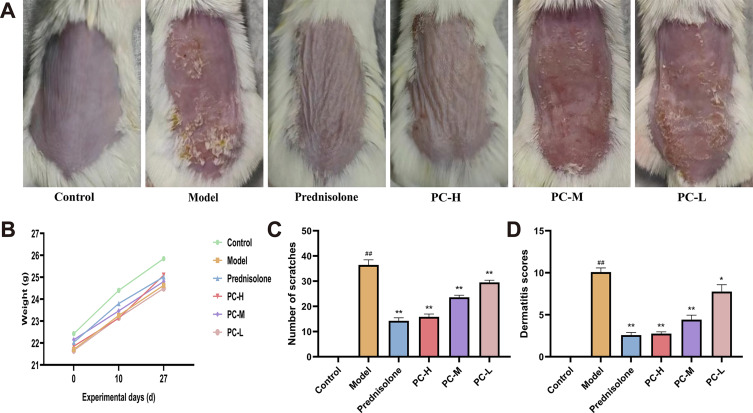
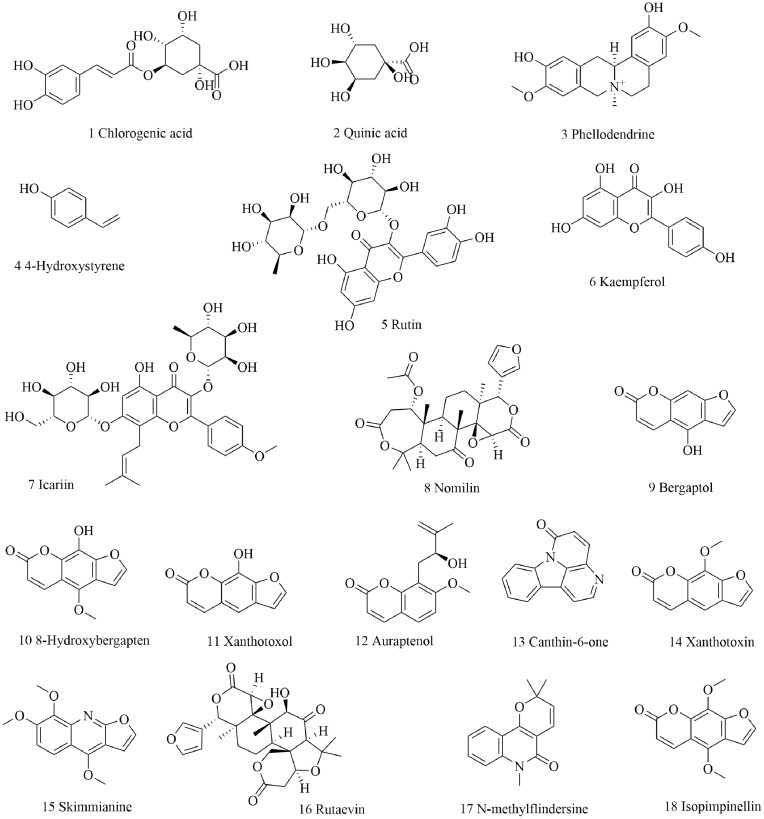
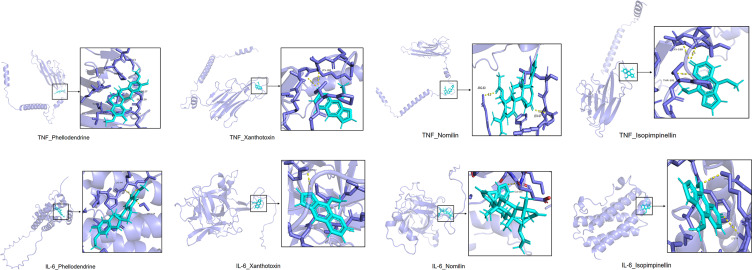
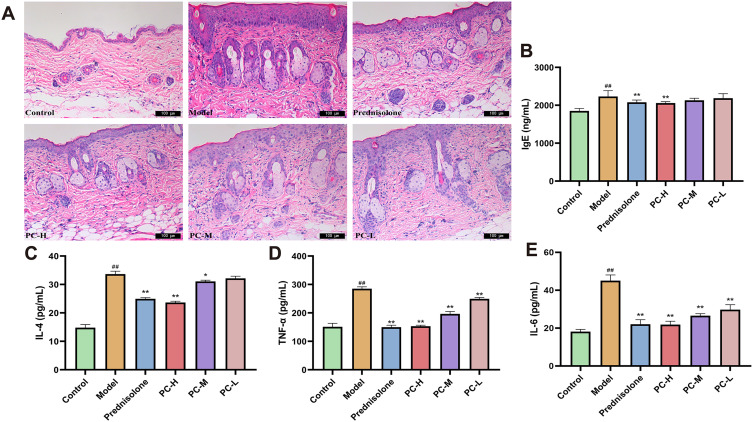
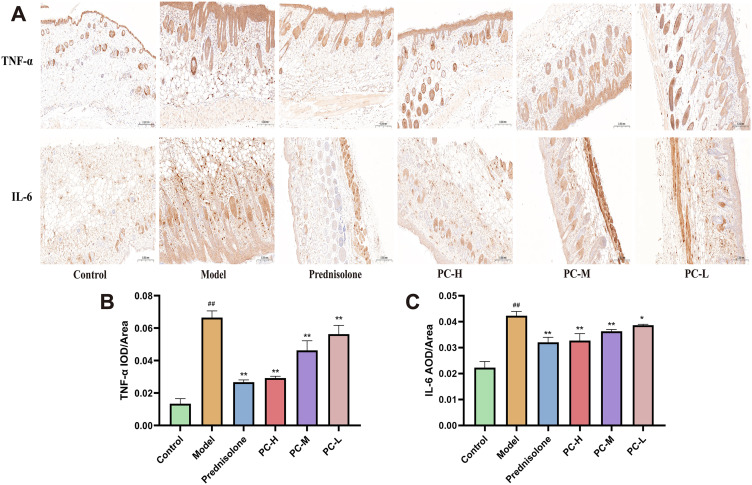
Fifty-three compounds and 18 serum prototype components were characterized within PC. The therapeutic efficacy of PC in AD was notably manifested in the alleviation of pruritus, improvement of skin histopathology, and reduction of cytokines involving IgE, IL-4, TNF-α and IL-6. Based on molecular docking studies, pharmacodynamic components such as phellodendrine, xanthotoxin, nomilin, and isopimpinellin strongly favored the main targets. Comprehensive investigations integrating serum pharmacochemistry, network pharmacology, and in vivo studies had revealed that PC prevented DNCB-induced AD through adjusting the TLR4/NF-κB signaling pathway.
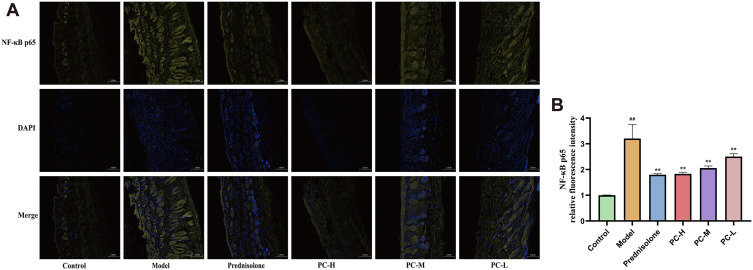
The anti-AD effects of PC may be attributed to its modulation of the TLR4/NF-κB signaling pathway, reduction of NF-кB expression in the nucleusim, downregulation of inflammatory cytokine levels, provement of skin histopathological manifestations, and reduction of skin pruritus.
特应性皮炎(AD)是一种常见的持续性炎症性皮肤病,需要有效的治疗干预。黄柏-蛇床子药对在中医临床应用中已显示出有效性和安全性,但其药理成分和作用机制尚未完全阐明。
本研究采用血清药物化学、网络药理学和验证实验来研究黄柏-蛇床子药对治疗AD的作用。
首先,应用超高效液相色谱-质谱联用技术(UPLC-MS)阐明黄柏-蛇床子药对被吸收的成分。采用网络药理学与体内研究相结合的综合方法(一般指标观察、皮肤病理组织染色、ELISA、免疫组织化学、免疫荧光和蛋白质免疫印迹法),验证在使用2,4-二硝基氯苯(DNCB)建立AD小鼠模型后黄柏-蛇床子药对的作用机制。
在黄柏-蛇床子药对中鉴定出53种化合物和18种血清原型成分。黄柏-蛇床子药对在AD治疗中的疗效显著体现在减轻瘙痒、改善皮肤组织病理学以及降低涉及IgE、IL-4、TNF-α和IL-6的细胞因子水平上。基于分子对接研究,药根碱、花椒毒素、诺米林和异茴芹内酯等药效成分与主要靶点具有很强的亲和力。综合血清药物化学、网络药理学和体内研究发现,黄柏-蛇床子药对通过调节TLR4/NF-κB信号通路预防DNCB诱导的AD。
黄柏-蛇床子药对的抗AD作用可能归因于其对TLR4/NF-κB信号通路的调节、细胞核内NF-κB表达的降低、炎症细胞因子水平的下调、皮肤组织病理学表现的改善以及皮肤瘙痒的减轻。