Appidi Tejaswini, China Debarghya, Ștefan George-Răzvan, Moreau Michele, Mao Serena, Velarde Esteban, Toyang Ngeh, Lowe Henry, Rengan Aravind Kumar, Ding Kai, Ngwa Wilfred
Department of Radiation Oncology and Molecular Radiation Sciences, Johns Hopkins University School of Medicine, Baltimore, Maryland, USA.
Department of Biomedical Engineering, Johns Hopkins University, Baltimore, Maryland, USA.
Mol Cancer. 2025 Mar 6;24(1):68. doi: 10.1186/s12943-025-02266-1.
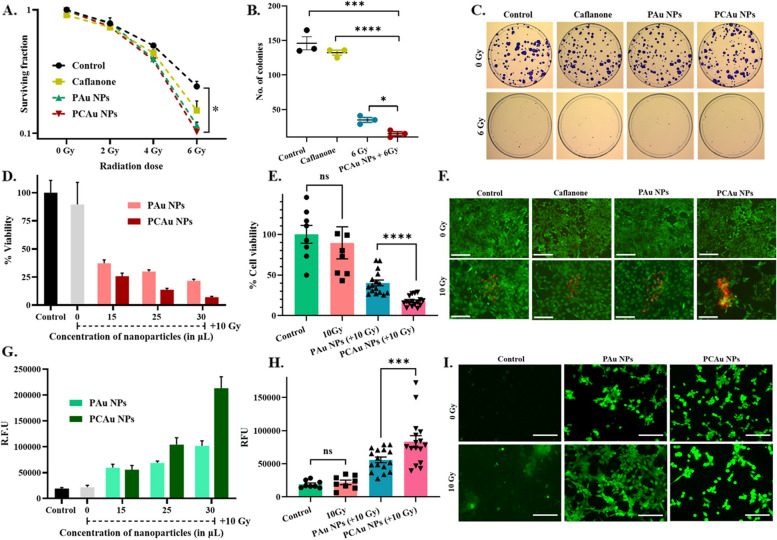
Clinical cancer treatment modalities include radiation as one of the first-line therapies used for treating almost two-thirds of cancer patients. Combinational therapy for cancer is becoming extremely popular, with multiple therapies and their pharmacological effects expected to provide a synergistic outcome. The nanotechnology-based combinational therapeutic approach is emerging as a more effective strategy, for its advantages include simultaneous loading of multiple drugs, on-demand drug delivery controlled by external or internal stimulus, targeting a particular site, and the potential to combine physical treatment modalities (like radiation, thermal therapies, etc.) with chemical interventions (like chemotherapy, immunotherapy, etc.). We report a combination of radiotherapy and chemotherapy mediated by a multifunctional lipo-polymeric hybrid nanosystem coated with gold, demonstrating the three different functionalities using a single nanosystem: a) radio sensitization, b) radiation-triggered delivery of drugs, and c) application as an X-ray/CT contrast agent. The lipo-polymeric hybrid nanoparticles, synthesized using a modified hydrogel isolation method, were loaded with a natural plant-derived anti-cancer agent "Caflanone." These nanoparticles were further subjected to in-situ reduction for a surface coating of gold, which provided enhanced radiosensitivity, radiation triggered drug delivery and X-ray/CT imaging. This approach using a multifunctional nanosystem leverages the biocompatibility of the lipo-polymeric hybrid system for the loading of drugs, precise spatiotemporal controllability of radiation for drug release, and the cytotoxicity of the plant-derived anti-cancer agent "Caflanone." A significant therapeutic efficacy in vitro against breast cancer (p = 0.0002), pancreatic cancer (p < 0.0001), and glioblastoma (p < 0.0001) was demonstrated with the combinational approach. The application of the nanosystem as an X-ray/CT contrast agent has been shown in vivo in tumor-bearing mice and the safety profile and histopathology evaluated in healthy mice showed no adverse effects. A significant increase (p = 0.01) in the survival of breast tumor-bearing mice treated with a combinational approach was also demonstrated. The engineered multifunctional nanoparticles enhanced the radiation therapy and triggered the drug release at the tumor site, triggering the action of encapsulated chemotherapeutic agents while providing image guidance.
临床癌症治疗方式包括放射治疗,它是用于治疗近三分之二癌症患者的一线治疗方法之一。癌症联合治疗正变得极为普遍,多种治疗方法及其药理作用有望产生协同效果。基于纳米技术的联合治疗方法正在成为一种更有效的策略,因为其优势包括多种药物的同时负载、由外部或内部刺激控制的按需给药、靶向特定部位,以及将物理治疗方式(如放射治疗、热疗等)与化学干预(如化疗、免疫治疗等)相结合的潜力。我们报告了一种由涂有金的多功能脂质-聚合物杂化纳米系统介导的放疗与化疗联合治疗方法,该纳米系统利用单一纳米系统展示了三种不同功能:a)放射增敏,b)辐射触发的药物递送,以及c)作为X射线/CT造影剂的应用。使用改良的水凝胶分离方法合成的脂质-聚合物杂化纳米颗粒负载了一种天然植物来源的抗癌剂“卡弗拉酮”。这些纳米颗粒进一步进行原位还原以进行金表面涂层,这提供了增强的放射敏感性、辐射触发的药物递送和X射线/CT成像。这种使用多功能纳米系统的方法利用了脂质-聚合物杂化系统的生物相容性来负载药物、辐射对药物释放的精确时空可控性以及植物来源的抗癌剂“卡弗拉酮”的细胞毒性。联合治疗方法在体外对乳腺癌(p = 0.0002)、胰腺癌(p < 0.0001)和胶质母细胞瘤(p < 0.0001)显示出显著的治疗效果。该纳米系统作为X射线/CT造影剂的应用已在荷瘤小鼠体内得到证实,并且在健康小鼠中评估的安全性和组织病理学显示没有不良反应。联合治疗方法治疗的荷乳腺肿瘤小鼠的存活率也有显著提高(p = 0.01)。工程化的多功能纳米颗粒增强了放射治疗并在肿瘤部位触发药物释放,触发封装的化疗药物的作用,同时提供图像引导。