Cheng Wei-Ming, Li Po-Chen, Nguyen Minh Tran-Binh, Lin Yu-Teng, Huang Yu-Tang, Cheng Tai-Shan, Nguyen Thi-Huong, Tran Thu-Ha, Huang Tzu-Yi, Hoang Thu-Huyen, Chen Sin-Yu, Chu Yu-Chieh, Wu Chih-Wei, Lee Ming-Fen, Chiou Yi-Shiou, Liu Hsiao-Sheng, Hong Yi-Ren, Chang Peter Mu-Hsin, Hu Yu-Feng, Chang Ying-Chih, Lai Jin-Mei, Huang Chi-Ying F
Program in Molecular Medicine, College of Life Sciences, National Yang Ming Chiao Tung University, Taipei, 112, Taiwan.
Institute of Biopharmaceutical Sciences, College of Pharmaceutical Sciences, National Yang Ming Chiao Tung University, Taipei, 112, Taiwan.
Cancer Cell Int. 2025 Mar 6;25(1):79. doi: 10.1186/s12935-025-03712-2.
Colorectal cancer (CRC) poses a significant clinical challenge because of drug resistance, which can adversely impact patient outcomes. Recent research has shown that abnormalities within the tumor microenvironment, especially hyperglycemia, play a crucial role in promoting metastasis and chemoresistance, and thereby determine the overall prognosis of patients with advanced CRC.
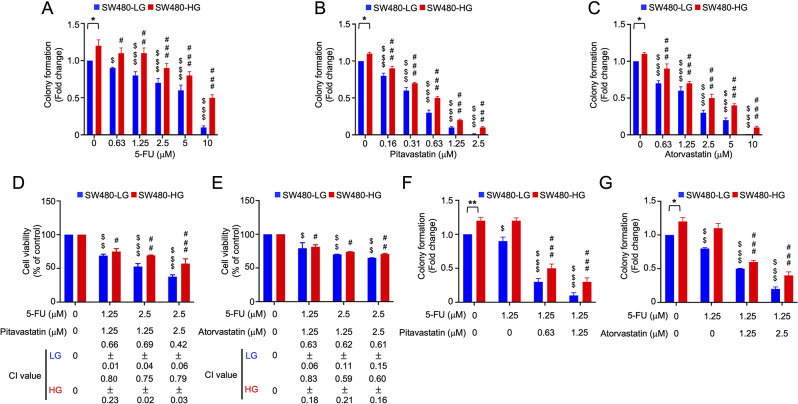
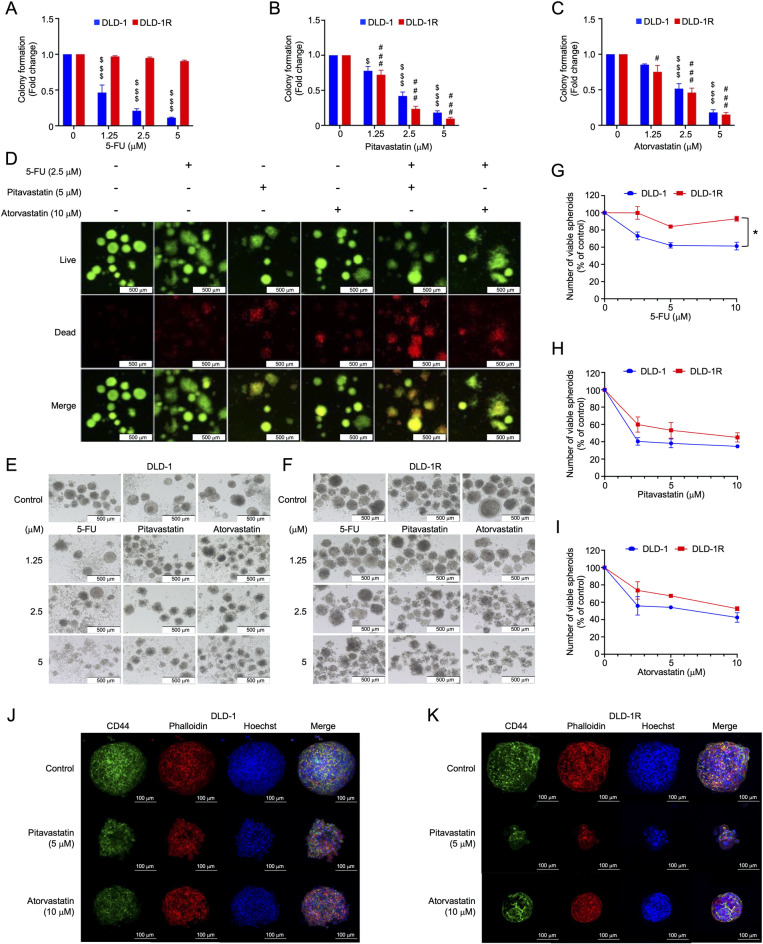
This study employs data mining and consensus molecular subtype (CMS) techniques to identify pitavastatin and atorvastatin as potential agents for targeting high glucose-induced drug resistance in advanced CRC cells. CRC cells maintained under either low or high glucose conditions were established and utilized to assess the cytotoxic effects of pitavastatin and atorvastatin, both with and without 5-fluorouracil (5-FU). CRC 3D spheroids cultured were also included to demonstrate the anti-drug resistance of pitavastatin and atorvastatin.
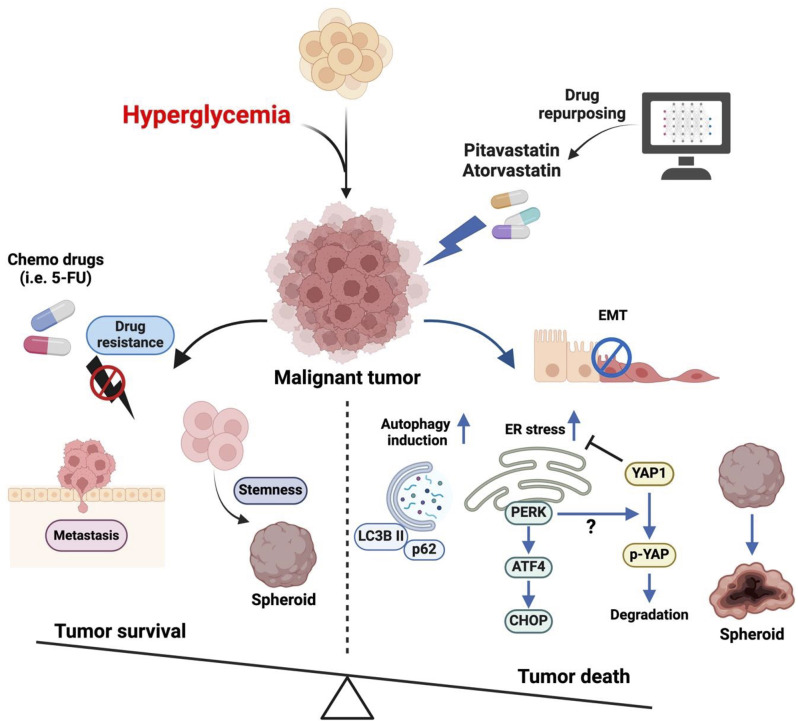
A bioinformatics analysis identified pitavastatin and atorvastatin as promising drug candidates. The CMS4 CRC cell line SW480 (SW480-HG) was established and cultured under high glucose conditions to simulate hyperglycemia-induced drug resistance and metastasis in CRC patients. Pitavastatin and atorvastatin could inhibit cell proliferation and 3D spheroid formation of CMS4 CRC cells under high glucose conditions. In addition, both pitavastatin and atorvastatin can synergistically promote the 5-FU-mediated cytotoxic effect and inhibit the growth of 5-FU-resistant CRC cells. Mechanistically, pitavastatin and atorvastatin can induce apoptosis and synergistically promote the 5-FU-mediated cytotoxic effect by activating autophagy, as well as the PERK/ATF4/CHOP signaling pathway while decreasing YAP expression.
This study highlights the biomarker-guided precision medicine strategy for drug repurposing. Pitavastatin and atorvastatin could be used to assist in the treatment of advanced CRC, particularly with CMS4 subtype CRC patients who also suffer from hyperglycemia. Pitavastatin, with an achievable dosage used for clinical interventions, is highly recommended for a novel CRC therapeutic strategy.
由于耐药性,结直肠癌(CRC)带来了重大的临床挑战,这可能对患者的治疗结果产生不利影响。最近的研究表明,肿瘤微环境中的异常情况,尤其是高血糖,在促进转移和化疗耐药方面起着关键作用,从而决定了晚期CRC患者的总体预后。
本研究采用数据挖掘和共识分子亚型(CMS)技术,确定匹伐他汀和阿托伐他汀是针对晚期CRC细胞中高糖诱导的耐药性的潜在药物。建立了在低或高糖条件下培养的CRC细胞,并用于评估匹伐他汀和阿托伐他汀在有或无5-氟尿嘧啶(5-FU)情况下的细胞毒性作用。还包括培养的CRC 3D球体,以证明匹伐他汀和阿托伐他汀的抗耐药性。
生物信息学分析确定匹伐他汀和阿托伐他汀是有前景的候选药物。建立了CMS4 CRC细胞系SW480(SW480-HG),并在高糖条件下培养,以模拟CRC患者高血糖诱导的耐药性和转移。匹伐他汀和阿托伐他汀可在高糖条件下抑制CMS4 CRC细胞的增殖和3D球体形成。此外,匹伐他汀和阿托伐他汀均可协同促进5-FU介导的细胞毒性作用,并抑制5-FU耐药CRC细胞的生长。机制上,匹伐他汀和阿托伐他汀可通过激活自噬以及PERK/ATF4/CHOP信号通路,同时降低YAP表达来诱导凋亡并协同促进5-FU介导的细胞毒性作用。
本研究强调了生物标志物引导的精准药物再利用策略。匹伐他汀和阿托伐他汀可用于辅助治疗晚期CRC,特别是对于同时患有高血糖的CMS4亚型CRC患者。匹伐他汀具有可用于临床干预的剂量,强烈推荐用于新的CRC治疗策略。