Mehdorn Matthias, Schnarkowski Benedikt, Stelzner Sigmar, Scheuermann Uwe, Kassahun Woubet Tefera, Denecke Timm, Niebisch Stefan, Meyer Hans-Jonas
Department of Visceral, Transplant, Thoracic and Vascular Surgery, University Hospital of Leipzig, Liebigstraße 20, 04103, Leipzig, Germany.
Hernia. 2025 Mar 12;29(1):117. doi: 10.1007/s10029-025-03303-0.
Burst abdomen (BA) is a relevant complication after abdominal surgery that causes additional surgical procedures, prolonged hospital stays and long-term morbidity. Several underlying risk factors exist and have been characterized previously. Those risk factors consist of surgical and medical factors. Recently, CT-derived body composition is of rising interest and 3D reconstruction of the linea alba has been studied. The clinical significance of those parameters is not clear. We therefore performed an analysis of linea alba 3D reconstruction measurements and their prognostic significance on the development of BA.
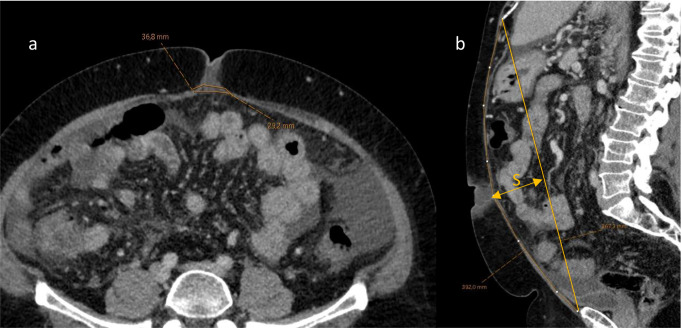
An institutional data base of patients with post operative wound infections was assembled. The subgroup of patients with BA was compared to controls. If the patients had complete preoperative abdominal CT scans, their images were further analyzed and 3D reconstruction of the linea alba was performed. Subsequently, lineal alba was measured at predetermined positions. Those values were evaluated as risk factors for postoperative BA.
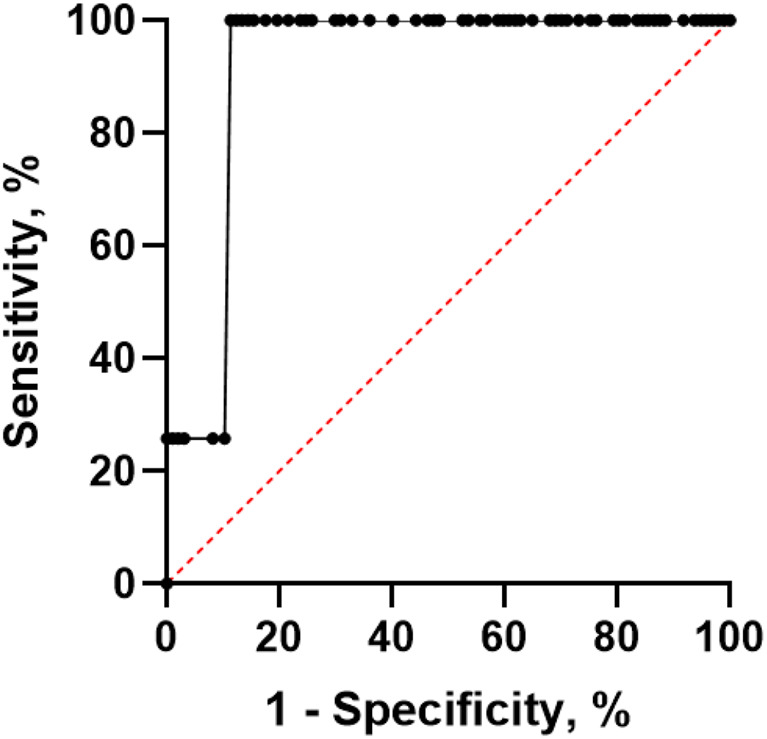
A total of 72 patients with BA and 32 controls were eligible for the analysis. We found body mass index-related significant differences as well as sex related differences in linea alba width. Furthermore, BA patients had a significantly wider linea alba and longer sagitta compared to controls. In the multivariate analysis of linea alba measurements and clinical parameters, the length of the sagitta was significantly associated with the risk of BA (OR 1.266; 95% CI 1.011-1.585; p = 0.04).
In this study of 3D reconstruction of the linea alba from routine CT scans, we could show that a longer sagitta was associated with an increased risk of postoperative BA.
腹部切口裂开是腹部手术后一种相关并发症,会导致额外的手术操作、延长住院时间及长期发病。存在多种潜在风险因素,且此前已对其进行了特征描述。这些风险因素包括手术因素和医疗因素。最近,基于CT的身体成分分析受到越来越多关注,白线的三维重建也已得到研究。这些参数的临床意义尚不清楚。因此,我们对白线三维重建测量值及其对腹部切口裂开发生的预后意义进行了分析。
收集了术后伤口感染患者的机构数据库。将腹部切口裂开患者亚组与对照组进行比较。如果患者术前有完整的腹部CT扫描,对其图像进行进一步分析并进行白线的三维重建。随后,在预定位置测量白线。将这些值评估为术后腹部切口裂开的风险因素。
共有72例腹部切口裂开患者和32例对照符合分析条件。我们发现体重指数相关的显著差异以及白线宽度的性别相关差异。此外,与对照组相比,腹部切口裂开患者的白线明显更宽,矢状径更长。在对白线测量值和临床参数的多变量分析中,矢状径长度与腹部切口裂开风险显著相关(OR 1.266;95%CI 1.011 - 1.585;p = 0.04)。
在这项从常规CT扫描进行白线三维重建的研究中,我们可以表明矢状径更长与术后腹部切口裂开风险增加相关。