Krawczyk Marta, Fernandez-Fuentes Narcis, Fidyt Klaudyna, Winiarski Tomasz, Pepek Monika, Graczyk-Jarzynka Agnieszka, Davis Jacinta, Bousquets-Muñoz Pablo, Puente Xose S, Menendez Pablo, Benard Emmanuelle, Wälchli Sébastien, Thomas-Tikhonenko Andrei, Winiarska Magdalena
Department of Immunology, Mossakowski Medical Research Institute, Polish Academy of Sciences, Warsaw, Poland.
Department of Immunology, Medical University of Warsaw, Warsaw, Poland.
bioRxiv. 2025 Mar 4:2025.02.28.640707. doi: 10.1101/2025.02.28.640707.
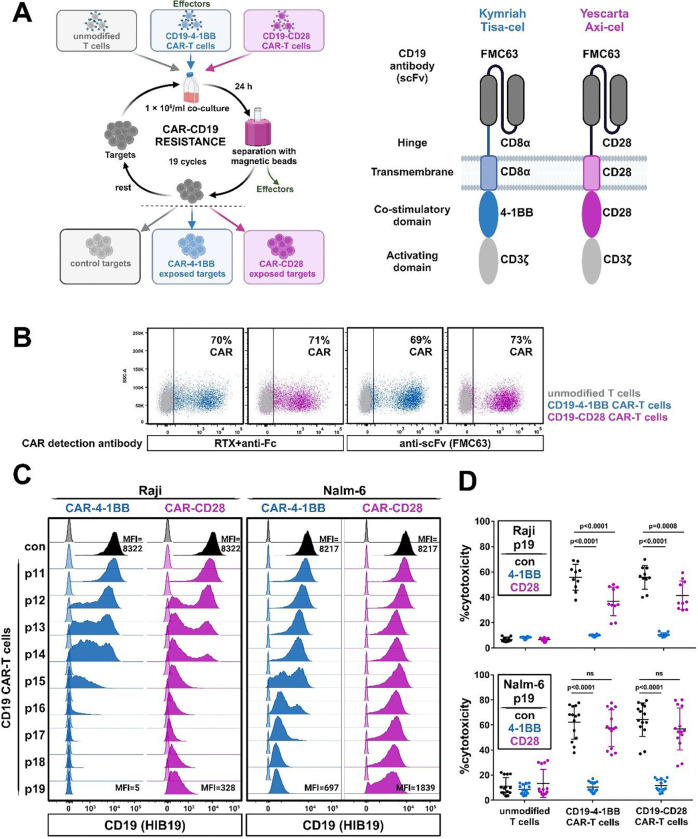
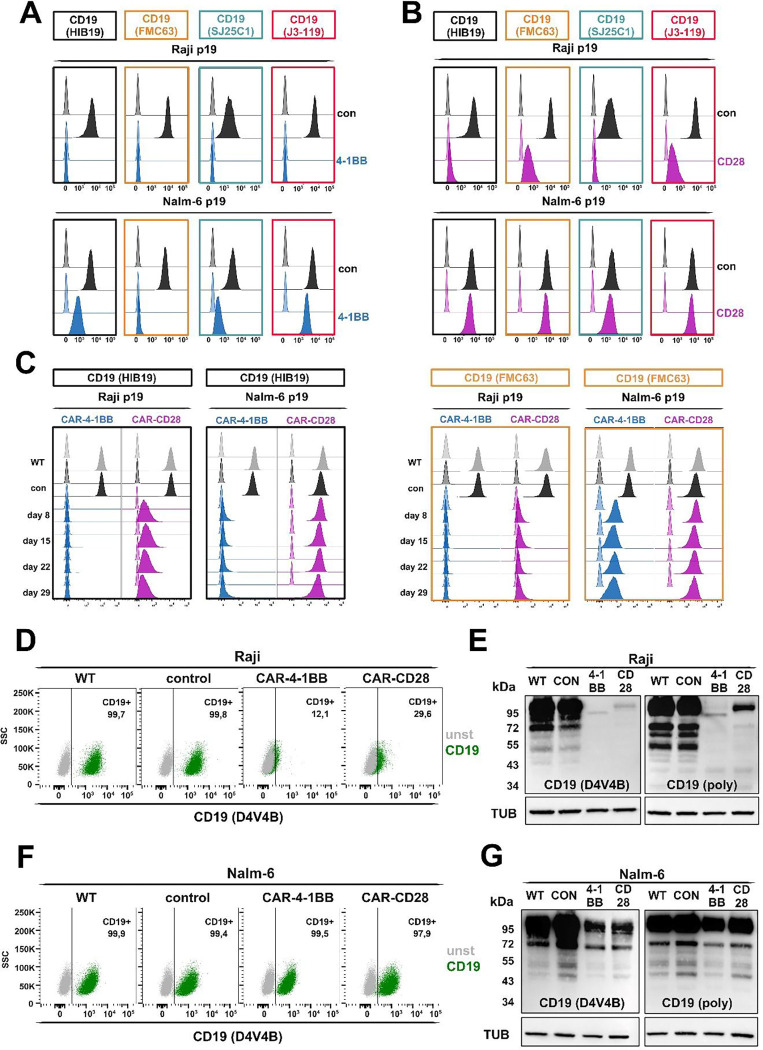
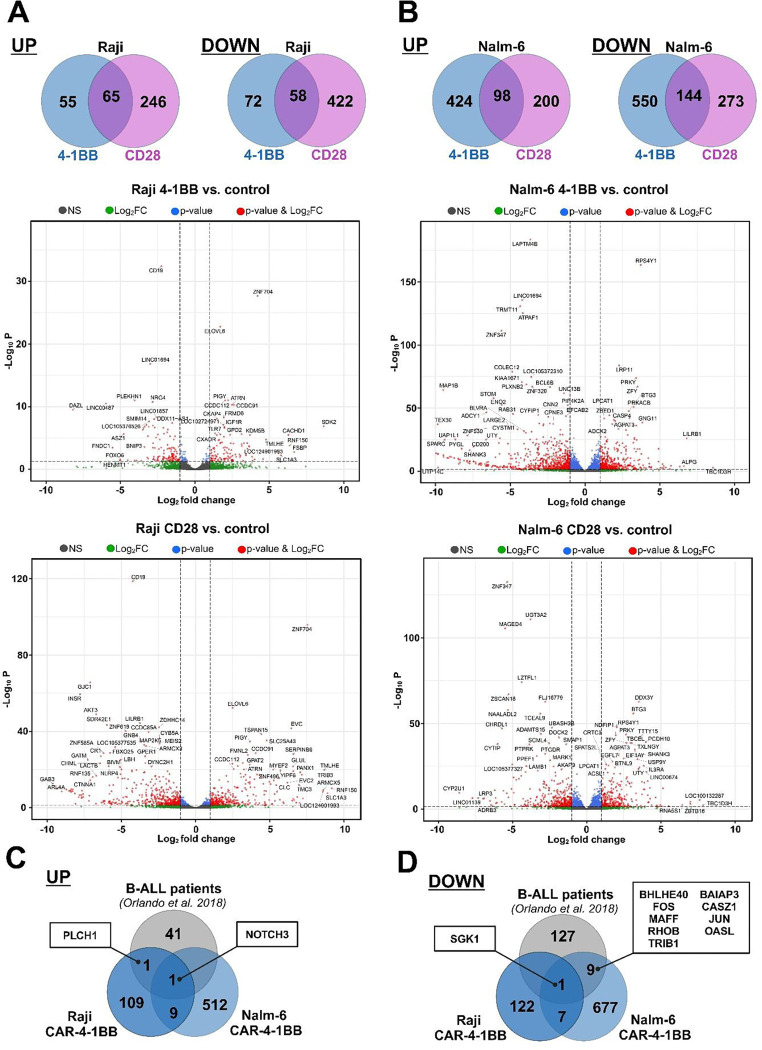
CD19-CAR-T-cells emerge as a major therapeutic option for relapsed/refractory B-cell-derived malignancies, however approximately half of patients eventually relapse. To identify resistance-driving factors, we repeatedly exposed B-cell lymphoma/B-cell acute lymphoblastic leukemia to 4-1BB/CD28-based CD19-CAR-T-cells . Generated models revealed costimulatory domain-dependent differences in CD19 loss. While CD19-4-1BB-CAR-T-cells induced combination epitope/total CD19 protein loss, CD19-CD28-CAR-T-cells did not drive antigen-escape. Consistent with observations in patients relapsing after CD19-4-1BB-CAR-T-cells, we identified CD19 frameshift/missense mutations affecting residues critical for FMC63 epitope recognition. Mathematical simulations revealed that differences between CD19-4-1BB- and CD19-CD28-CAR-T-cells activity against low-antigen-expressing tumor contribute to heterogeneous therapeutic responses. By integrating and data, we propose a biological scenario where CD19-4-1BB-CAR-T-cells fail to eliminate low-antigen tumor cells, fostering CAR-resistance. These findings offer mechanistic insight into the observed clinical differences between axi-cel (CD28-based) and tisa-cel (4-1BB-based)-treated B-cell lymphoma patients and advance our understanding on CAR-T resistance. Furthermore, we underscore the need for specific FMC63 epitope detection to deliver information on antigen levels accessible for CD19-CAR-T-cells.
CD19嵌合抗原受体T细胞(CD19-CAR-T细胞)已成为复发/难治性B细胞来源恶性肿瘤的主要治疗选择,然而约半数患者最终会复发。为了确定导致耐药的因素,我们将B细胞淋巴瘤/B细胞急性淋巴细胞白血病反复暴露于基于4-1BB/CD28的CD19-CAR-T细胞。生成的模型揭示了共刺激域依赖性的CD19丢失差异。虽然CD19-4-1BB-CAR-T细胞诱导了组合表位/总CD19蛋白丢失,但CD19-CD28-CAR-T细胞并未导致抗原逃逸。与CD19-4-1BB-CAR-T细胞治疗后复发患者的观察结果一致,我们鉴定出影响FMC63表位识别关键残基的CD19移码/错义突变。数学模拟表明,CD19-4-1BB-CAR-T细胞和CD19-CD28-CAR-T细胞对低抗原表达肿瘤的活性差异导致了异质性治疗反应。通过整合[具体数据1]和[具体数据2]数据,我们提出了一种生物学情景,即CD19-4-1BB-CAR-T细胞无法消除低抗原肿瘤细胞,从而促进了CAR耐药性。这些发现为axi-cel(基于CD28)和tisa-cel(基于4-1BB)治疗的B细胞淋巴瘤患者之间观察到的临床差异提供了机制性见解,并增进了我们对CAR-T耐药性的理解。此外,我们强调需要进行特定的FMC63表位检测,以提供关于CD19-CAR-T细胞可及抗原水平的信息。