Pavlidis Georgios
Department of Social and Psychological Studies, Karlstad University, Universitetsgatan 2, Karlstad, 65188, Sweden.
Institution of Culture and Society, Linkoping University, Bredgatan 33, Norrköping, 60221, Sweden.
BMC Psychol. 2025 Mar 18;13(1):264. doi: 10.1186/s40359-025-02574-7.
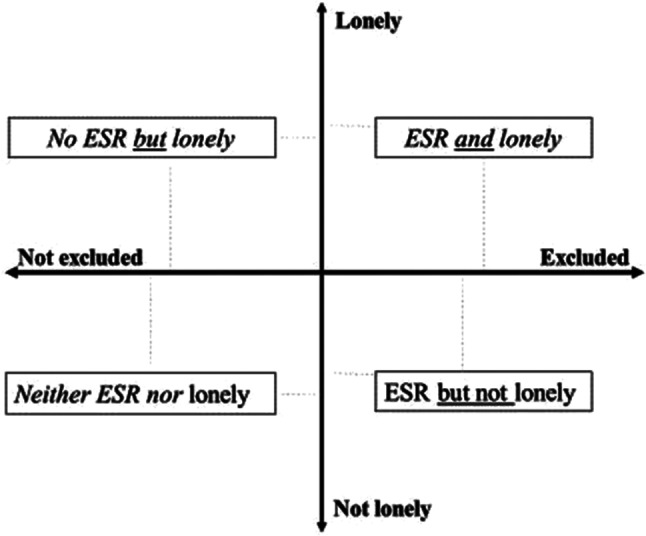
Exclusion from social relations (ESR) describes severe states of social isolation in older age that may be associated with poorer cognitive outcomes. Previous studies on cognitive aging provide mixed evidence for the effects of social isolation and loneliness in shaping cognitive outcomes among older adults. In addition, the joint consideration of social isolation and loneliness remains rarely used in the empirical examination of cognitive aging, whereas an exclusionary perspective is missing.
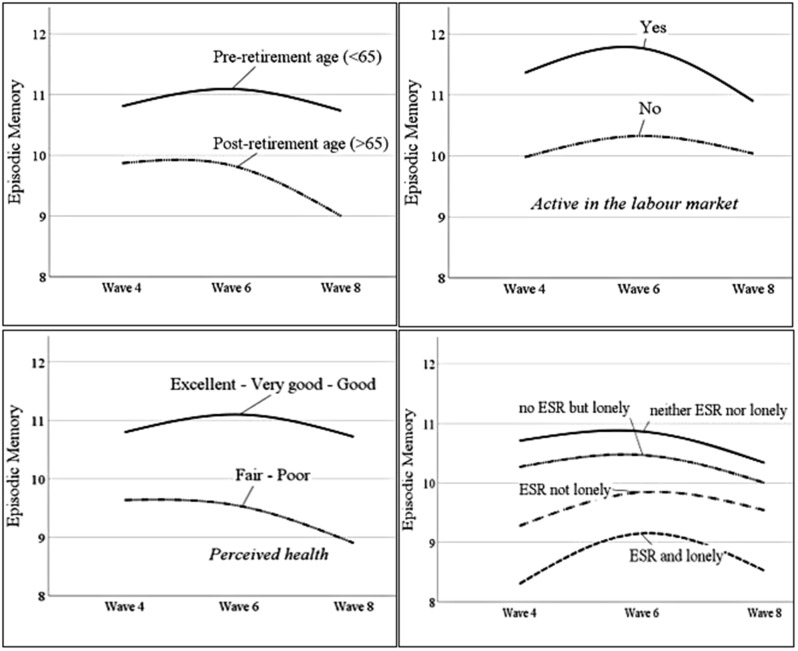
Using a sample (N = 7,830) from the Survey of Health, Ageing, and Retirement in Europe (SHARE), this study examined the cross-sectional and longitudinal effects of three ESR states in older age (ESR and lonely, ESR but not lonely, not ESR but lonely) on episodic memory. Living alone or without a partner, being active in the labor market, and social participation were also included as exclusionary states in linear mixed models with health, demographics, and socioeconomic factors as covariates.
Cross-sectionally, ESR states in older age are associated with worse episodic memory independent of loneliness. There was no evidence for longitudinal effects between ESR states at baseline and episodic memory slopes over time.
It was concluded that the negative effects of loneliness-typified ESR states on cognitive aging may be temporary and reversible, as a function of older adults' transition in-and-out of these exclusionary states.
社会关系排斥(ESR)描述了老年人严重的社会隔离状态,这可能与较差的认知结果相关。先前关于认知老化的研究对于社会隔离和孤独感在塑造老年人认知结果方面的影响提供了相互矛盾的证据。此外,在认知老化的实证研究中,很少同时考虑社会隔离和孤独感,而缺乏一种排他性视角。
本研究使用来自欧洲健康、老龄化和退休调查(SHARE)的样本(N = 7830),考察了老年人三种ESR状态(ESR且孤独、ESR但不孤独、非ESR但孤独)对情景记忆的横断面和纵向影响。在以健康、人口统计学和社会经济因素作为协变量的线性混合模型中,独居或无伴侣、活跃于劳动力市场以及社会参与也被纳入作为排他性状态。
横断面研究表明,老年人的ESR状态与较差的情景记忆相关,且与孤独感无关。没有证据表明基线时的ESR状态与随时间变化的情景记忆斜率之间存在纵向影响。
得出的结论是,以孤独为特征的ESR状态对认知老化的负面影响可能是暂时的且可逆的,这取决于老年人进出这些排他性状态的转变情况。