Herrera-Restrepo Oscar, Kwiatkowska Marta, Huse Samuel, Ndegwa Nelson, Kocaata Zeki, Ganz Michael L
US Health Economics & Outcomes Research, Vaccines, GSK, Philadelphia, PA, USA.
Data & Analytics, Evidera, London, UK.
Hum Vaccin Immunother. 2025 Dec;21(1):2479338. doi: 10.1080/21645515.2025.2479338. Epub 2025 Mar 19.
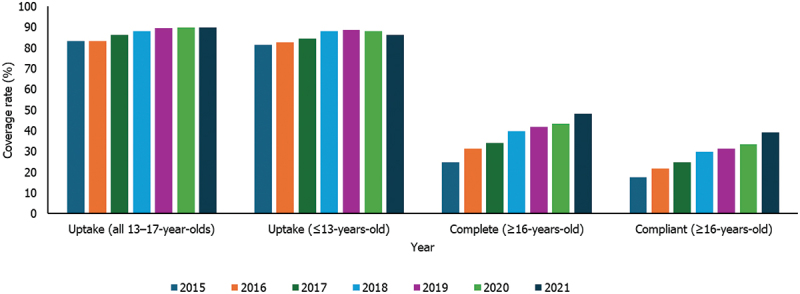
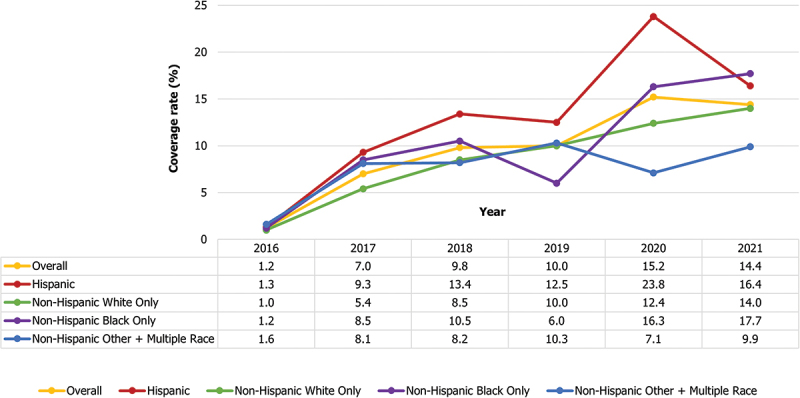
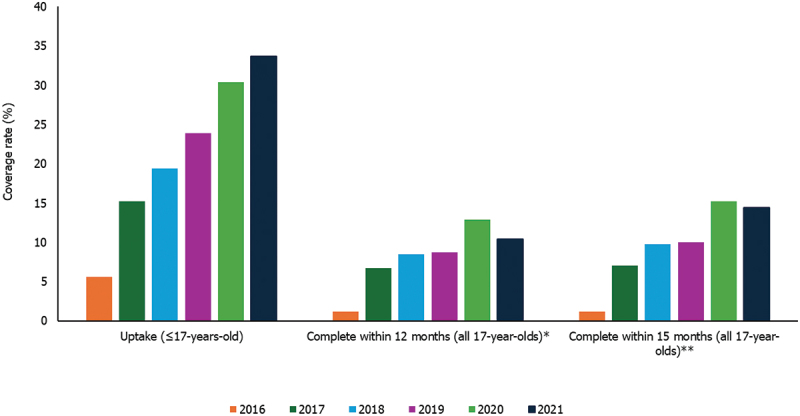
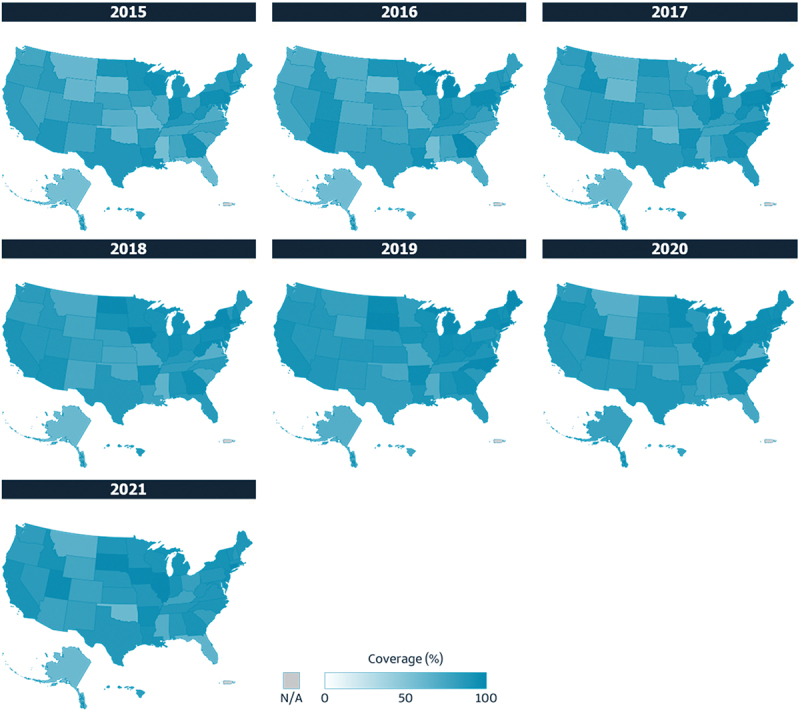
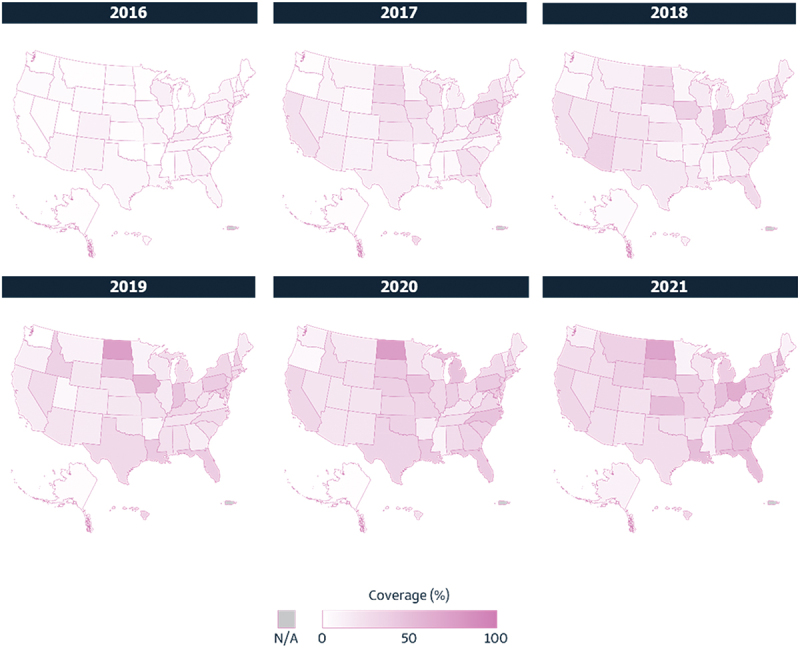
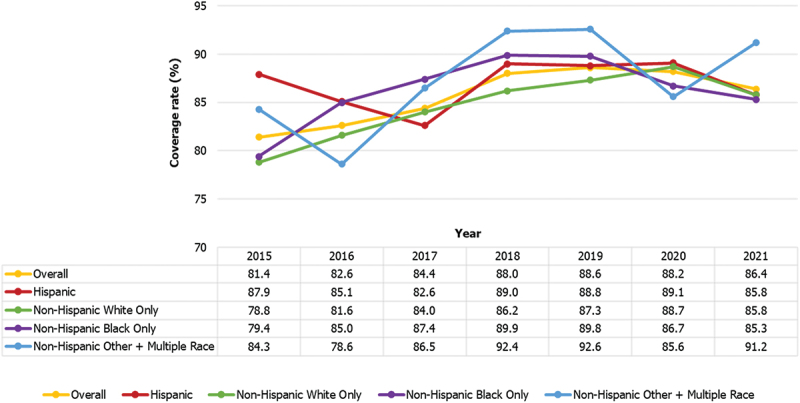
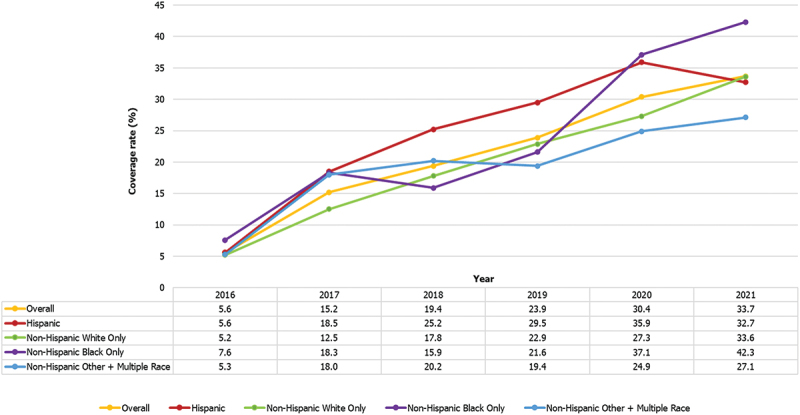
In the United States, while meningococcal vaccines are available and recommended for adolescents and young adults, coverage remains low and disparities persist. We evaluated meningococcal serogroups A, C, W, Y (MenACWY) and B (MenB) vaccine uptake, completion, and compliance using a cross-sectional analysis of National Immunization Survey-Teen (NIS-Teen) data (2015-2021) and a cohort analysis of commercial claims data (2010-2021). Regression models were used to identify factors associated with vaccine uptake. Included in the NIS-Teen MenACWY and MenB analyses were 138,952 and 177,077 patients, respectively. Included in the claims MenACWY and MenB analyses were 953,905 and 818,424 patients, respectively. In 2021, MenACWY uptake was 86.4% (95% confidence interval [CI]: 83.6-88.8%) among ≤13-year-olds (NIS-Teen) and 63.2% (62.8-63.5%) among 11-12-year-olds (claims). MenB was 33.7% (30.5-37.1%) among ≤17-year-olds (NIS-Teen), 41.6% (41.2-42.0%) among 16-18-year-olds (claims), and 15.0% (14.7-15.4%) among 19-23-year-olds (claims). The states with the lowest and highest MenB uptake by ≤17-year-olds in 2021 (NIS-Teen) were Minnesota (10.1% [3.9-23.6%]) and North Dakota (69.9% [52.1-83.2%]). Factors associated with MenACWY uptake included living in a state with a vaccine mandate, Black or Hispanic race (versus White), and well-child visit attendance. Factors associated with MenB uptake included having Medicaid (versus private insurance) and Hispanic race (versus White). The findings suggest that meningococcal vaccination coverage disparities persist across vaccines, age, geography, and race and ethnicity. Higher MenACWY (versus MenB) coverage suggests the benefit of routine recommendations. Annual well-child visits and simplified vaccination schedules could reduce vaccination access barriers.
在美国,虽然有脑膜炎球菌疫苗可供使用并推荐给青少年和青年成人,但疫苗接种覆盖率仍然较低,差异依然存在。我们使用全国青少年免疫调查(NIS-Teen)数据(2015 - 2021年)的横断面分析以及商业理赔数据的队列分析(2010 - 2021年),评估了A、C、W、Y群脑膜炎球菌(MenACWY)和B群脑膜炎球菌(MenB)疫苗的接种率、全程接种率和依从性。回归模型用于确定与疫苗接种相关的因素。NIS-Teen中MenACWY和MenB分析分别纳入了138,952名和177,077名患者。理赔数据中MenACWY和MenB分析分别纳入了953,905名和818,424名患者。2021年,在≤13岁儿童中(NIS-Teen),MenACWY疫苗接种率为86.4%(95%置信区间[CI]:83.6 - 88.8%),在11 - 12岁儿童中(理赔数据)为63.2%(62.8 - 63.5%)。MenB疫苗在≤17岁青少年中(NIS-Teen)接种率为33.7%(30.5 - 37.1%),在16 - 18岁青少年中(理赔数据)为41.6%(41.2 - 42.0%),在19 - 23岁青少年中(理赔数据)为15.0%(14.7 - 15.4%)。2021年≤17岁青少年中MenB疫苗接种率最低和最高的州(NIS-Teen)分别是明尼苏达州(10.1% [3.9 - 23.6%])和北达科他州(69.9% [52.1 - 83.2%])。与MenACWY疫苗接种相关的因素包括居住在有疫苗强制令的州、黑人或西班牙裔种族(与白人相比)以及按时进行儿童健康检查。与MenB疫苗接种相关的因素包括拥有医疗补助(与私人保险相比)和西班牙裔种族(与白人相比)。研究结果表明,脑膜炎球菌疫苗接种覆盖率在不同疫苗、年龄、地域以及种族和民族之间的差异依然存在。较高的MenACWY(与MenB相比)覆盖率表明常规推荐的益处。每年进行儿童健康检查以及简化疫苗接种计划可以减少疫苗接种的障碍。