Li Jingqiu, Hu Xinyang, Tao Xinyu, Li Yuming, Jiang Wan, Zhao Mingtao, Ma Zhehui, Chen Bangjie, Sheng Shuyan, Tong Jiaye, Zhang Haibo, Shen Bing, Gao Xiaomei
Second Clinical Medical College, Anhui Medical University, Hefei, China.
Frist Clinical Medical College, Anhui Medical University, Hefei, China.
Front Cell Infect Microbiol. 2025 Mar 6;15:1433131. doi: 10.3389/fcimb.2025.1433131. eCollection 2025.
Recent research on the gut-brain axis has deepened our understanding of the correlation between gut bacteria and the neurological system. The inflammatory response triggered by gut microbiota may be associated with neurodegenerative diseases. Additionally, the impact of gut microbiota on emotional state, known as the "Gut-mood" relationship, could play a role in depression and anxiety disorders.
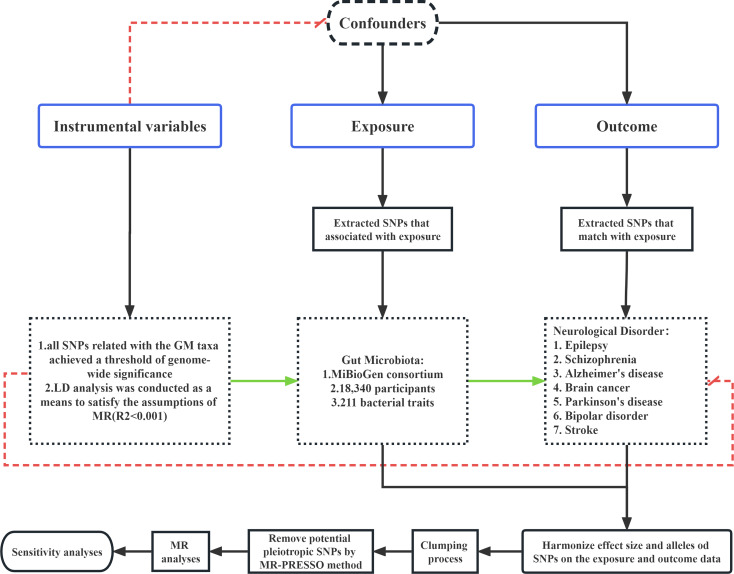
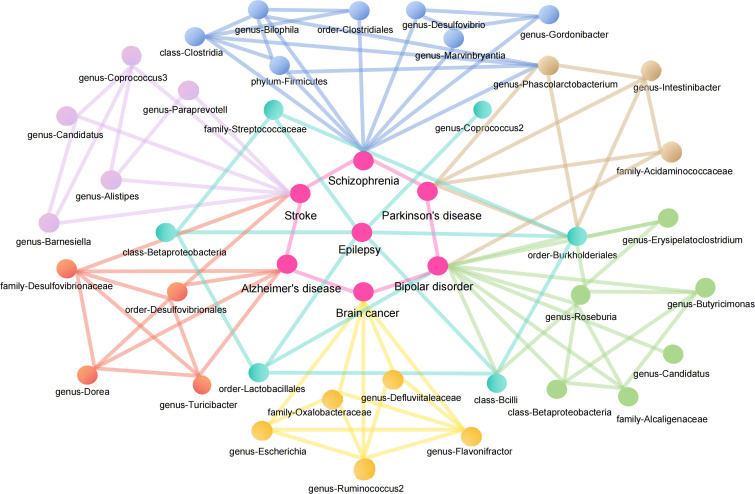
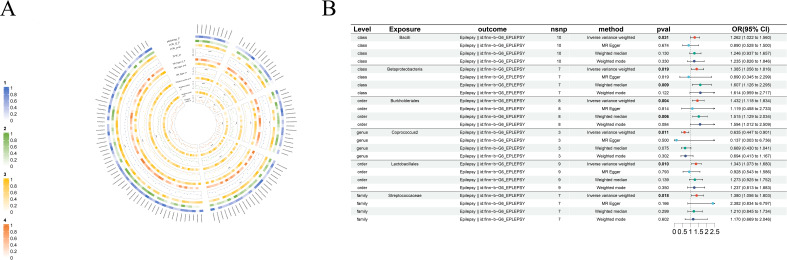
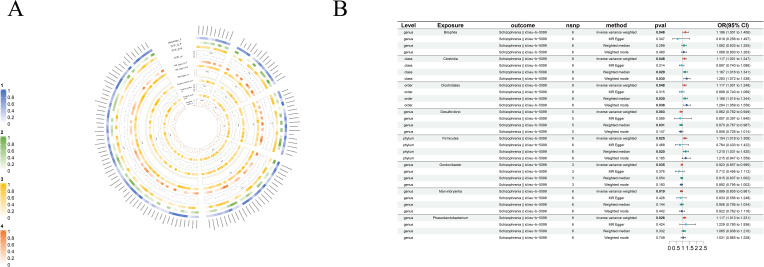
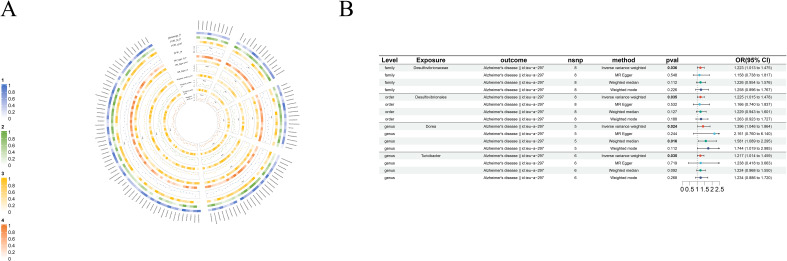
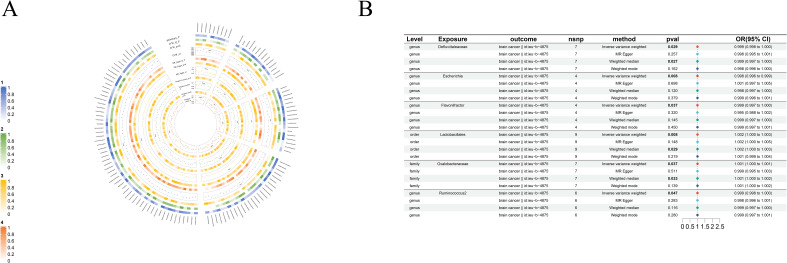
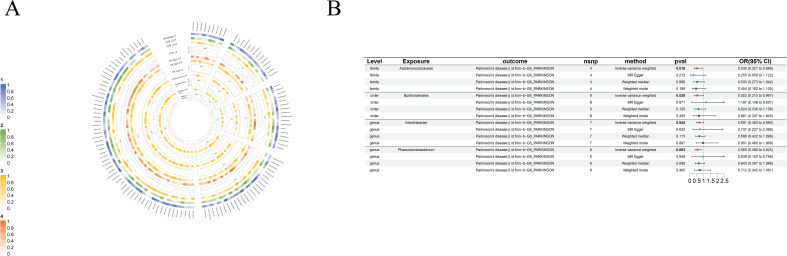
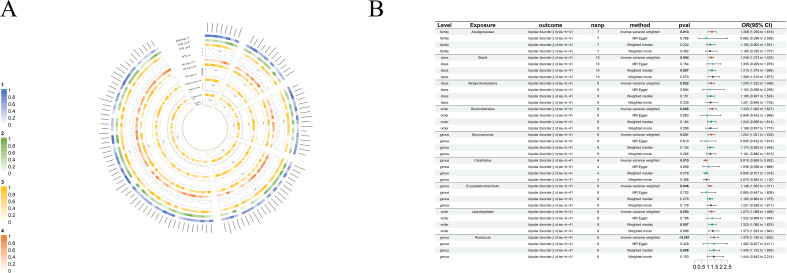
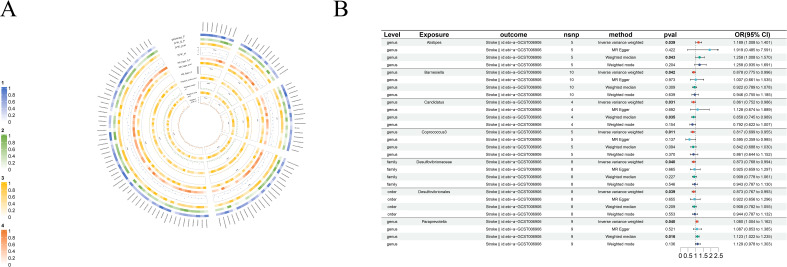
This review summarizes recent data on the role of gut-brain axis in the pathophysiology of neuropsychiatric and neurological disorders including epilepsy, schizophrenia, Alzheimer's disease, brain cancer, Parkinson's disease, bipolar disorder and stroke. Also, we conducted a Mendelian randomization study on seven neurological disorders (Epilepsy, schizophrenia, Alzheimer's disease, brain cancer, Parkinson's disease, bipolar disorder and stroke). MR-Egger and MR-PRESSO tests confirmed the robustness of analysis against horizontal pleiotropy.
By comparing the protective and risk factors for neurological disorders found in our research and other researches, we can furtherly determine valuable indicators for disease evolution tracking and potential treatment targets. Future research should explore extensive microbiome genome-wide association study datasets using metagenomics sequencing techniques to deepen our understanding of connections and causality between neurological disorders.
最近关于肠-脑轴的研究加深了我们对肠道细菌与神经系统之间相关性的理解。肠道微生物群引发的炎症反应可能与神经退行性疾病有关。此外,肠道微生物群对情绪状态的影响,即“肠道-情绪”关系,可能在抑郁症和焦虑症中起作用。
本综述总结了关于肠-脑轴在神经精神和神经系统疾病(包括癫痫、精神分裂症、阿尔茨海默病、脑癌、帕金森病、双相情感障碍和中风)病理生理学中作用的最新数据。此外,我们对七种神经系统疾病(癫痫、精神分裂症、阿尔茨海默病、脑癌、帕金森病、双相情感障碍和中风)进行了孟德尔随机化研究。MR-Egger和MR-PRESSO检验证实了分析对水平多效性的稳健性。
通过比较我们的研究和其他研究中发现的神经系统疾病的保护因素和风险因素,我们可以进一步确定用于疾病进展跟踪的有价值指标和潜在治疗靶点。未来的研究应使用宏基因组测序技术探索广泛的微生物组全基因组关联研究数据集,以加深我们对神经系统疾病之间联系和因果关系的理解。