Soukar Imad, Fisher Robert J, Bhagavatula Sanjana, Collard Marianne, Cole Philip A, Alani Rhoda M
Department of Dermatology, Boston University Chobanian and Avedisian School of Medicine, 609 Albany Street, J-507, Boston, MA, 02118, USA.
Division of Genetics, Departments of Medicine and Biological Chemistry and Molecular Pharmacology, Harvard Medical School and Brigham and Women's Hospital, Boston, MA, USA.
Sci Rep. 2025 Mar 24;15(1):10128. doi: 10.1038/s41598-025-94517-w.
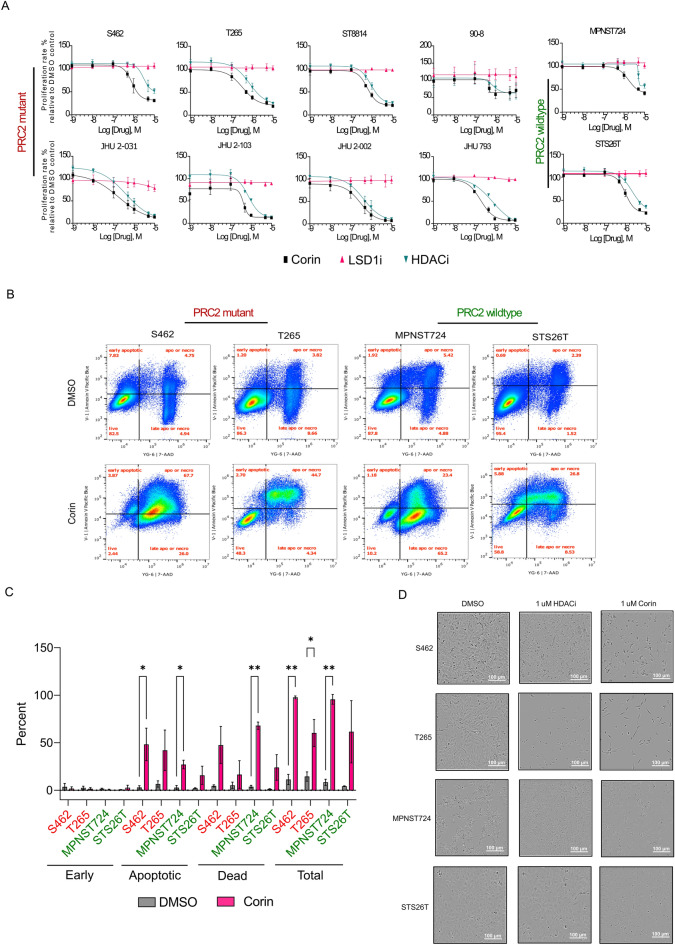
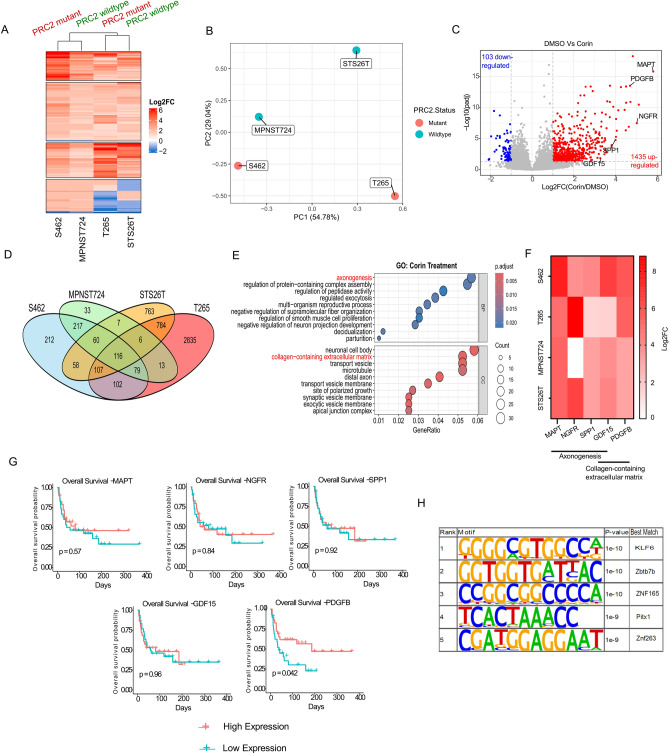
Malignant peripheral nerve sheath tumor (MPNST) is a highly aggressive sarcoma that may be seen in patients with neurofibromatosis type 1 (NF1) or occur sporadically. While surgery is the primary treatment for localized MPNST with a 61.9% overall survival rate, metastatic disease is often fatal due to resistance to systemic therapies which underscores the urgent need for effective treatments. MPNSTs frequently harbor inactivating driver mutations in the PRC2 epigenetic repressor complex suggesting epigenetic therapies may represent a specific vulnerability in these tumors. Here, we investigate the role of the LSD1-HDAC1-CoREST (LHC) repressor complex in mediating MPNST tumor growth and progression. Our findings demonstrate that the LHC small molecule inhibitor, corin, induces apoptosis and significantly inhibits proliferation in MPNST cells. Transcriptomic analysis of corin-treated MPNST cells demonstrates specific increases in genes associated with axonogenesis and neuronal differentiation as well as altered extracellular matrix; additionally, corin treatment is shown to inhibit MPNST invasion in vitro. These results underscore the critical role of the LHC complex in facilitating MPNST growth and progression and suggest that targeting the LHC complex represents a promising therapeutic approach for this aggressive malignancy.
恶性外周神经鞘瘤(MPNST)是一种侵袭性很强的肉瘤,可见于1型神经纤维瘤病(NF1)患者或散发性发病。虽然手术是局限性MPNST的主要治疗方法,总体生存率为61.9%,但转移性疾病往往因对全身治疗耐药而致命,这凸显了对有效治疗的迫切需求。MPNST经常在PRC2表观遗传抑制复合物中存在失活的驱动突变,这表明表观遗传疗法可能是这些肿瘤的一个特定弱点。在此,我们研究了LSD1-HDAC1-CoREST(LHC)抑制复合物在介导MPNST肿瘤生长和进展中的作用。我们的研究结果表明,LHC小分子抑制剂corin可诱导MPNST细胞凋亡并显著抑制其增殖。对corin处理的MPNST细胞进行转录组分析显示,与轴突发生和神经元分化相关的基因以及细胞外基质发生了特异性增加;此外,corin处理在体外可抑制MPNST的侵袭。这些结果强调了LHC复合物在促进MPNST生长和进展中的关键作用,并表明靶向LHC复合物是治疗这种侵袭性恶性肿瘤的一种有前景的治疗方法。