Rajaiah Paramasivan, Gupta Bhavna, Mayilsamy Muniyaraj
ICMR-Vector Control Research Centre, 4, Sarojini Street, Chinna Chokkikulam, Madurai 625 002, India.
Microorganisms. 2025 Feb 27;13(3):544. doi: 10.3390/microorganisms13030544.
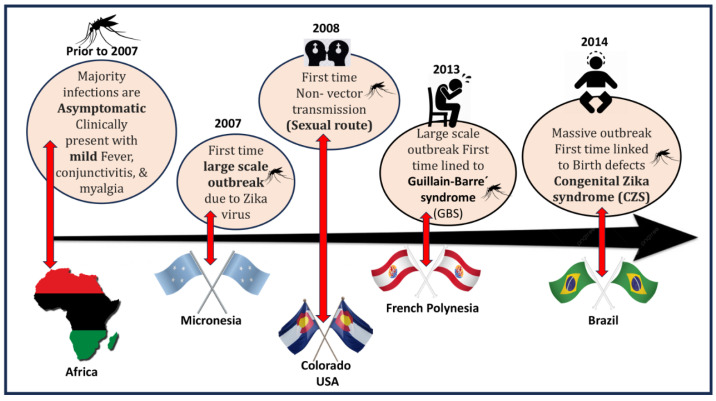
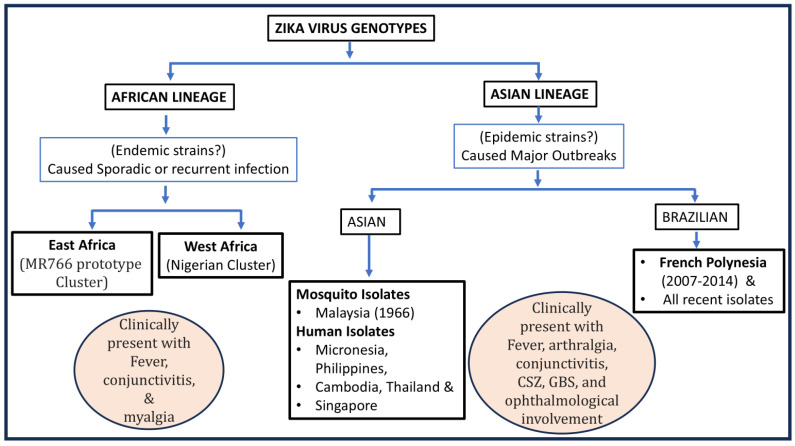
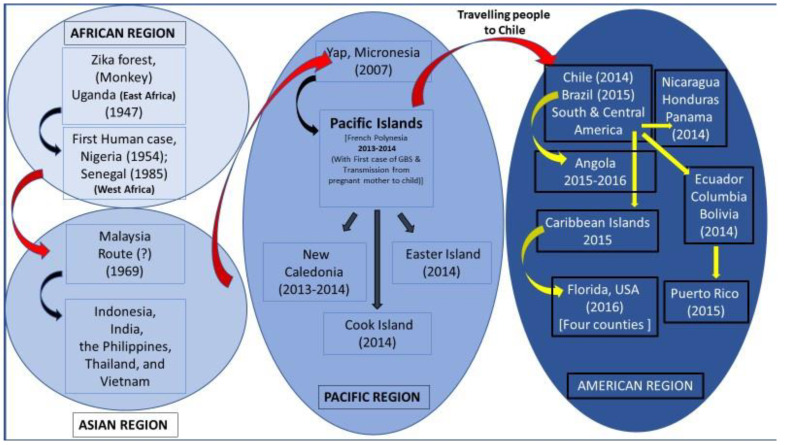
ZIKA fever (ZIKAF) is an emerging mosquito-borne flavivirus illness in humans. Regarding the etiological agent, ZIKA virus (ZIKAV), though it is known to be distributed in the tropics, causing sporadic cases, its rapid global expansion with pandemic potential has raised global concern. Due to its abrupt emergence in South American countries, the Caribbean, and the Americas, the WHO declared ZIKA a public health emergency of international concern in 2016. ZIKAV usually causes mild infections; however, its recent unusual presentations of Guillen-Barré syndrome in adults and microcephaly in newborn babies of ZIKAV-infected mothers in Brazil has caused concern among global public health authorities. Certain mutations on virus genomes have been found to be correlated with clinical severity, and its unusual transmission routes through sexual and blood transfusions emphasize the necessity for understanding its virological determinants and impact. Its abrupt re-emergence in India (2018-2019), particularly in Gujarat (2016), Tamil Nadu (2017), Uttar Pradesh (2021), Maharashtra, Kerala (2021), and Karnataka (2023), has indicated the need for urgent measures to strengthen surveillance systems and design effective prevention and control measures in this country. Given the global concern around ZIKAV, here, we reviewed current knowledge about global ZIKAV genetic lineages vis à vis the situation in India and discussed future priorities for ZIKAV research in India for effectively designing control strategies.
寨卡热(ZIKAF)是一种新出现的由蚊子传播的人类黄病毒疾病。关于病原体寨卡病毒(ZIKAV),尽管已知其分布在热带地区,引发散发病例,但其具有大流行潜力的迅速全球扩张已引起全球关注。由于其在南美洲国家、加勒比地区和美洲突然出现,世界卫生组织在2016年宣布寨卡为国际关注的突发公共卫生事件。寨卡病毒通常引起轻度感染;然而,其最近在巴西成年患者中出现格林-巴利综合征以及寨卡病毒感染母亲所生新生儿出现小头畸形的异常表现,已引起全球公共卫生当局的关注。已发现病毒基因组上的某些突变与临床严重程度相关,并且其通过性传播和输血的异常传播途径凸显了了解其病毒学决定因素及其影响的必要性。它于2018 - 2019年在印度突然再次出现,特别是在古吉拉特邦(2016年)、泰米尔纳德邦(2017年)、北方邦(2021年)、马哈拉施特拉邦、喀拉拉邦(2021年)和卡纳塔克邦(2023年),这表明该国需要采取紧急措施加强监测系统并设计有效的预防和控制措施。鉴于全球对寨卡病毒的关注,在此,我们回顾了关于全球寨卡病毒基因谱系的现有知识以及印度的情况,并讨论了印度寨卡病毒研究未来的重点,以便有效地设计控制策略。