Gjølberg Torleif Tollefsrud, Mester Simone, Calamera Gaia, Telstad Jenny Skjermo, Sandlie Inger, Andersen Jan Terje
Authera AS, 0349, Oslo, Norway.
Department of Pharmacology, Institute of Clinical Medicine, University of Oslo, 0372, Oslo, Norway.
BioDrugs. 2025 May;39(3):373-409. doi: 10.1007/s40259-025-00708-2. Epub 2025 Mar 29.
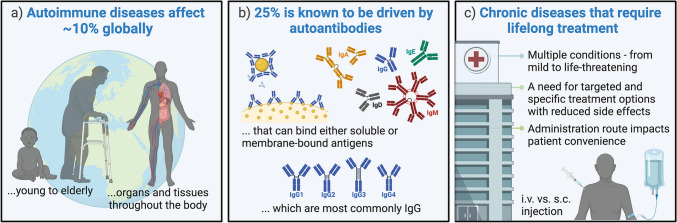
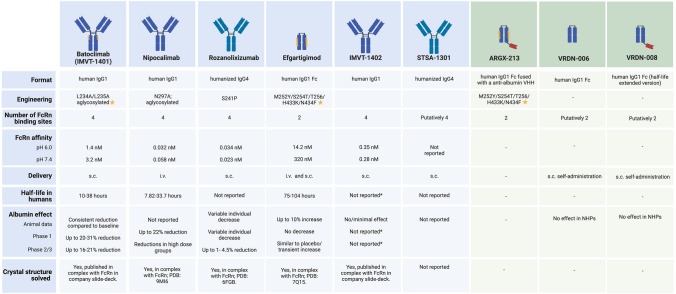
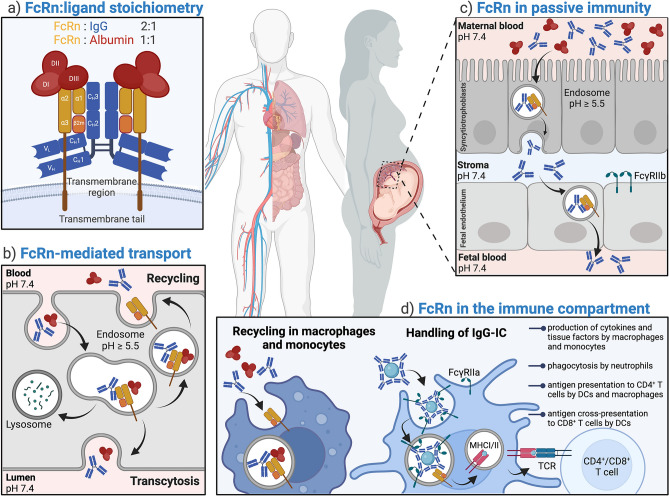
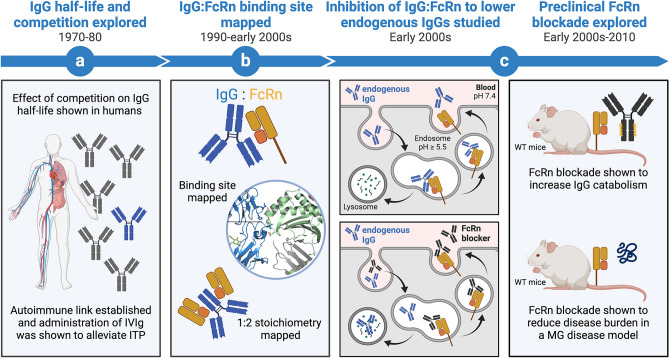
Autoimmune diseases are highly prevalent and affect people at all ages, women more often than men. The most prominent immunological manifestation is the production of antibodies directed against self-antigens. In many cases, these antibodies (Abs) drive the pathogenesis by attacking the body's own healthy cells, causing serious health problems that may be life threatening. Most autoantibodies are of the immunoglobulin G (IgG) isotype, which has a long plasma half-life and potent effector functions. Thus, there is a need for specific treatment options that rapidly eliminate these pathogenic IgG auto-Abs. In this review, we discuss how the neonatal Fc receptor (FcRn) acts as a regulator of the high levels of not only IgG Abs, but also albumin, by rescuing both these soluble proteins from cellular catabolism, and how a molecular and cellular understanding of this complex biology has spurred an intense interest in the development of FcRn-targeting strategies for the treatment of IgG-driven autoimmune diseases. We find that this emerging therapeutic class demonstrates efficacy within several autoimmune diseases with distinct pathophysiology. This offers hope for both new therapeutic avenues for highly prevalent diseases currently treated by other means, and rare diseases with no approved therapies to date. In addition, we elaborate on studies that have led to approval of the first FcRn antagonists, the clinical progress and structural design of molecules in the pipeline, their position in the overall therapeutic landscape of autoimmunity, the design of next-generation antagonists as well as the use of this receptor-targeting principle for other therapeutic applications.
自身免疫性疾病非常普遍,影响各年龄段人群,女性比男性更易患病。最显著的免疫学表现是产生针对自身抗原的抗体。在许多情况下,这些抗体通过攻击人体自身的健康细胞来驱动发病机制,导致可能危及生命的严重健康问题。大多数自身抗体属于免疫球蛋白G(IgG)同种型,其在血浆中的半衰期长且具有强大的效应功能。因此,需要有能快速清除这些致病性IgG自身抗体的特异性治疗方案。在本综述中,我们讨论了新生儿Fc受体(FcRn)如何通过将这两种可溶性蛋白从细胞分解代谢中拯救出来,从而不仅作为高水平IgG抗体的调节剂,还作为白蛋白的调节剂,以及对这种复杂生物学的分子和细胞层面的理解如何激发了人们对开发靶向FcRn的策略来治疗由IgG驱动的自身免疫性疾病的浓厚兴趣。我们发现,这一新兴治疗类别在几种具有不同病理生理学的自身免疫性疾病中显示出疗效。这为目前通过其他方法治疗的高发性疾病以及迄今为止尚无批准疗法的罕见疾病提供了新的治疗途径。此外,我们详细阐述了已导致首个FcRn拮抗剂获批的研究、正在研发的分子的临床进展和结构设计、它们在自身免疫性疾病整体治疗格局中的地位、下一代拮抗剂的设计以及这种受体靶向原理在其他治疗应用中的使用情况。