Wang Fan, Li Weina, Han Guohui, Xie Jun, Bai Xiangdong
Department of Breast Surgery, Shanxi Hospital Affiliated to Cancer Hospital, Shanxi Province Cancer Hospital, Chinese Academy of Medical Sciences, Cancer Hospital Affiliated to Shanxi Medical University, Number Three, New Worker's Road, Xinghualing District, Taiyuan, Shanxi, 030013, China.
Department of Radiotherapy, Shanxi Hospital Affiliated to Cancer Hospital, Shanxi Province Cancer Hospital, Chinese Academy of Medical Sciences, Cancer Hospital Affiliated to Shanxi Medical University, Taiyuan, Shanxi, China.
Breast Cancer Res. 2025 Mar 31;27(1):47. doi: 10.1186/s13058-025-02005-w.
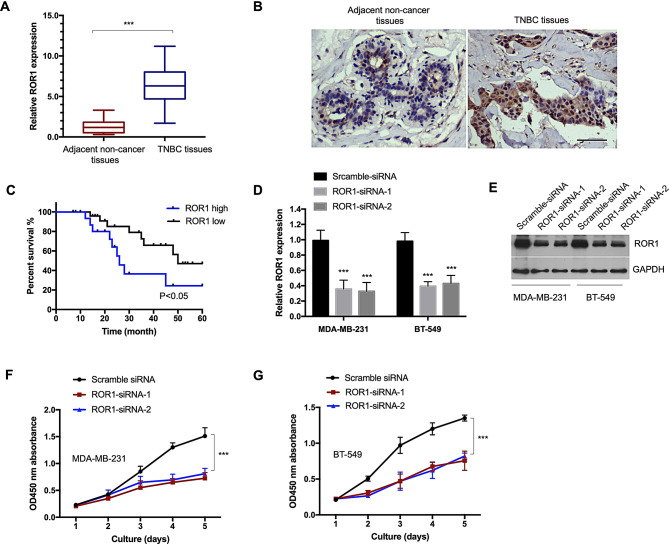
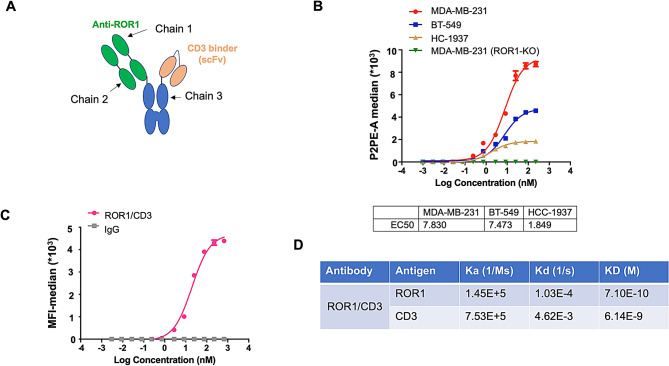
Triple negative breast cancer (TNBC) is an aggressive breast cancer subtype characterized with poor prognosis and high metastatic potential. Although traditional chemotherapy, radiation, and surgical resection remain the standard treatment options for TNBC, bispecific antibody-based immunotherapy is emerging as new strategy in TNBC treatment. Here, we found that the receptor tyrosine kinase-like Orphan Receptor 1 (ROR1) was highly expressed in TNBC but minimally expressed in normal tissue. A bispecific ROR1-targeted CD3 T cell engager (TCE) was designed in IgG-based format with extended half-life.
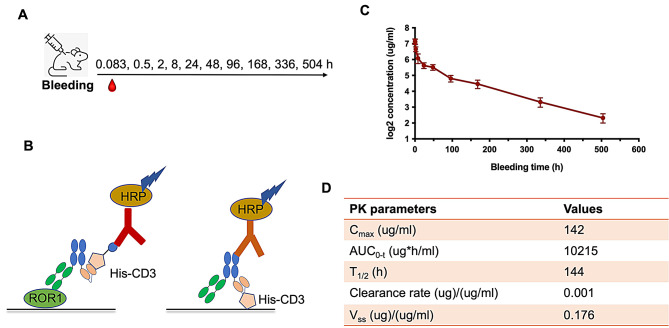
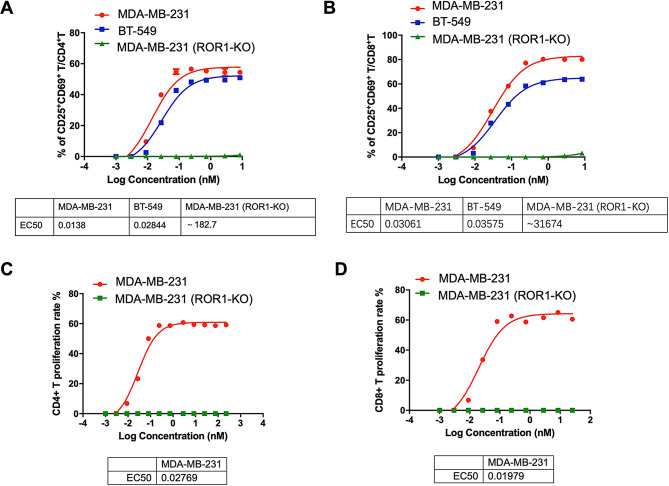
The expression of ROR1 in TNBC was detected by RT-qPCR and immunohistology analysis. The killing of ROR1/CD3 antibody on TNBC cells was determined by the in vitro cytotoxicity assay and in vivo PBMC reconstituted mouse model. The activation of ROR1/CD3 on T cells was analyzed by the flow cytometry and ELISA assay. Pharmacokinetics study of ROR1/CD3 was performed in mouse.
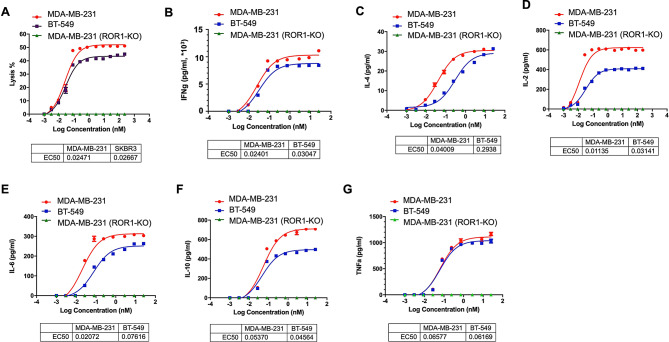
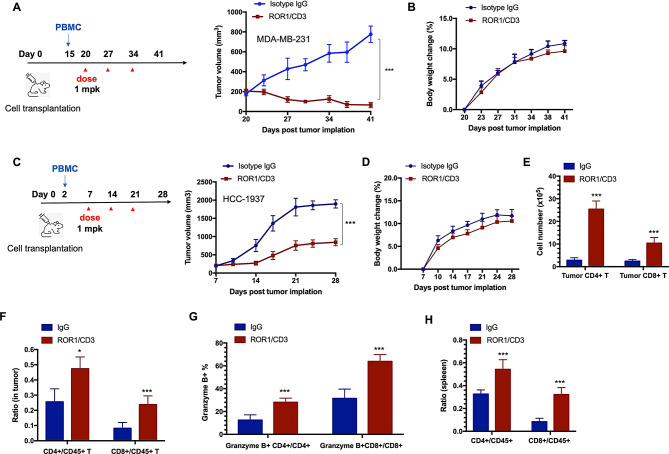
The ROR1/CD3 TCE triggered T cell activation and proliferation, which showed potent and specific killing to TNBC cells in ROR1-depedent manner. In vivo mouse model indicated that ROR1/CD3 TCE redirected the cytotoxic activity of T cells to lyse TNBC cells and induced significant tumor regression. Additionally, the ROR1/CD3 bispecific antibody exhibited an extended half-life in mouse, which may enable intermittent administration in clinic.
Collectively, these results demonstrated that ROR1/CD3 TCE has a promising efficacy profile in preclinical studies, which suggested it as a possible option for the treatment of ROR1-expressing TNBC.
三阴性乳腺癌(TNBC)是一种侵袭性乳腺癌亚型,其特征是预后不良和高转移潜能。尽管传统的化疗、放疗和手术切除仍然是TNBC的标准治疗选择,但基于双特异性抗体的免疫疗法正在成为TNBC治疗的新策略。在此,我们发现受体酪氨酸激酶样孤儿受体1(ROR1)在TNBC中高表达,但在正常组织中低表达。一种基于IgG形式的具有延长半衰期的双特异性靶向ROR1的CD3 T细胞衔接器(TCE)被设计出来。
通过RT-qPCR和免疫组织学分析检测TNBC中ROR1的表达。通过体外细胞毒性试验和体内PBMC重建小鼠模型确定ROR1/CD3抗体对TNBC细胞的杀伤作用。通过流式细胞术和ELISA试验分析ROR1/CD3对T细胞的激活作用。在小鼠中进行ROR1/CD3的药代动力学研究。
ROR1/CD3 TCE触发T细胞活化和增殖,以ROR1依赖性方式对TNBC细胞表现出强效且特异性的杀伤作用。体内小鼠模型表明,ROR1/CD3 TCE将T细胞的细胞毒性活性重定向以裂解TNBC细胞并诱导显著的肿瘤消退。此外,ROR1/CD3双特异性抗体在小鼠中表现出延长的半衰期,这可能使其在临床上能够间歇给药。
总体而言,这些结果表明ROR1/CD3 TCE在临床前研究中具有有前景的疗效,这表明它可能是治疗表达ROR1的TNBC的一种选择。