Wang Michael X, Mauch Brandon E, Williams August F, Barazande-Pour Tania, Araujo Hoffmann Filipe, Harris Sophie H, Lathrop Cooper P, Turkal Claire E, Yung Bryan S, Paw Michelle H, Gervasio David A G, Tran Tiffany, Stuhlfire Anna E, Guo Theresa, Daniels Gregory A, Park Soo J, Gutkind J Silvio, Hangauer Matthew J
Department of Dermatology, University of California San Diego.
Department of Pharmacology, University of California San Diego.
bioRxiv. 2025 Mar 17:2025.03.14.643359. doi: 10.1101/2025.03.14.643359.
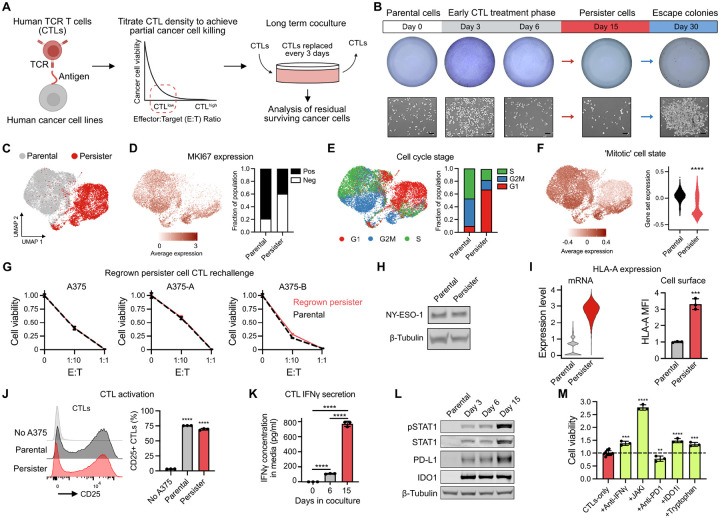
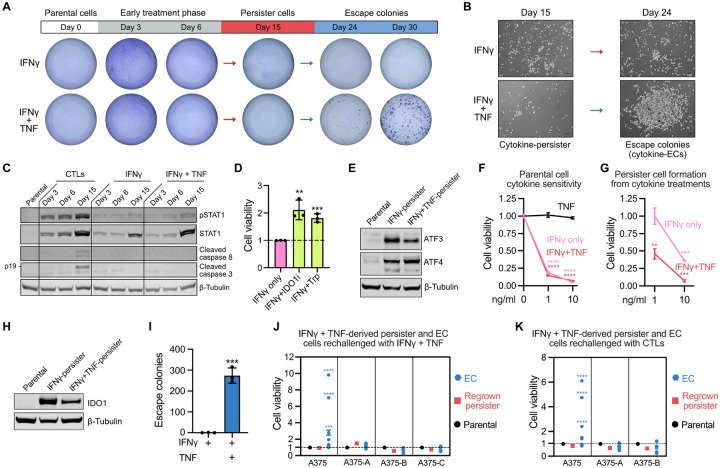
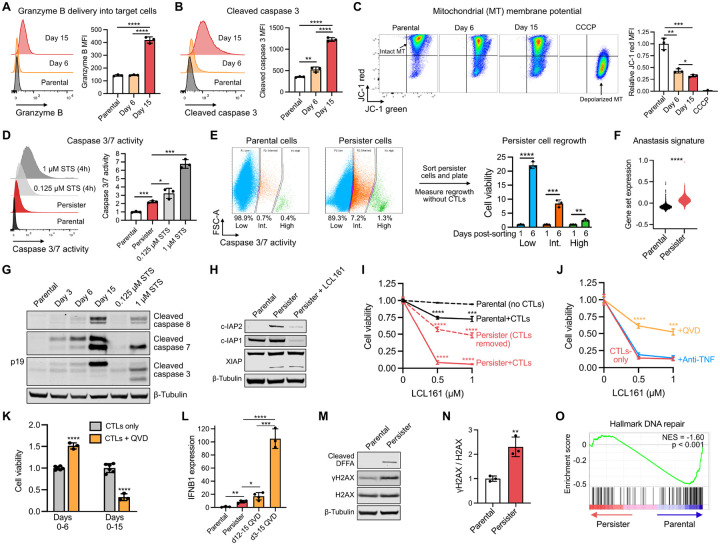
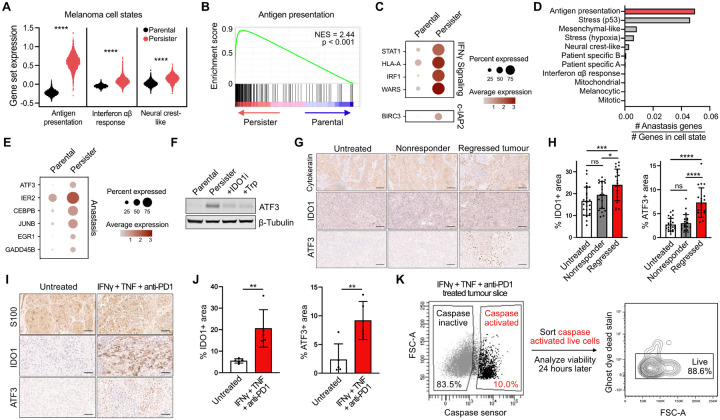
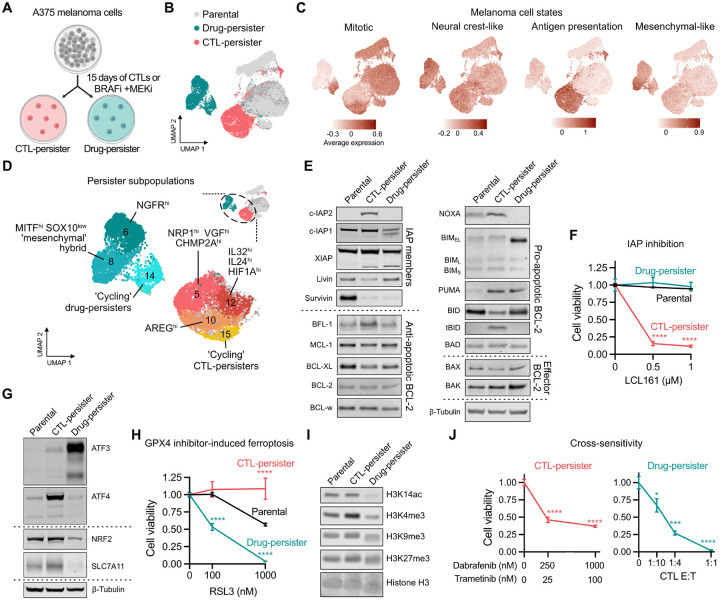
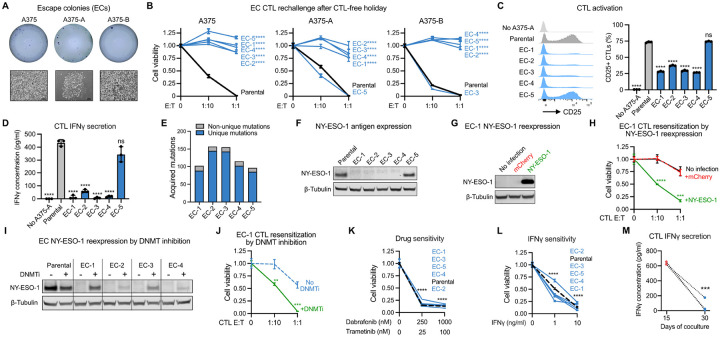
Drug-tolerant persister cancer cells were first reported fifteen years ago as a quiescent, reversible cell state which tolerates unattenuated cytotoxic drug stress. It remains unknown whether a similar phenomenon contributes to immune evasion. Here we report a persister state which survives weeks of direct cytotoxic T lymphocyte (CTL) attack. In contrast to previously known immune evasion mechanisms that avoid immune attack, antigenic persister cells robustly activate CTLs which deliver Granzyme B, secrete IFNγ, and induce tryptophan starvation resulting in apoptosis initiation. Instead of dying, persister cells paradoxically leverage apoptotic caspase activity to avoid inflammatory death. Furthermore, persister cells acquire mutations and epigenetic changes which enable outgrowth of CTL-resistant cells. Persister cell features are enriched in inflamed tumors which regressed during immunotherapy and in surgically resected human melanoma tissue under immune stress . These findings reveal a persister cell state which is a barrier to immune-mediated tumor clearance.
十五 年前首次报道了耐药物的持久性癌细胞,它是一种静止、可逆的细胞状态,能够耐受未减弱的细胞毒性药物应激。目前尚不清楚类似现象是否会导致免疫逃逸。在这里,我们报道了一种持久性状态,它能在数周的直接细胞毒性T淋巴细胞(CTL)攻击中存活下来。与先前已知的避免免疫攻击的免疫逃逸机制不同,抗原性持久性细胞强烈激活CTL,CTL释放颗粒酶B、分泌IFNγ,并诱导色氨酸饥饿,从而引发细胞凋亡。持久性细胞非但没有死亡,反而反常地利用凋亡半胱天冬酶的活性来避免炎症性死亡。此外,持久性细胞会发生突变和表观遗传变化,从而使抗CTL细胞得以生长。持久性细胞特征在免疫治疗期间消退的炎症性肿瘤以及免疫应激下手术切除的人类黑色素瘤组织中富集。这些发现揭示了一种持久性细胞状态,它是免疫介导的肿瘤清除的障碍。