
白细胞介素-21工程通过丰富代谢途径增强CD19特异性嵌合抗原受体自然杀伤细胞对B细胞淋巴瘤的活性。
Interleukin-21 engineering enhances CD19-specific CAR-NK cell activity against B-cell lymphoma via enriched metabolic pathways.
作者信息
He Bailin, Chen Hong, Wu Jiaxu, Qiu Shiqiu, Mai Qiusui, Zeng Qing, Wang Cong, Deng Shikai, Cai Zihong, Liu Xiaoli, Xuan Li, Li Chengyao, Zhou Hongsheng, Liu Qifa, Xu Na
机构信息
Department of Hematology, Nanfang Hospital, Southern Medical University, Guangzhou, China.
Guangdong Provincial Clinical Research Center for Hematologic Diseases, Nanfang Hospital, Southern Medical University, Guangzhou, China.
出版信息
Exp Hematol Oncol. 2025 Apr 2;14(1):51. doi: 10.1186/s40164-025-00639-2.
BACKGROUND
NK cells engineered to express interleukin-15 (IL-15) and a CD19-targeted chimeric antigen receptor (CAR) have been used to treat patients with relapsed and/or refractory B cell malignances, demonstrating encouraging outcomes and favorable safety profile. However, the effect of IL-21 in CAR-NK cell therapy remains unknown.
METHODS
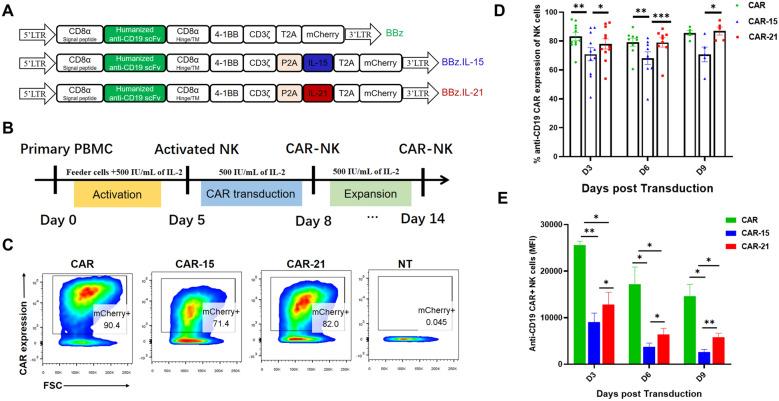
CD19-specific CAR with 4-1BB costimulatory domain and cytokine IL-21 or IL-15 was constructed and transduced into peripheral blood (PB)-derived NK cells to produce CD19-CAR-IL21 NK cells (CAR-21) or CD19-CAR-IL15 NK cells (CAR-15), respectively. The phenotypic profile, transcriptomic characteristics, functionality and anti-tumor activity of CAR-21 NK cells and CAR-15 NK cells were compared.
RESULTS
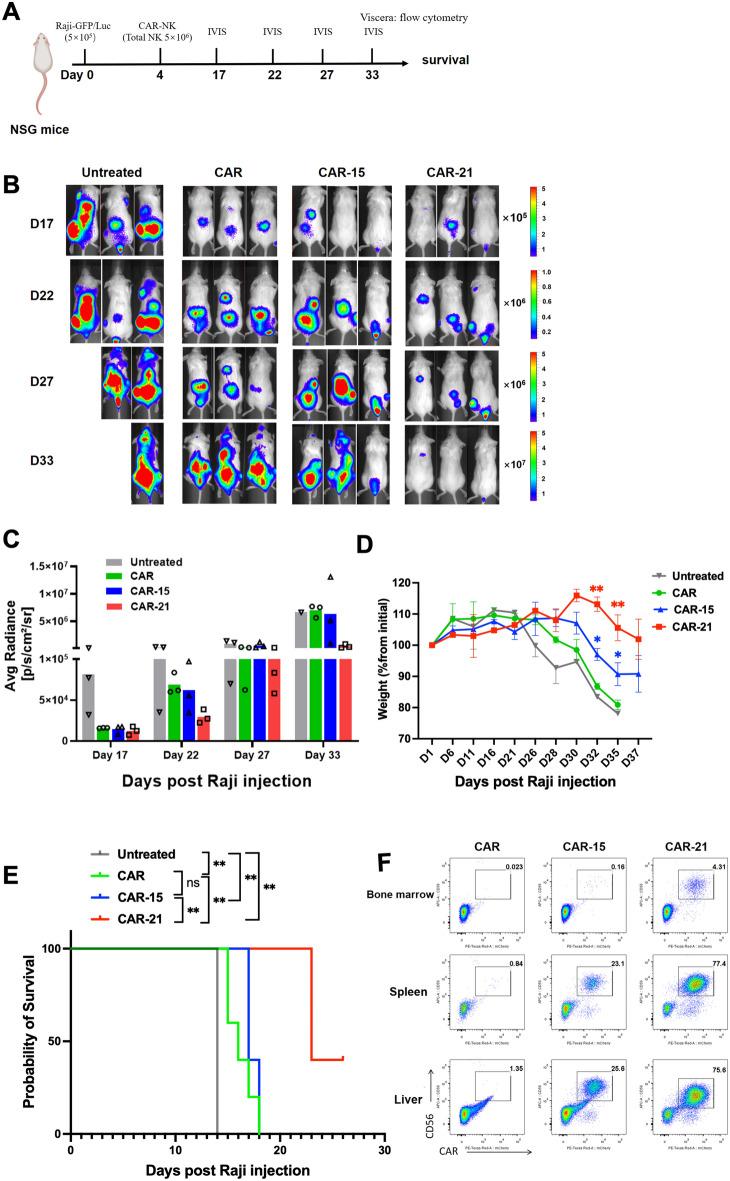
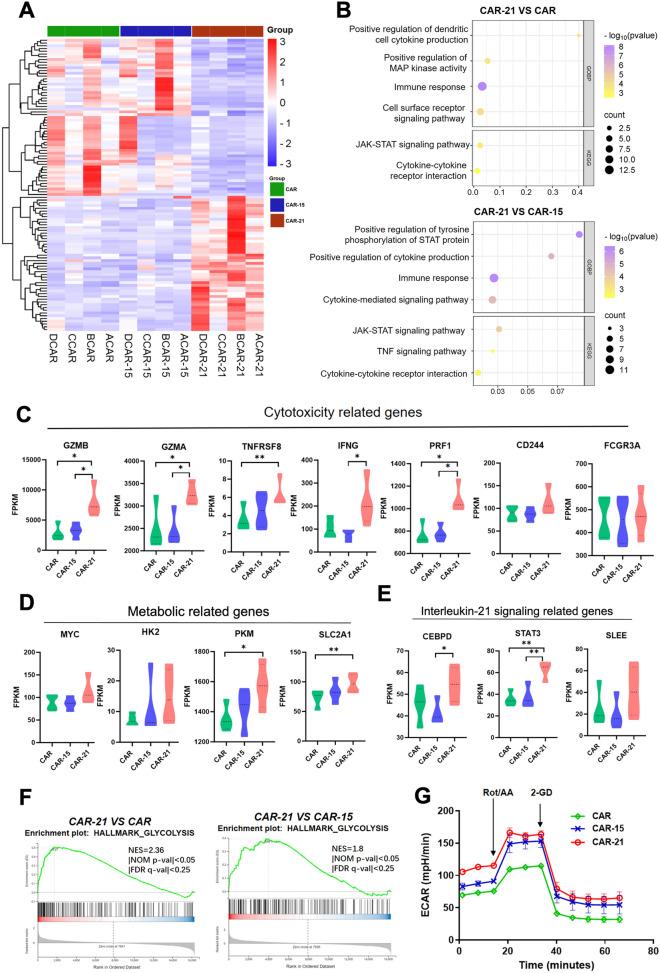
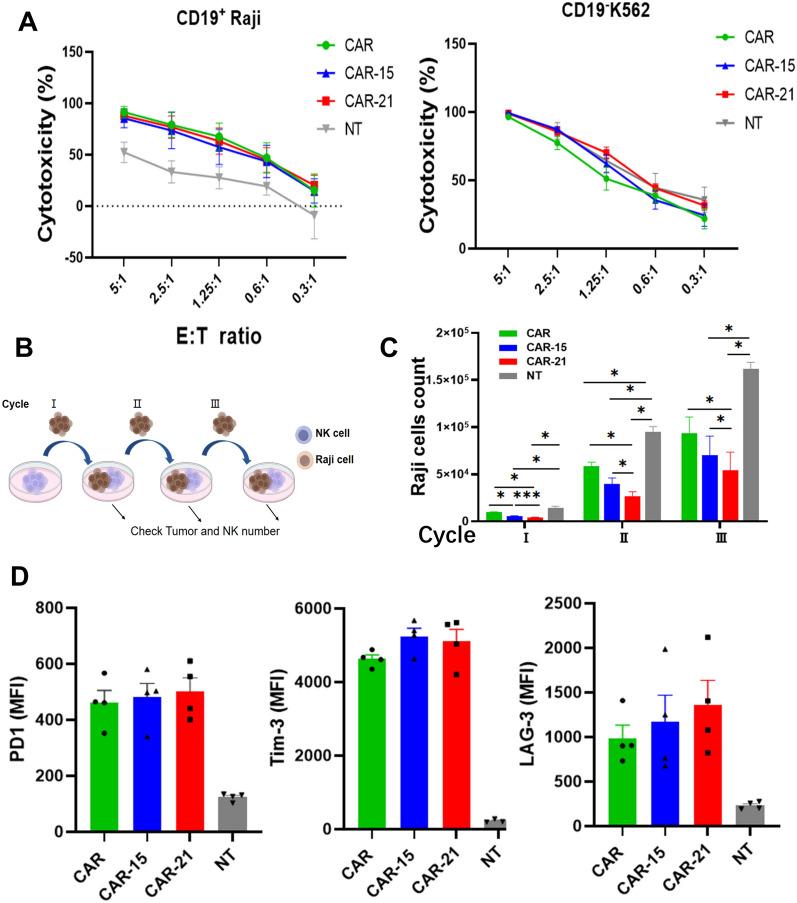
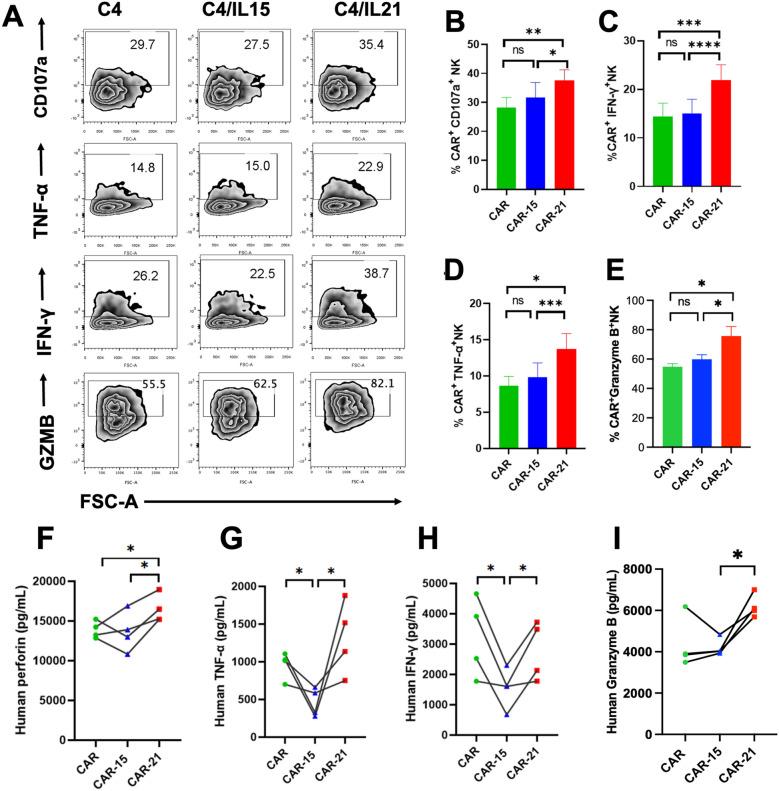
Compared with CAR-NK cells co-expressing IL-15, CAR-NK cells co-expressing IL-21 exhibited significantly increased IFN-γ, TNF-α and Granzyme B production, as well as degranulation, in response to CD19 Raji lymphoma cells, resulting in enhanced cytotoxic activity upon repetitive tumor stimulation. Furthermore, IL-21 co-expression improved the in vivo persistence of CAR-NK cells and significantly suppressed tumor growth in a xenograft Raji lymphoma murine model, leading to prolonged survival of CD19 tumor-bearing mice. RNA sequencing revealed that CAR-21 NK cells have a distinct transcriptomic signature characterized by enriched in cytokine, cytotoxicity, and metabolic related signaling, when compared with CAR-15 NK or CAR NK cells.
CONCLUSIONS
This study demonstrated that CD19-specific CAR-NK cells engineered to express IL-21 exhibit superior persistence and anti-tumor activity against CD19 tumor compared to CAR-NK cells co-expressing IL-15, which might be a promising therapeutic strategy for treating patients with relapse or refractory B cell malignances.
背景
经基因工程改造以表达白细胞介素-15(IL-15)和靶向CD19的嵌合抗原受体(CAR)的自然杀伤(NK)细胞已被用于治疗复发和/或难治性B细胞恶性肿瘤患者,显示出令人鼓舞的疗效和良好的安全性。然而,IL-21在CAR-NK细胞疗法中的作用仍不清楚。
方法
构建具有4-1BB共刺激结构域和细胞因子IL-21或IL-15的CD19特异性CAR,并将其转导至外周血(PB)来源的NK细胞中,分别产生CD19-CAR-IL21 NK细胞(CAR-21)或CD19-CAR-IL15 NK细胞(CAR-15)。比较CAR-21 NK细胞和CAR-15 NK细胞的表型特征、转录组学特征、功能和抗肿瘤活性。
结果
与共表达IL-15的CAR-NK细胞相比,共表达IL-21的CAR-NK细胞在受到CD19 Raji淋巴瘤细胞刺激时,IFN-γ、TNF-α和颗粒酶B的产生以及脱颗粒作用显著增加,从而在重复肿瘤刺激后增强了细胞毒性活性。此外,共表达IL-21改善了CAR-NK细胞在体内的持久性,并在异种移植Raji淋巴瘤小鼠模型中显著抑制肿瘤生长,延长了荷CD19肿瘤小鼠的生存期。RNA测序显示,与CAR-15 NK或CAR NK细胞相比,CAR-21 NK细胞具有独特的转录组特征,其特征是细胞因子、细胞毒性和代谢相关信号富集。
结论
本研究表明,经基因工程改造以表达IL-21的CD19特异性CAR-NK细胞与共表达IL-15的CAR-NK细胞相比,对CD19肿瘤表现出更强的持久性和抗肿瘤活性,这可能是治疗复发或难治性B细胞恶性肿瘤患者的一种有前景的治疗策略。
 Zotero 插件