Experimental Immunology, Department for Children and Adolescents Medicine, University Hospital Frankfurt, Goethe University, Frankfurt am Main, Germany.
Division of Pediatric Stem Cell Transplantation and Immunology, Department for Children and Adolescents Medicine, University Hospital Frankfurt, Goethe University, Frankfurt am Main, Germany.
Front Immunol. 2020 Jan 24;10:3123. doi: 10.3389/fimmu.2019.03123. eCollection 2019.
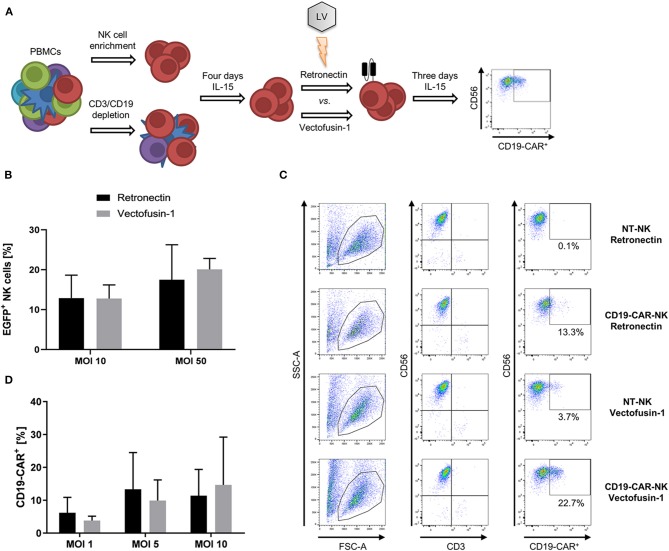
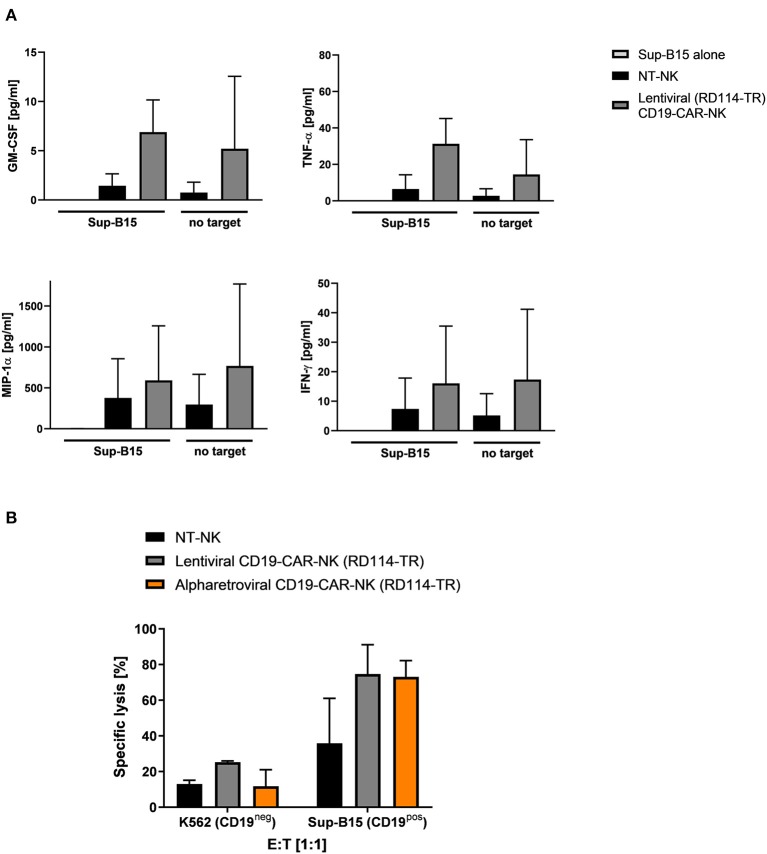
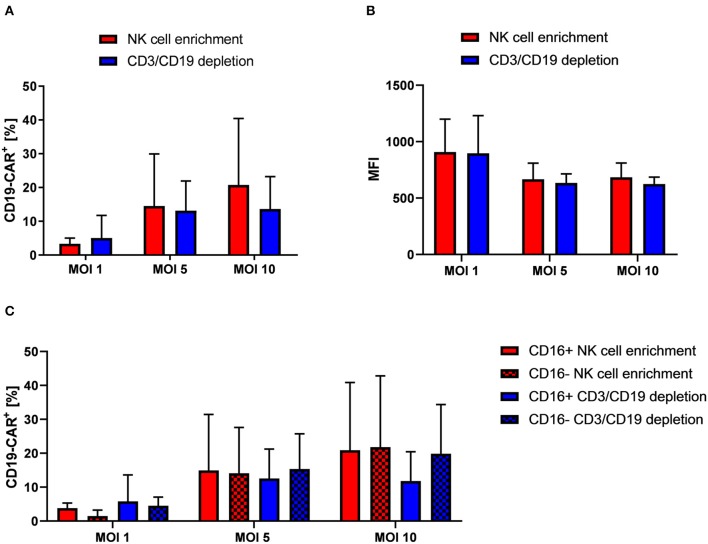
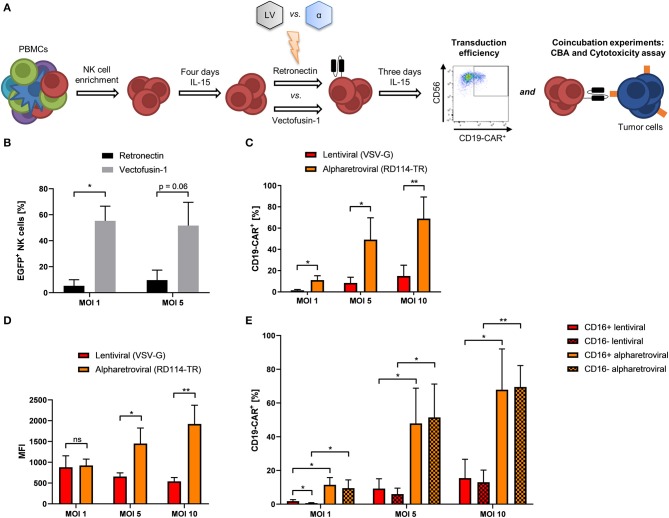
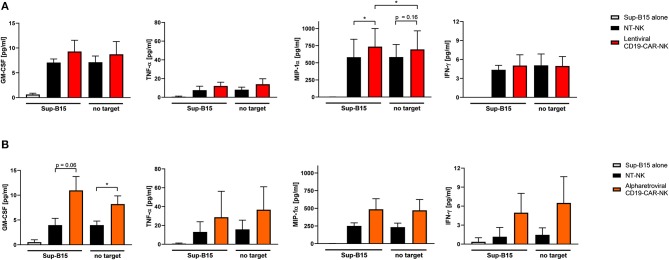
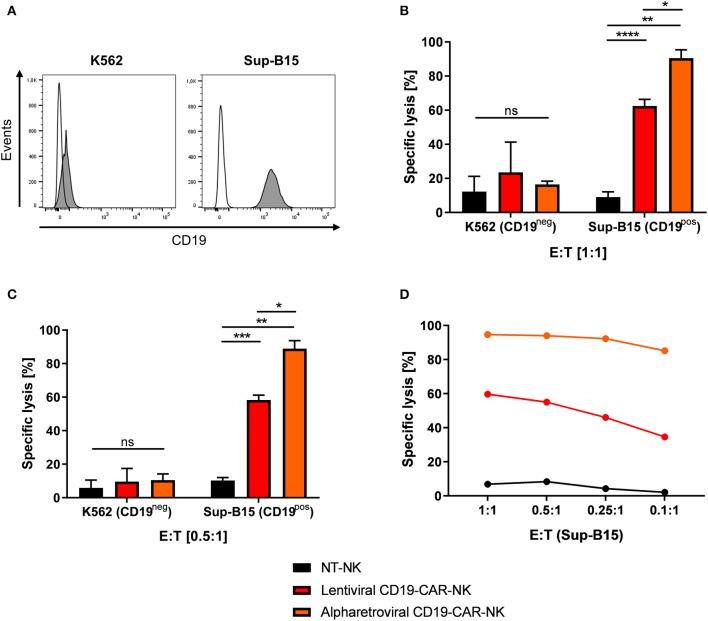
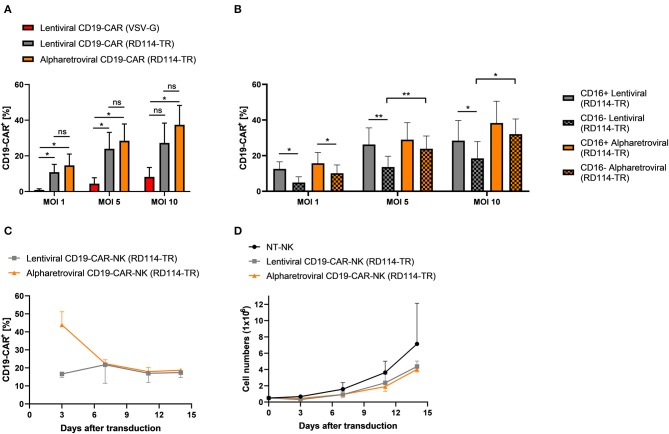
Autologous chimeric antigen receptor-modified (CAR) T cells with specificity for CD19 showed potent antitumor efficacy in clinical trials against relapsed and refractory B-cell acute lymphoblastic leukemia (B-ALL). Contrary to T cells, natural killer (NK) cells kill their targets in a non-antigen-specific manner and do not carry the risk of inducing graft vs. host disease (GvHD), allowing application of donor-derived cells in an allogenic setting. Hence, unlike autologous CAR-T cells, therapeutic CD19-CAR-NK cells can be generated as an off-the-shelf product from healthy donors. Nevertheless, genetic engineering of peripheral blood (PB) derived NK cells remains challenging and optimized protocols are needed. In our study, we aimed to optimize the generation of CD19-CAR-NK cells by retroviral transduction to improve the high antileukemic capacity of NK cells. We compared two different retroviral vector platforms, the lentiviral and alpharetroviral, both in combination with two different transduction enhancers (Retronectin and Vectofusin-1). We further explored different NK cell isolation techniques (NK cell enrichment and CD3/CD19 depletion) to identify the most efficacious methods for genetic engineering of NK cells. Our results demonstrated that transduction of NK cells with RD114-TR pseudotyped retroviral vectors, in combination with Vectofusin-1 was the most efficient method to generate CD19-CAR-NK cells. Retronectin was potent in enhancing lentiviral/VSV-G gene delivery to NK cells but not alpharetroviral/RD114-TR. Furthermore, the Vectofusin-based transduction of NK cells with CD19-CARs delivered by alpharetroviral/RD114-TR and lentiviral/RD114-TR vectors outperformed lentiviral/VSV-G vectors. The final generated CD19-CAR-NK cells displayed superior cytotoxic activity against CD19-expressing target cells when compared to non-transduced NK cells achieving up to 90% specific killing activity. In summary, our findings present the use of RD114-TR pseudotyped retroviral particles in combination with Vectofusin-1 as a successful strategy to genetically modify PB-derived NK cells to achieve highly cytotoxic CD19-CAR-NK cells at high yield.
自体嵌合抗原受体修饰 (CAR) T 细胞对 CD19 具有特异性,在临床试验中对复发和难治性 B 细胞急性淋巴细胞白血病 (B-ALL) 表现出强大的抗肿瘤疗效。与 T 细胞不同,自然杀伤 (NK) 细胞以非抗原特异性方式杀死其靶标,并且不会引发移植物抗宿主病 (GvHD) 的风险,从而允许在同种异体环境中应用供体来源的细胞。因此,与自体 CAR-T 细胞不同,治疗性 CD19-CAR-NK 细胞可以作为来自健康供体的现成产品生成。然而,外周血 (PB) 衍生 NK 细胞的基因工程仍然具有挑战性,需要优化方案。在我们的研究中,我们旨在通过逆转录病毒转导优化 CD19-CAR-NK 细胞的生成,以提高 NK 细胞的高抗白血病能力。我们比较了两种不同的逆转录病毒载体平台,即慢病毒和阿尔法逆转录病毒,两者均与两种不同的转导增强剂 (Retronectin 和 Vectofusin-1) 结合使用。我们进一步探索了不同的 NK 细胞分离技术 (NK 细胞富集和 CD3/CD19 耗尽),以确定基因工程 NK 细胞最有效的方法。我们的结果表明,用 RD114-TR 假型逆转录病毒载体转导 NK 细胞,结合 Vectofusin-1 是生成 CD19-CAR-NK 细胞最有效的方法。Retronectin 在增强 NK 细胞的慢病毒/VSV-G 基因转导方面很有效,但对阿尔法逆转录病毒/RD114-TR 无效。此外,用基于 Vectofusin 的 CD19-CAR 转导 NK 细胞,用阿尔法逆转录病毒/RD114-TR 和慢病毒/RD114-TR 载体转导,优于慢病毒/VSV-G 载体。最终生成的 CD19-CAR-NK 细胞对表达 CD19 的靶细胞表现出优越的细胞毒性活性,与未转导的 NK 细胞相比,达到了高达 90%的特异性杀伤活性。总之,我们的研究结果表明,使用 RD114-TR 假型逆转录病毒颗粒与 Vectofusin-1 联合使用是一种成功的策略,可以对 PB 来源的 NK 细胞进行基因修饰,以高产率获得高细胞毒性的 CD19-CAR-NK 细胞。