Fang Yimin, Chen Haiyan, Liu Yunhua, Jiang Kai, Qian Yucheng, Wei Jingsun, Fu Dongliang, Yang Hang, Dai Siqi, Jin Tian, Bu Tongtong, Ding Kefeng
Department of Colorectal Surgery and Oncology, (Key Laboratory of Cancer Prevention and Intervention, China National Ministry of Education, Key Laboratory of Molecular Biology in Medical Sciences, Zhejiang Province, China), the Second Affiliated Hospital, Zhejiang University School of Medicine, Zhejiang, Hangzhou, China.
Zhejiang Provincial Clinical Research Center for CANCER, Hangzhou, China.
J Cell Mol Med. 2025 Apr;29(7):e70519. doi: 10.1111/jcmm.70519.
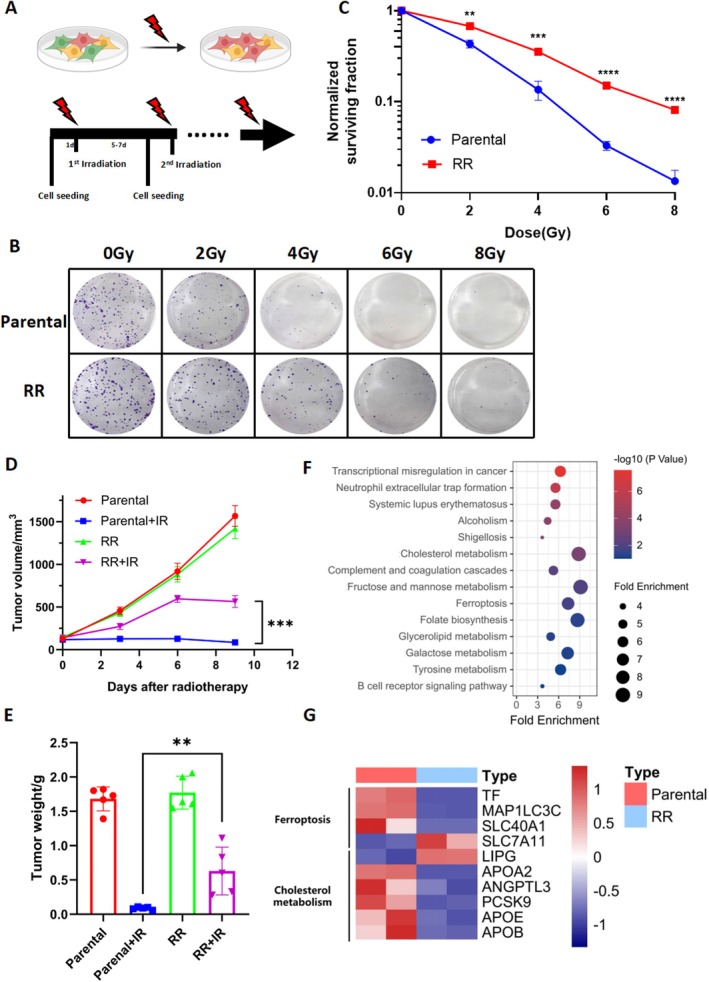
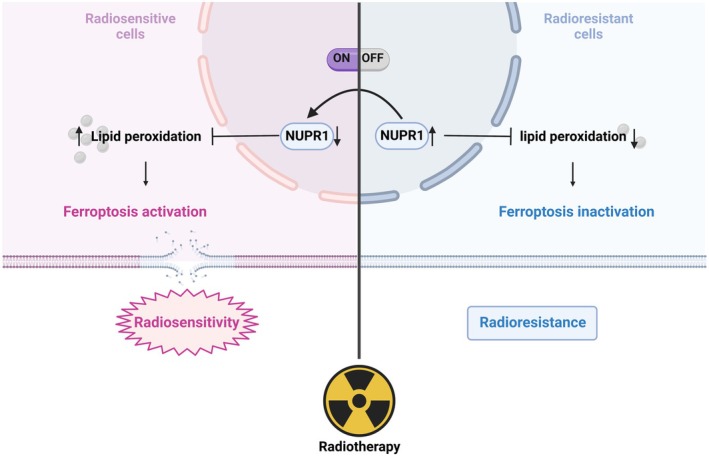
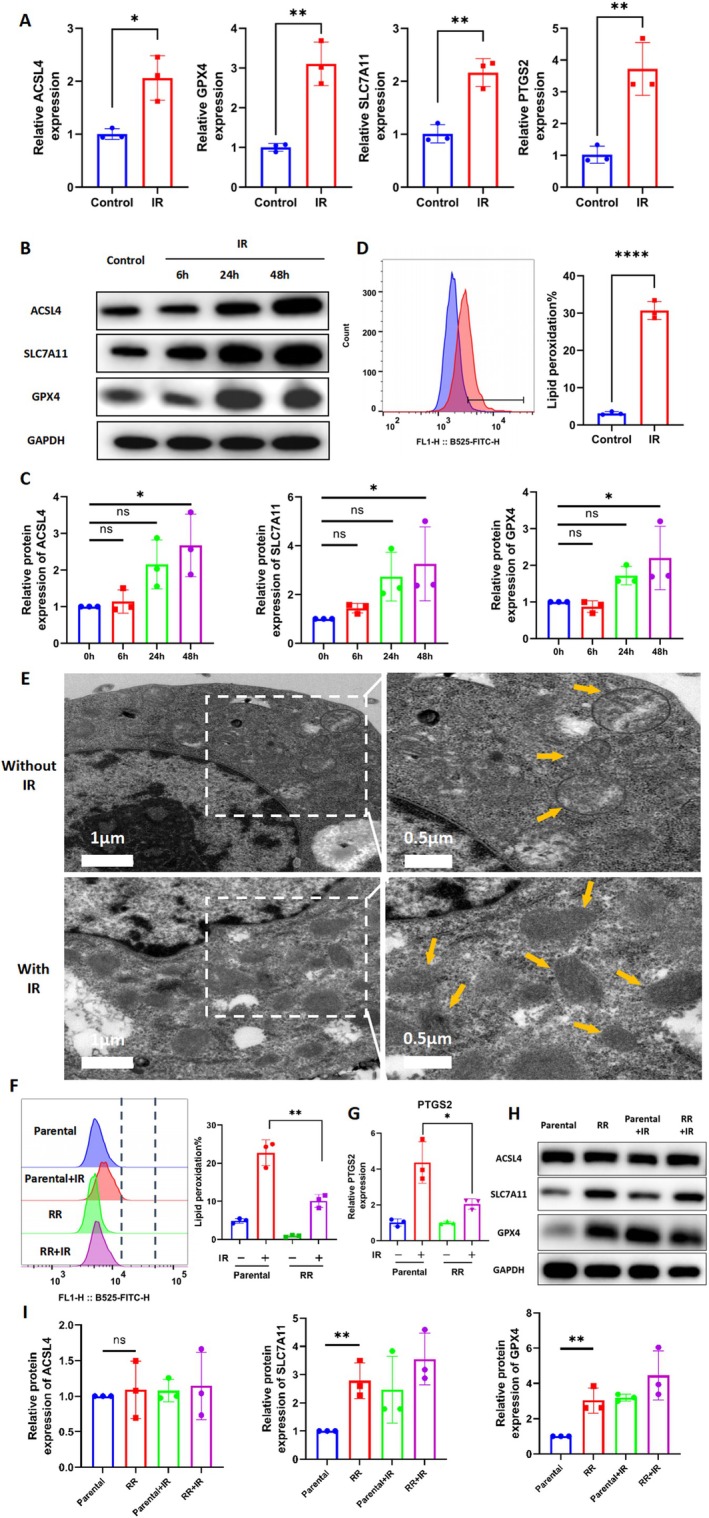
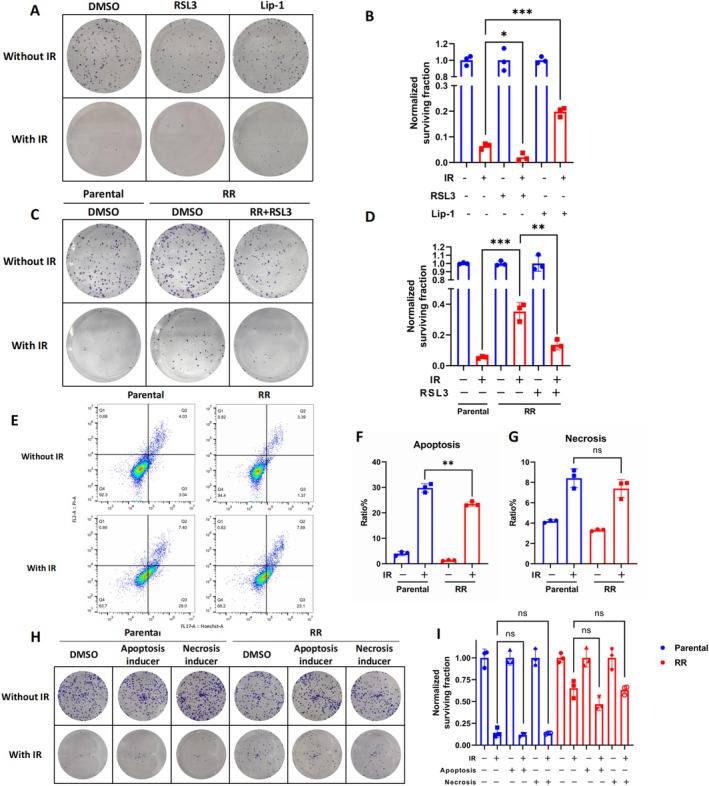
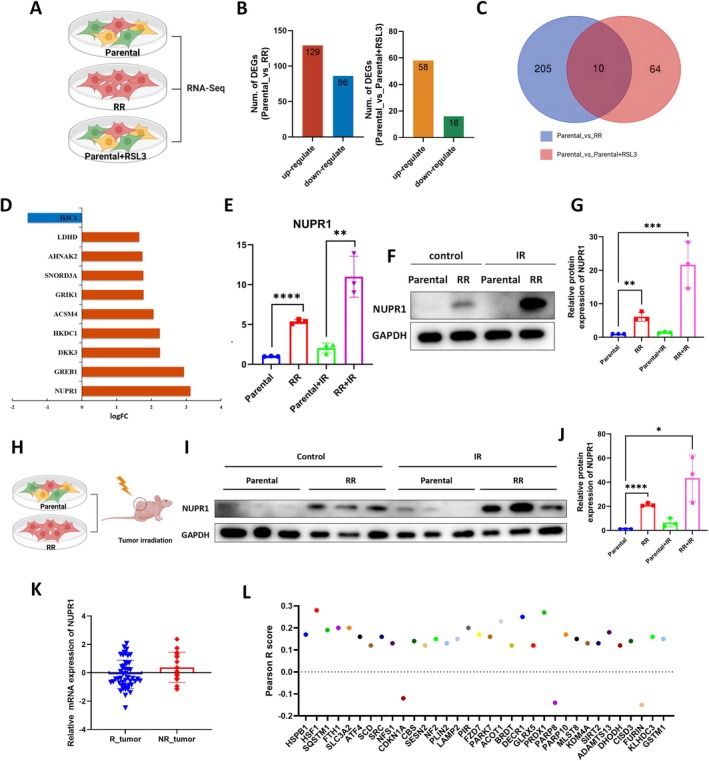
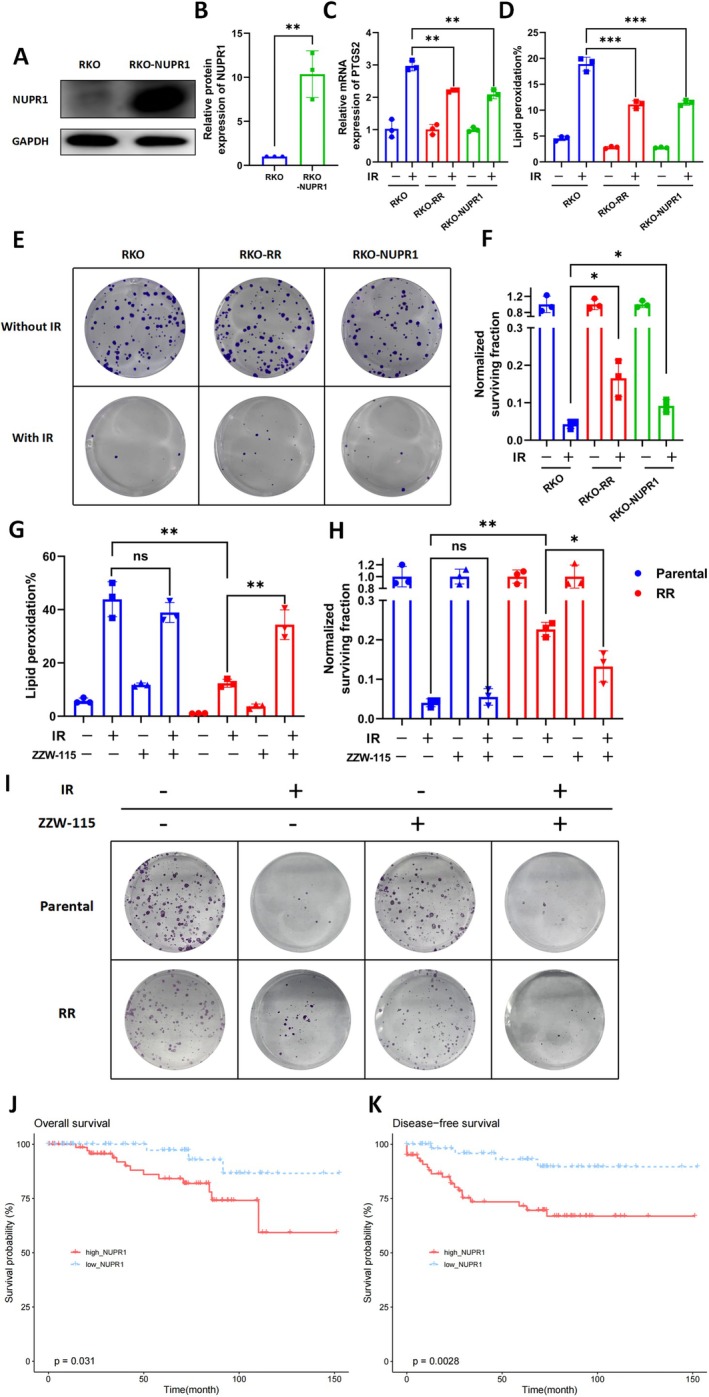
Radioresistance is a major clinical challenge and the underlying mechanism has not been thoroughly elucidated. In this study, a radioresistant (RR) cell line is established to explore the transcriptomic signatures of radioresistance in colorectal cancer (CRC). KEGG enriched pathway analysis demonstrated that ferroptosis is inactivated in RR cells. Further detection confirmed that radiotherapy can promote ferroptosis, and ferroptosis inactivation is one of the hallmarks of radioresistance in CRC. What's more, induction of ferroptosis can restore the radiosensitivity of CRC cells. Then, we performed RNA sequencing to compare gene expression between parental and RR cells, and cells pretreated with or without RSL3. Via high-throughput screening, NUPR1 was identified as a potential candidate for ferroptosis-mediated radioresistance in CRC. CRC cells can acquire radiation resistance by NUPR1-mediated ferroptosis suppression in the NUPR1-overexpressing cell line. More importantly, ZZW-115, an NUPR1 inhibitor, can sensitise RR cells to radiotherapy. Overall, our findings identify ferroptosis inactivation linked with resistance to radiotherapy. Besides, NUPR1 can promote radiation resistance by inhibiting ferroptosis, and targeting NUPR1 may be a potential strategy to relieve radioresistance associated with ferroptosis in CRC.
放射抗性是一个主要的临床挑战,其潜在机制尚未完全阐明。在本研究中,建立了一种放射抗性(RR)细胞系,以探索结直肠癌(CRC)中放射抗性的转录组特征。KEGG富集通路分析表明,铁死亡在RR细胞中失活。进一步检测证实,放疗可促进铁死亡,铁死亡失活是CRC放射抗性的标志之一。此外,诱导铁死亡可恢复CRC细胞的放射敏感性。然后,我们进行了RNA测序,以比较亲代细胞和RR细胞之间以及用或不用RSL3预处理的细胞之间的基因表达。通过高通量筛选,NUPR1被确定为CRC中铁死亡介导的放射抗性的潜在候选基因。在过表达NUPR1的细胞系中,CRC细胞可通过NUPR1介导的铁死亡抑制获得辐射抗性。更重要的是,NUPR1抑制剂ZZW-115可使RR细胞对放疗敏感。总体而言,我们的研究结果确定了铁死亡失活与放疗抗性相关。此外,NUPR1可通过抑制铁死亡促进辐射抗性,靶向NUPR1可能是缓解CRC中铁死亡相关放射抗性的潜在策略。