Giovarelli Matteo, Zecchini Silvia, Casati Silvia Rosanna, Lociuro Laura, Gjana Oriola, Mollica Luca, Pisanu Elena, Mbissam Harcel Djaya, Cappellari Ornella, De Santis Chiara, Arcari Alessandro, Bigot Anne, Clerici Giuditta, Catalani Elisabetta, Del Quondam Simona, Andolfo Annapaola, Braccia Clarissa, Cattaneo Maria Grazia, Banfi Cristina, Brunetti Dario, Mocciaro Emanuele, De Luca Annamaria, Clementi Emilio, Cervia Davide, Perrotta Cristiana, De Palma Clara
Department of Biomedical and Clinical Sciences (DIBIC), Università degli Studi di Milano, Milan, Italy.
Department of Medical Biotechnology and Translational Medicine (BioMeTra), Università degli Studi di Milano; Segrate, Milan, Italy.
Cell Death Dis. 2025 Apr 7;16(1):259. doi: 10.1038/s41419-025-07595-z.
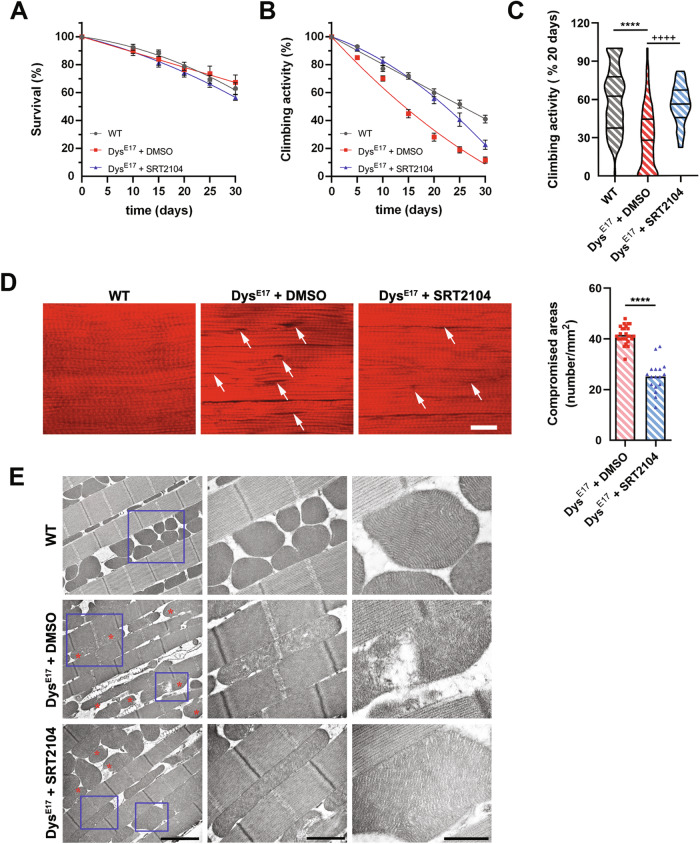
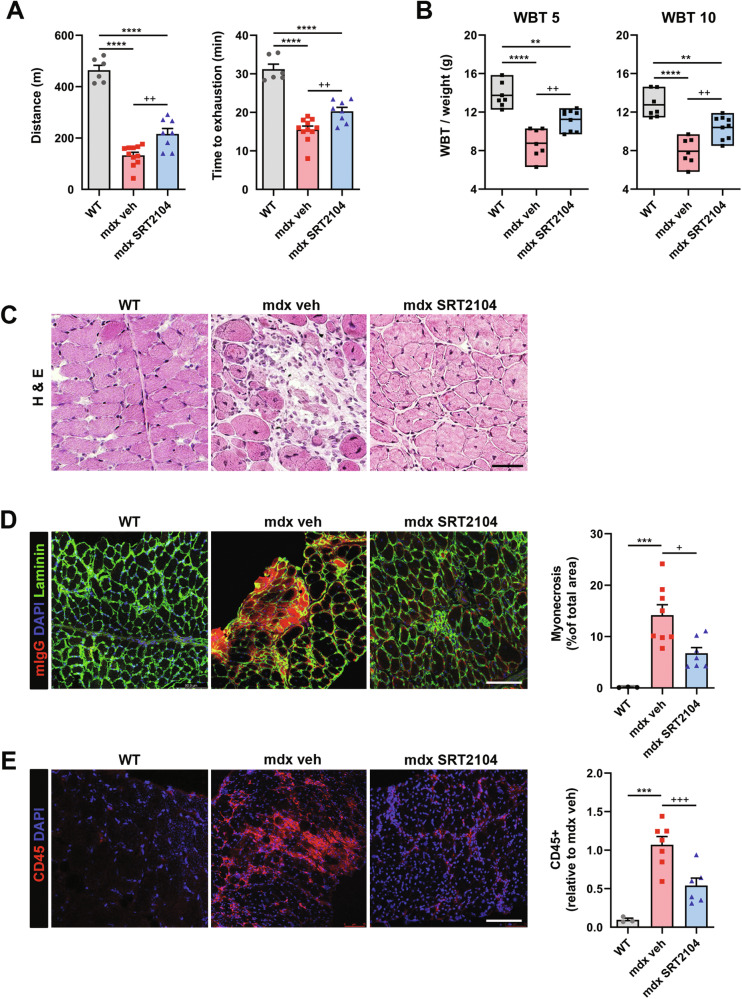
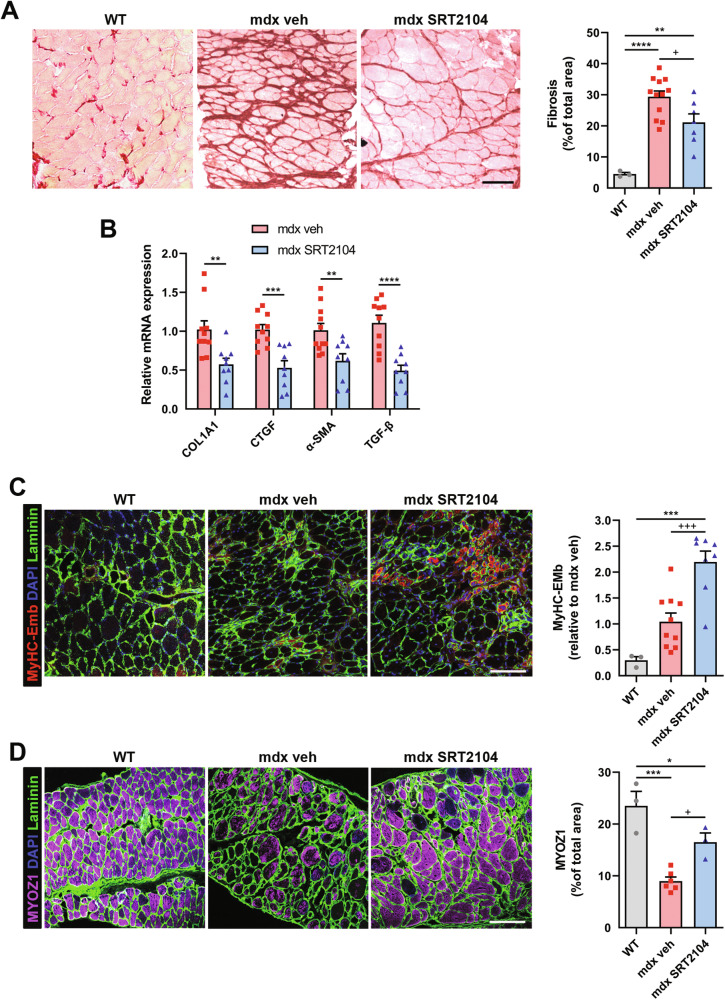
Duchenne muscular dystrophy (DMD) is a devastating genetic disorder, whose management is still a major challenge, despite progress in genetic and pharmacological disease-modifying treatments have been made. Mitochondrial dysfunctions contribute to DMD, however, there are no effective mitochondrial therapies for DMD. SIRT1 is a NAD-dependent deacetylase that controls several key processes and whose impairment is involved in determining mitochondrial dysfunction in DMD. In addition to well-known resveratrol, other potent selective activators of SIRT1 exist, with better pharmacokinetics properties and a safer profile. Among these, SRT2104 is the most promising and advanced in clinical studies. Here we unveil the beneficial effects of SRT2104 in flies, mice, and patient-derived myoblasts as different models of DMD, demonstrating an anti-inflammatory, anti-fibrotic, and pro-regenerative action of the drug. We elucidate, by molecular dynamics simulations, that a conformational selection mechanism is responsible for the activation of SIRT1. Further, the impact of SRT2104 in reshaping muscle proteome and acetylome profiles has been investigated, highlighting effects that mimic those induced by exercise. Overall, our data suggest SRT2104 as a possible therapeutic candidate to successfully counteract DMD progression.
杜氏肌营养不良症(DMD)是一种毁灭性的遗传疾病,尽管在基因和药物疾病修饰治疗方面取得了进展,但其治疗仍然是一项重大挑战。线粒体功能障碍与DMD有关,然而,目前尚无针对DMD的有效线粒体疗法。SIRT1是一种依赖烟酰胺腺嘌呤二核苷酸(NAD)的脱乙酰酶,它控制着几个关键过程,其功能受损与DMD中线粒体功能障碍的发生有关。除了著名的白藜芦醇外,还存在其他有效的SIRT1选择性激活剂,它们具有更好的药代动力学特性和更安全的特性。其中,SRT2104是最有前景且在临床研究中进展最为先进的。在此,我们揭示了SRT2104在果蝇、小鼠和患者来源的成肌细胞(作为DMD的不同模型)中的有益作用,证明了该药物具有抗炎、抗纤维化和促进再生的作用。通过分子动力学模拟,我们阐明了一种构象选择机制负责SIRT1的激活。此外,还研究了SRT2104对重塑肌肉蛋白质组和乙酰化蛋白质组图谱的影响,突出了其模拟运动诱导效应的作用。总体而言,我们的数据表明SRT2104可能是成功对抗DMD进展的治疗候选药物。