Guo Qing, Li Zhao-Feng, Hu Dong-Yan, Li Pei-Jun, Wu Kai-Nian, Fan Hui-Hui, Deng Jie, Wu Hong-Mei, Zhang Xiong, Zhu Jian-Hong
Institute of Nutrition and Diseases and Center for Research, School of Public Health, Wenzhou Medical University, Wenzhou, China.
Department of Neurology and Institute of Geriatric Neurology, the Second Affiliated Hospital and Yuying Children's Hospital, Wenzhou Medical University, Wenzhou, China.
EMBO J. 2025 May;44(10):2906-2927. doi: 10.1038/s44318-025-00430-3. Epub 2025 Apr 7.
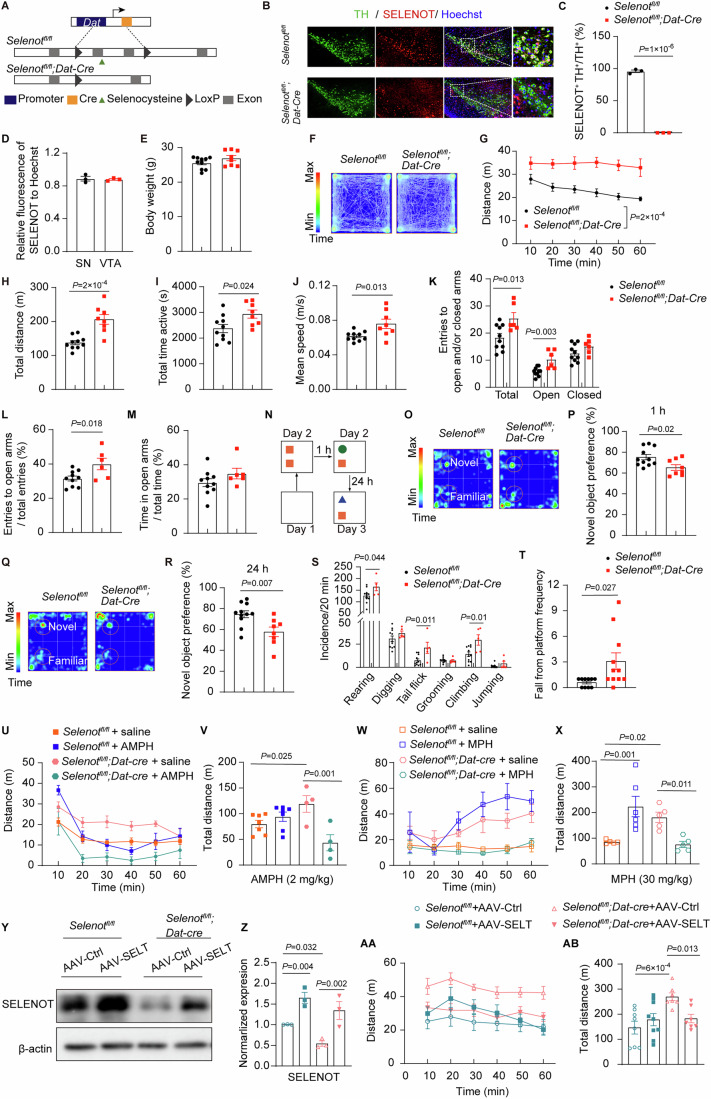
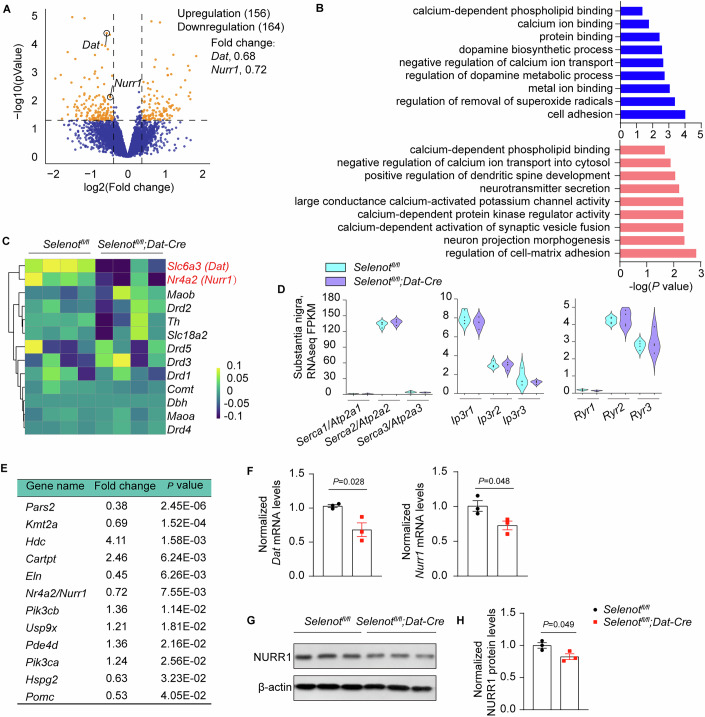
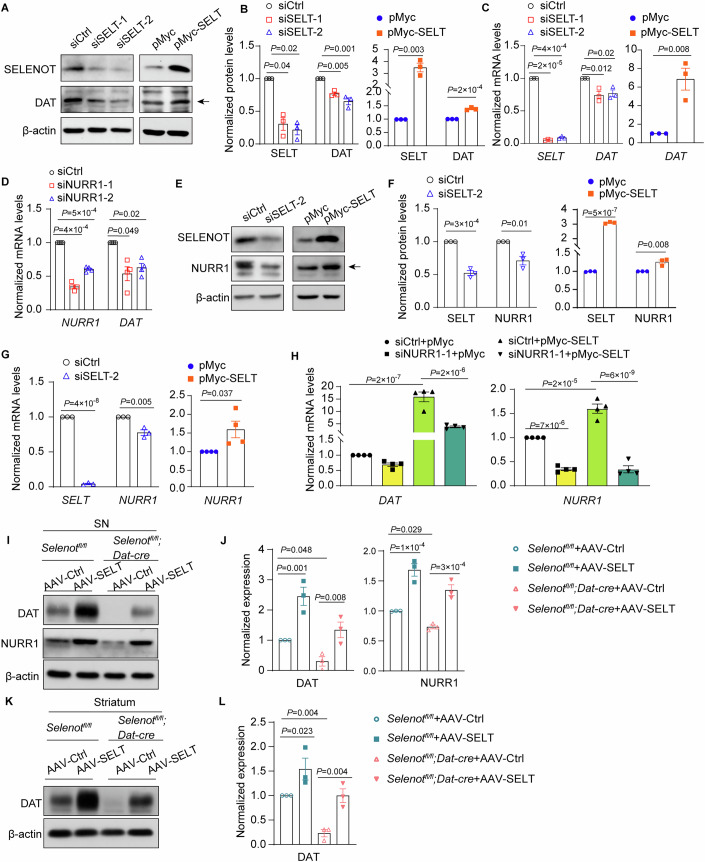
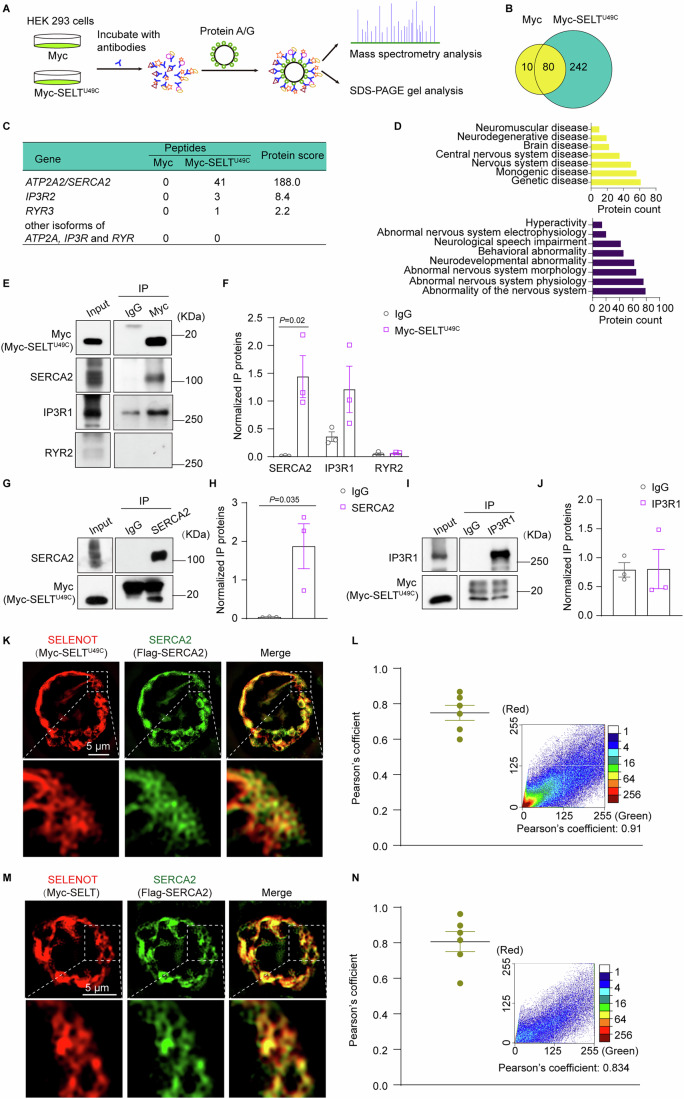
Dopaminergic neuron dysfunction has been implicated in multiple neurological and psychiatric disorders. SELENOT is a selenocysteine-containing protein of the ER membrane with antioxidant and neuroprotective activities, but its pathophysiological role in dopaminergic neurons remains unclear. In this study we show that male mice with SELENOT-deficient dopaminergic neurons exhibit attention deficit/hyperactivity disorder (ADHD)-like symptoms, including hyperlocomotion, recognition memory deficits, repetitive movements, and impulsivity. Dopamine metabolism, extrasynaptic dopamine levels, spontaneous excitatory postsynaptic currents in the striatum, and electroencephalography theta power are all enhanced in these animals, while dopaminergic neurons in the substantia nigra are slightly reduced but with normal firing and cellular stress levels. Our results also indicate that the expression of dopamine transporter (DAT) is significantly reduced in the absence of SELENOT. Both the development of ADHD-like phenotypes and DAT downregulation are also observed when SELENOT is absent from the whole brain, but not when its conditional knockout is restricted to astrocytes. Mechanistically, we show that SELENOT downregulates DAT expression via interaction with SERCA2 of the ER -but not with IP3R or RYR- to regulate the ER-cytosol Ca flux and, subsequently, the activity of transcription factor NURR1 and the expression levels of DAT. Treatment with amphetamine or methylphenidate, which are commonly used to treat ADHD, reverses the hyperactivity observed in mice with SELENOT-deficient dopaminergic neurons. Our study demonstrates that SELENOT in mouse dopaminergic neurons maintains proper dopamine signaling in the midbrain against the development of ADHD-like behaviors.
多巴胺能神经元功能障碍与多种神经和精神疾病有关。SELENOT是一种内质网膜含硒半胱氨酸的蛋白质,具有抗氧化和神经保护活性,但其在多巴胺能神经元中的病理生理作用仍不清楚。在本研究中,我们发现多巴胺能神经元缺乏SELENOT的雄性小鼠表现出注意力缺陷/多动障碍(ADHD)样症状,包括活动过度、识别记忆缺陷、重复运动和冲动。这些动物的多巴胺代谢、突触外多巴胺水平、纹状体中的自发性兴奋性突触后电流以及脑电图θ波功率均增强,而黑质中的多巴胺能神经元略有减少,但放电和细胞应激水平正常。我们的结果还表明,在缺乏SELENOT的情况下,多巴胺转运体(DAT)的表达显著降低。当全脑缺乏SELENOT时,也观察到ADHD样表型的发展和DAT下调,但当其条件性敲除仅限于星形胶质细胞时则未观察到。从机制上讲,我们表明SELENOT通过与内质网的SERCA2相互作用下调DAT表达,而不是与IP3R或RYR相互作用,以调节内质网-细胞质钙通量,进而调节转录因子NURR1的活性和DAT的表达水平。使用常用于治疗ADHD的苯丙胺或哌甲酯治疗可逆转多巴胺能神经元缺乏SELENOT的小鼠中观察到的多动。我们的研究表明,小鼠多巴胺能神经元中的SELENOT可维持中脑适当的多巴胺信号,以防止出现ADHD样行为。