Hadžiomerović Nedžad, Šunje-Rizvan Amila, Maksimović Alan, Šatrović Lejla, Tandir Faruk
Department of Basic Sciences of Veterinary Medicine, Veterinary Faculty, University of Sarajevo, Sarajevo, Bosnia and Herzegovina.
Department of Clinical Sciences of Veterinary Medicine, Veterinary Faculty, University of Sarajevo, Sarajevo, Bosnia and Herzegovina.
Open Vet J. 2025 Feb;15(2):863-870. doi: 10.5455/OVJ.2025.v15.i2.35. Epub 2025 Feb 28.
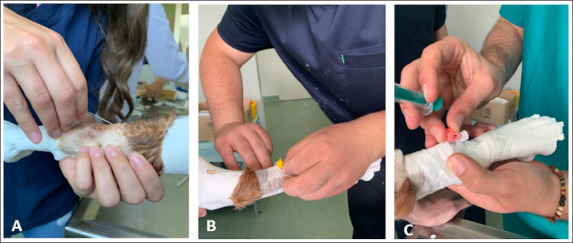
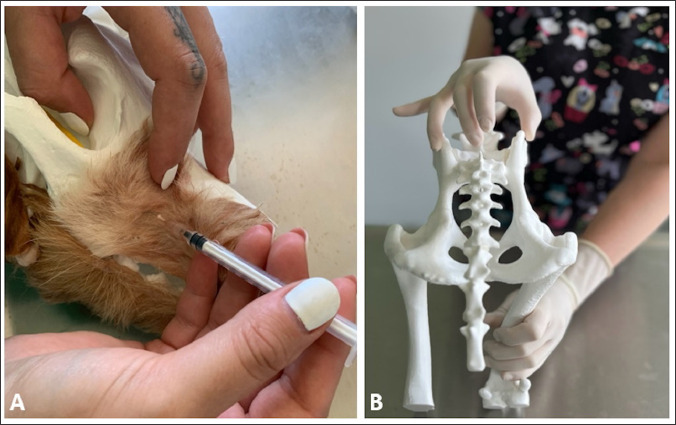
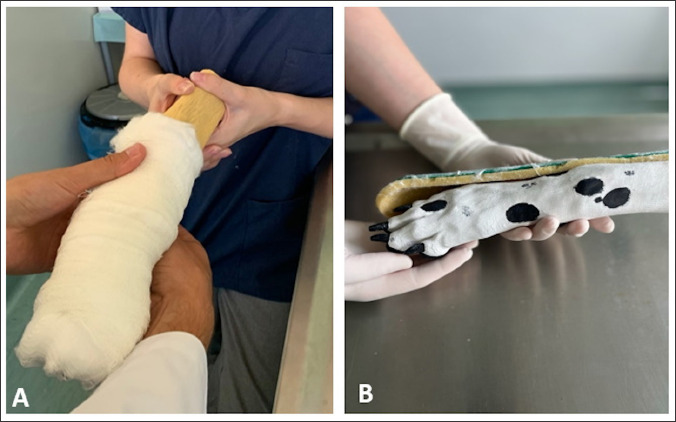
Three-dimensional printing is used in veterinary medicine to produce precise physical models for education, research, and training. As simulation-based approaches in veterinary education continually improve, we are exploring the applicability of three dimensional (3D) printing technology for this purpose.
The aim of this study was to evaluate the level of student satisfaction, motivation, and confidence with the introduction of 3D-printed models in veterinary clinical training.
A total of 57 students from the University of Sarajevo-Veterinary Faculty were included in the study. The groups were created according to the previous clinical training: third-year students with dominant observational and little active participation, fourth-year students with modest active participation, and fifth-year students with high prominent active participation in the clinical work. The students attended the theoretical review and practical presentation prior to their work on 3D printing models. Upon completion of the activity, students were given a survey that included questions divided into four categories: general satisfaction, comparison with traditional teaching methods, interactivity and practical application, and technical characteristics.
Students exhibited a positive attitude toward the use of the three dimensional printing (3DP) models as clinical simulators. This innovative approach could reduce stress when transitioning to work with live animals while enhancing interest in clinical work.
The significant benefits of the 3DP include enhanced durability, low production costs, and a significant reduction in the number of cadavers needed for educational purposes.
三维打印技术在兽医学中用于制作精确的物理模型,以用于教育、研究和培训。随着兽医学教育中基于模拟的方法不断改进,我们正在探索三维(3D)打印技术在此方面的适用性。
本研究旨在评估在兽医临床培训中引入3D打印模型后学生的满意度、积极性和自信心水平。
萨拉热窝大学兽医学院的57名学生参与了本研究。根据之前的临床培训情况将学生分组:三年级学生主要是观察,很少积极参与;四年级学生有适度的积极参与;五年级学生在临床工作中有高度显著的积极参与。学生们在进行3D打印模型工作之前参加了理论复习和实践展示。活动结束后,给学生发放了一份调查问卷,问题分为四类:总体满意度、与传统教学方法的比较、互动性和实际应用以及技术特性。
学生们对使用三维打印(3DP)模型作为临床模拟器持积极态度。这种创新方法可以在过渡到与活体动物工作时减轻压力,同时提高对临床工作的兴趣。
3DP的显著优点包括增强耐用性、降低生产成本以及大幅减少教育所需的尸体数量。