Tait Carol, Camilleri Josette, Blundell Katherine
Dundee Hospital and Research School, University of Dundee, Dundee, United Kingdom.
Dentistry, School of Health Sciences, College of Medicine and Health, University of Birmingham, Birmingham, United Kingdom.
Br Dent J. 2025 Apr;238(7):487-496. doi: 10.1038/s41415-025-8562-1. Epub 2025 Apr 11.
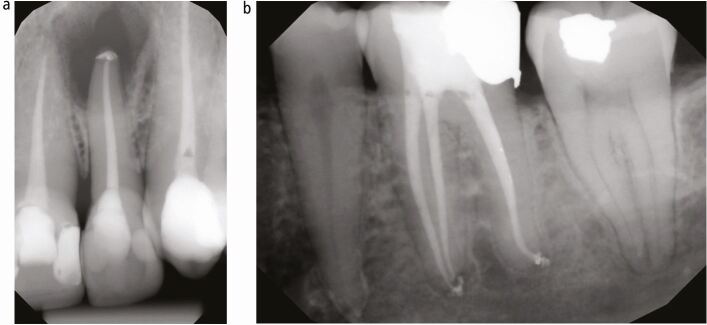
Once the root canal space is shaped and disinfected, it must be sealed to prevent recontamination, which can compromise treatment success and lead to reinfection. This crucial phase of root canal therapy is known as obturation - a term derived from the Latin obturare, meaning to block, close, or obstruct. The primary goal of obturation is to create a bacteria-tight/fluid-tight seal within the root canal system, preventing bacterial ingress and entombing any residual microorganisms that may remain after cleaning and shaping. Achieving an optimal seal requires a thorough understanding of the various materials and techniques available, as well as their respective advantages and limitations. This paper provides a comprehensive overview of the materials and clinical techniques used in root canal obturation, including traditional and contemporary approaches. Additionally, it explores the rationale behind material selection and technique adaptation, equipping clinicians with the knowledge to make informed decisions tailored to individual clinical scenarios. By evaluating the properties and performance of different sealers and obturation methods, this paper aims to guide practitioners toward the most effective and predictable outcomes in endodontic treatment.
一旦根管空间被预备和消毒,就必须进行封闭以防止再污染,否则会影响治疗效果并导致再感染。根管治疗的这一关键阶段称为充填——该术语源自拉丁语obturare,意为堵塞、封闭或阻塞。充填的主要目标是在根管系统内形成一个细菌和液体都无法进入的密封,防止细菌侵入并包裹在清理和预备后可能残留的任何微生物。要实现最佳密封,需要全面了解可用的各种材料和技术,以及它们各自的优缺点。本文全面概述了根管充填中使用的材料和临床技术,包括传统方法和现代方法。此外,还探讨了材料选择和技术应用背后的原理,为临床医生提供知识,以便根据个体临床情况做出明智的决策。通过评估不同封闭剂和充填方法的性能,本文旨在指导从业者在牙髓治疗中获得最有效和可预测的结果。