Jia Xuewei, Xue Xiaomeng, Liu Fayu, Pang Pai, Yue Yang, Li Menghan, Qi Zhongzheng, Sun Changfu
Department of Oral and Maxillofacial Surgery, School and Hospital of Stomatology, China Medical University, No.117 Nanjing Bei Street, Heping District, Shenyang, Liaoning, 110002, PR China.
BMC Oral Health. 2025 Apr 11;25(1):536. doi: 10.1186/s12903-025-05924-4.
From a functional and aesthetic point of view, the oral commissure is the most difficult area to reconstruct in lip defects. It is a very complex and challenging task to rebuild the function and appearance of the oral commissure area with high quality.The aim of this paper is to discuss and compare the results of different methods for the reconstruction of defects in oral commissure area.
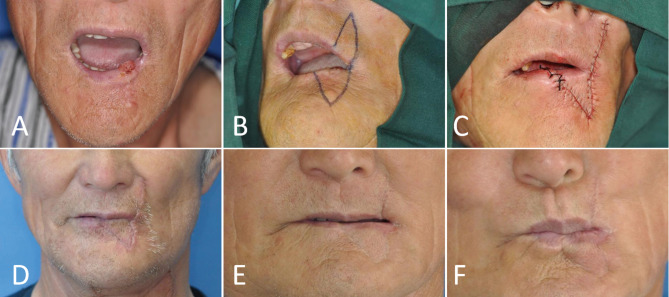
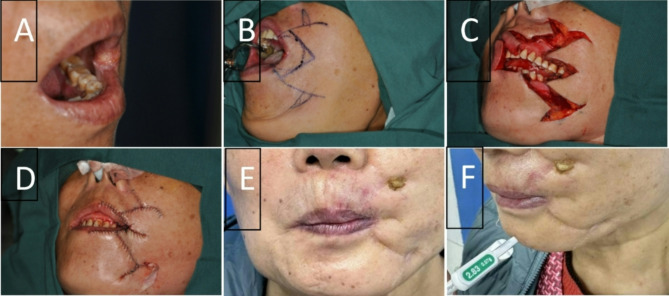
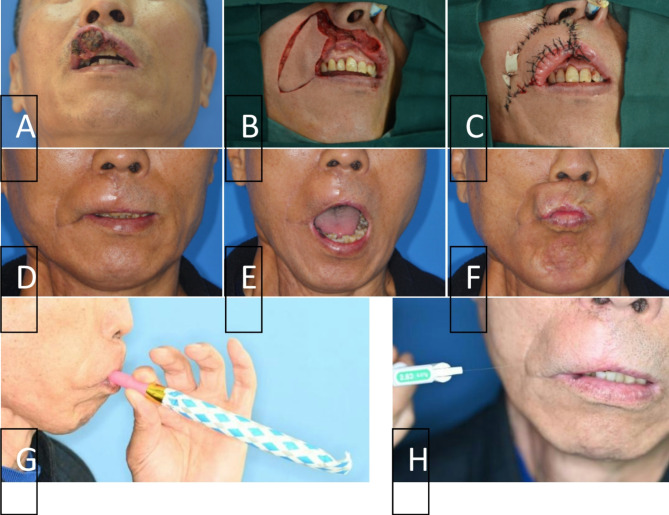
This study used five commonly used adjacent tissue flaps to reconstruct and evaluate postoperative oral function and appearance in patients who underwent repair of defects in the oral commissure region between September 2015 and June 2024. The primary outcomes were salivation, oral function, speech intelligibility, reconstructed lip tactility, Patient and Observer Scar Assessment Scale (POSAS) and patient postoperative quality of life evaluation.
A total of 55 patients underwent surgical reconstruction of defects in oral commissure. At 6 months postoperatively, the McGregor and Colmenero groups demonstrated more statistically excellent oral motility compared to the other groups (p = 0.028).There was no significant difference in the effect of the different reconstruction on the patients' speech expression and flap tactile sensitivity. The aesthetic outcomes were favorable in both groups. Quality of life was at a higher level in patients who underwent reconstruction with the Estlander, McGregor and Colmenero flaps (p = 0.036).
Taking into account the differences between each reconstruction method, the Estlander flap is the preferred method for small and medium-sized defects, the McGregor and Colmenero flap can better restore motor function.The methods of repairing defects of the oral commissure area described in our study do not differ significantly in speech expression, flap tactile sensitivity, or aesthetic outcomes. Postoperative quality of life is higher in patients reconstructed with Estlander, McGregor and Colmenero flap repairing.
从功能和美学角度来看,口角是唇部缺损修复中最难重建的区域。高质量重建口角区域的功能和外观是一项非常复杂且具有挑战性的任务。本文旨在探讨和比较不同方法重建口角区域缺损的效果。
本研究采用五种常用的邻近组织瓣,对2015年9月至2024年6月期间接受口角区域缺损修复的患者进行重建,并评估术后口腔功能和外观。主要观察指标包括唾液分泌、口腔功能、言语清晰度、重建唇部触觉、患者和观察者瘢痕评估量表(POSAS)以及患者术后生活质量评估。
共有55例患者接受了口角缺损的手术重建。术后6个月,与其他组相比,麦格雷戈组和科尔梅内罗组在统计学上显示出更优的口腔运动能力(p = 0.028)。不同重建方法对患者言语表达和皮瓣触觉敏感性的影响无显著差异。两组的美学效果均良好。采用埃斯特兰德瓣、麦格雷戈瓣和科尔梅内罗瓣进行重建的患者生活质量更高(p = 0.036)。
考虑到每种重建方法之间的差异,埃斯特兰德瓣是中小型缺损的首选方法,麦格雷戈瓣和科尔梅内罗瓣能更好地恢复运动功能。我们研究中描述的口角区域缺损修复方法在言语表达、皮瓣触觉敏感性或美学效果方面无显著差异。采用埃斯特兰德瓣、麦格雷戈瓣和科尔梅内罗瓣修复的患者术后生活质量更高。