Reyes Beverly A S
Department of Pharmacology & Physiology, Drexel University College of Medicine, Philadelphia, Pennsylvania, USA.
Eur J Neurosci. 2025 Apr;61(7):e70111. doi: 10.1111/ejn.70111.
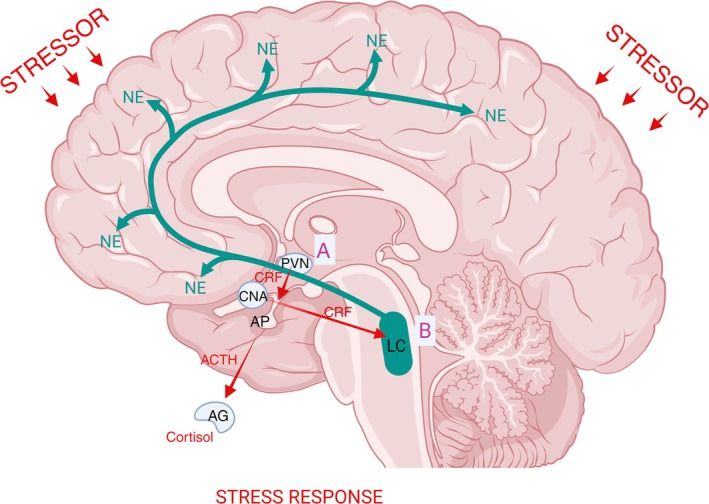
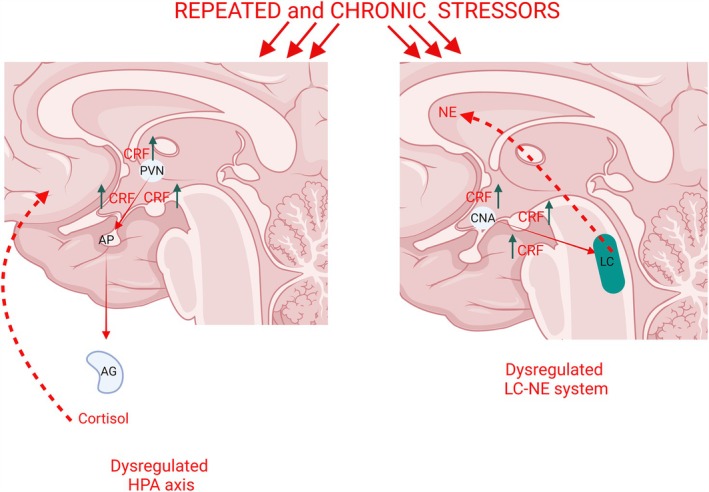
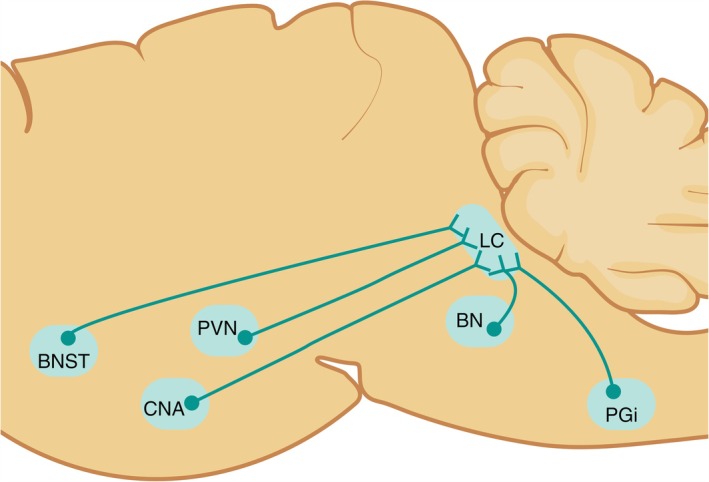
The locus coeruleus-norepinephrine (LC-NE) system is involved in mediating a wide array of functions, including attention, arousal, cognition, and stress response. Dysregulation of the LC-NE system is strongly linked with several stress-induced neuropsychiatric disorders, highlighting the LC's pivotal role in the development of these disorders. Located in the dorsal pontine tegmental area, the LC contains noradrenergic neurons that serve as the main source of NE in the central nervous system. Activation of the LC and subsequent release of NE at different levels of the neuroaxis is adaptive, allowing the body to adjust appropriately amid a challenging stimulus. However, prolonged and repeated LC activation leads to maladaptive responses that implicate LC-NE dysfunction in stress-induced neuropsychiatric disorders. As the primary initiator of the stress response, corticotropin-releasing factor (CRF) activates the hypothalamic-pituitary-adrenal axis. Following the discovery of CRF more than four decades ago, numerous studies established that CRF also acts as a neurotransmitter that governs the activity of other neurotransmitters in the brain neurotransmitter system. The LC-NE system receives abundant CRF afferents arising from several brain nuclei. CRF afferents to LC-NE are activated and recruited in the pathogenesis of stress-induced neuropsychiatric disorders. Presented in this review are the CRF neuroanatomical connectivity and physiological characteristics that modulate LC-NE function, which may contribute to the pathogenesis of stress-induced neuropsychiatric disorders. Additionally, this review illustrates the contribution of LC-NE to the apparent sex-dependent differences in stress-induced neuropsychiatric disorders. Hence, the LC-NE system is a promising target for the development of therapeutic strategies for stress-induced neuropsychiatric disorders.
蓝斑 - 去甲肾上腺素(LC - NE)系统参与介导一系列广泛的功能,包括注意力、觉醒、认知和应激反应。LC - NE系统的失调与几种应激诱导的神经精神疾病密切相关,突出了蓝斑在这些疾病发展中的关键作用。蓝斑位于脑桥背侧被盖区,包含去甲肾上腺素能神经元,这些神经元是中枢神经系统中去甲肾上腺素的主要来源。蓝斑的激活以及随后在神经轴不同水平上去甲肾上腺素的释放具有适应性,使身体能够在具有挑战性的刺激下进行适当调整。然而,蓝斑的长期和反复激活会导致适应不良的反应,这表明LC - NE功能障碍与应激诱导的神经精神疾病有关。作为应激反应的主要启动者,促肾上腺皮质激素释放因子(CRF)激活下丘脑 - 垂体 - 肾上腺轴。在四十多年前发现CRF之后,大量研究证实CRF还作为一种神经递质,控制着脑内神经递质系统中其他神经递质的活性。LC - NE系统接受来自几个脑核的丰富的CRF传入纤维。在应激诱导的神经精神疾病的发病机制中,传入LC - NE的CRF纤维被激活并募集。本综述介绍了调节LC - NE功能的CRF神经解剖学连接和生理特征,这可能有助于应激诱导的神经精神疾病的发病机制。此外,本综述阐述了LC - NE在应激诱导的神经精神疾病中明显的性别差异方面的作用。因此,LC - NE系统是开发应激诱导的神经精神疾病治疗策略的一个有前景的靶点。