Guo Mingjun, Shu Lei, He Zhihui
Department of Critical Care Medicine, the Third Xiangya Hospital, Central South University, No.138 Tongzipo Road, Yuelu District, Changsha, 410013, Hunan Province, China.
Sci Rep. 2025 Apr 12;15(1):12615. doi: 10.1038/s41598-025-96655-7.
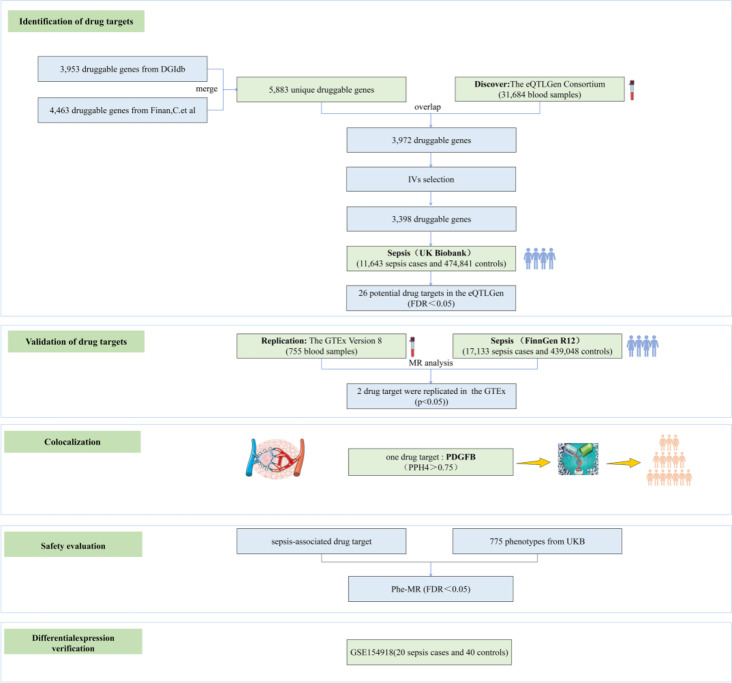
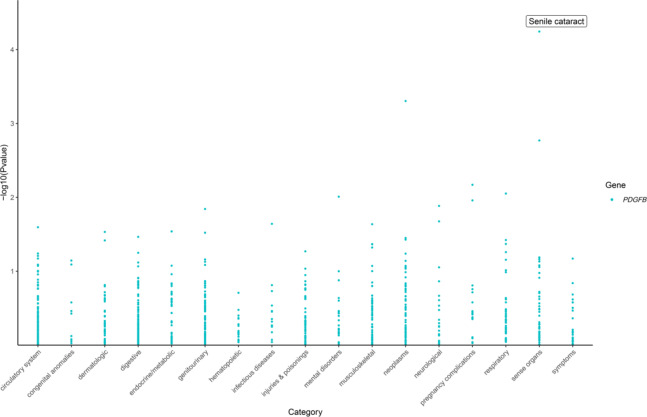
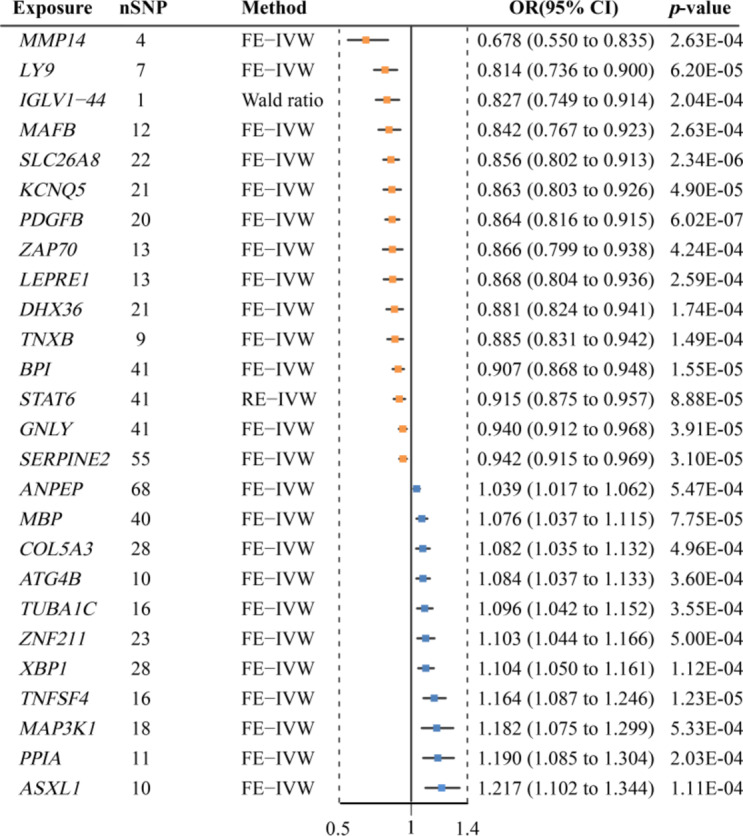
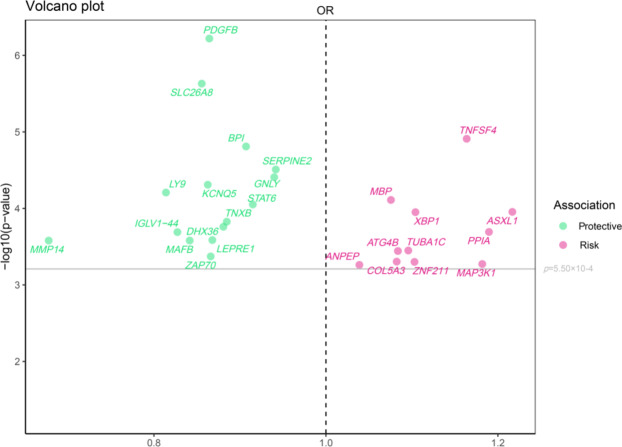
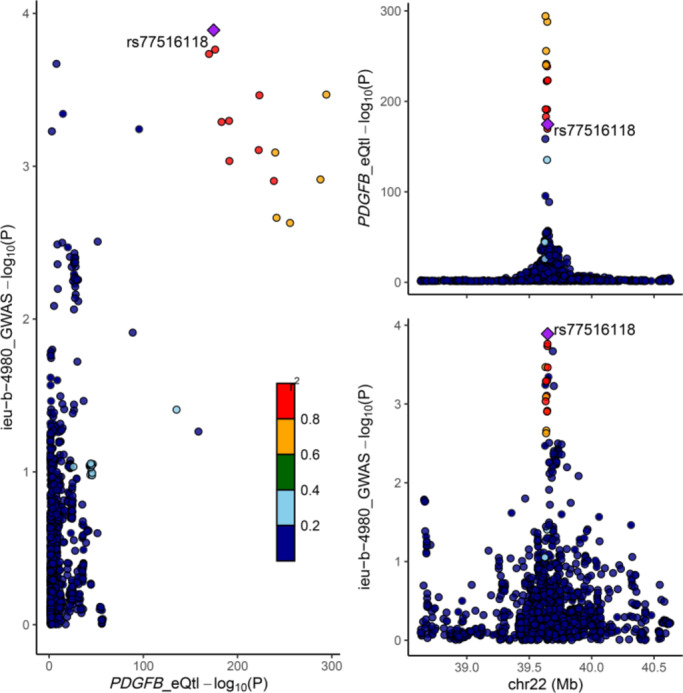
Sepsis is a major contributor to global health loss, yet effective therapeutic options remain scarce. This study aims to identify potential therapeutic targets for sepsis. We integrated data from the druggable genome, expression quantitative trait loci (eQTLs) from human blood, and genome-wide association studies on sepsis. Mendelian randomization (MR) was employed to investigate causal relationships between drug target genes and sepsis. The eQTLGen Consortium data served as the discovery set and was validated using genotype-tissue expression (GTEx) eQTLs. Sensitivity and colocalization analyses were conducted to support causal inferences. Additionally, phenome-wide MR (Phe-MR) was used to assess potential side effects of druggable genes. The expression levels of the target genes were validated using the GSE154918 dataset. In the discovery MR analysis phase, we identified 26 potential targets with significant expression in blood (PFDR < 0.05). PDGFB and BPI were further validated in the replication MR analysis. Colocalization analysis provided strong evidence (PPH4 > 0.75) supporting PDGFB as a therapeutic candidate for sepsis. Phe-MR analysis suggested that targeting PDGFB is unlikely to cause adverse effects. PDGFB downregulation was confirmed in sepsis groups via the GEO dataset. PDGFB is identified as a promising druggable target for sepsis treatment, supported by strong evidence of its therapeutic potential.
脓毒症是全球健康损失的主要原因之一,但有效的治疗选择仍然稀缺。本研究旨在确定脓毒症的潜在治疗靶点。我们整合了来自可药物基因组的数据、人类血液中的表达定量性状位点(eQTL)以及脓毒症的全基因组关联研究。采用孟德尔随机化(MR)来研究药物靶基因与脓毒症之间的因果关系。eQTLGen联盟数据用作发现集,并使用基因型-组织表达(GTEx)eQTL进行验证。进行敏感性和共定位分析以支持因果推断。此外,全表型组MR(Phe-MR)用于评估可药物化基因的潜在副作用。使用GSE154918数据集验证靶基因的表达水平。在发现MR分析阶段,我们确定了26个在血液中具有显著表达的潜在靶点(PFDR < 0.05)。PDGFB和BPI在重复MR分析中得到进一步验证。共定位分析提供了有力证据(PPH4 > 0.75),支持PDGFB作为脓毒症的治疗候选药物。Phe-MR分析表明,靶向PDGFB不太可能引起不良反应。通过GEO数据集在脓毒症组中证实了PDGFB下调。PDGFB被确定为脓毒症治疗的一个有前景的可药物化靶点,其治疗潜力有强有力的证据支持。