Pilati Diego, Agyei Eugene Kusi, Elkhashab Marwa, Fuchs Elisabeth, Nielsen Ian Helstrup, Bjerg Tobias Wang, Anthi Aina Karen, Jiménez-Reinoso Anaïs, Iversen Marie Beck, Pohl Layla, Narita Ryo, Frago Susana, Jakobsen Martin R, Andersen Jan Terje, Degn Søren E, Paludan Søren R, Alvarez-Vallina Luis, Howard Kenneth A
Interdisciplinary Nanoscience Center (iNANO), Department of Molecular Biology and Genetics, Aarhus University, DK-8000 Aarhus C, Denmark.
Department of Biomedicine, Aarhus University, Aarhus C, Denmark.
J Biol Chem. 2025 Apr 11;301(6):108508. doi: 10.1016/j.jbc.2025.108508.
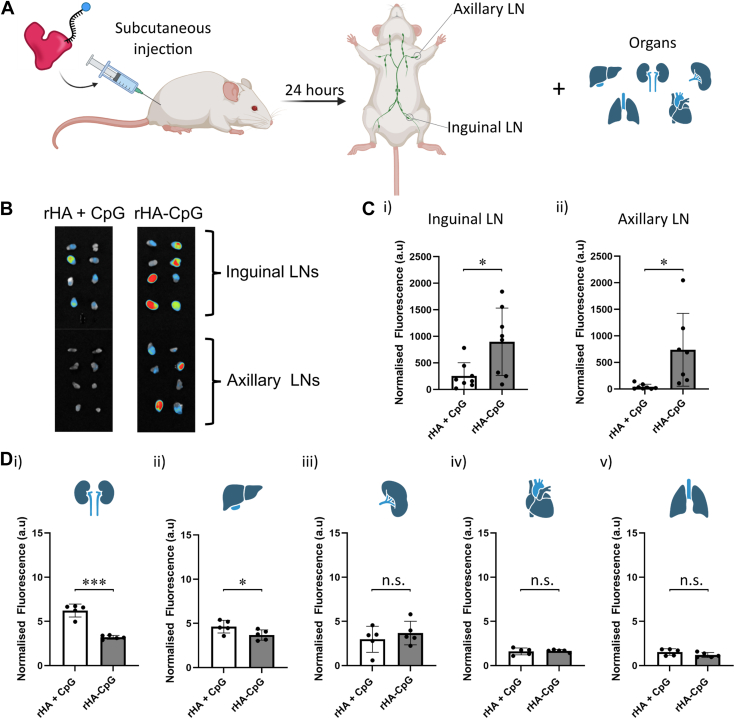
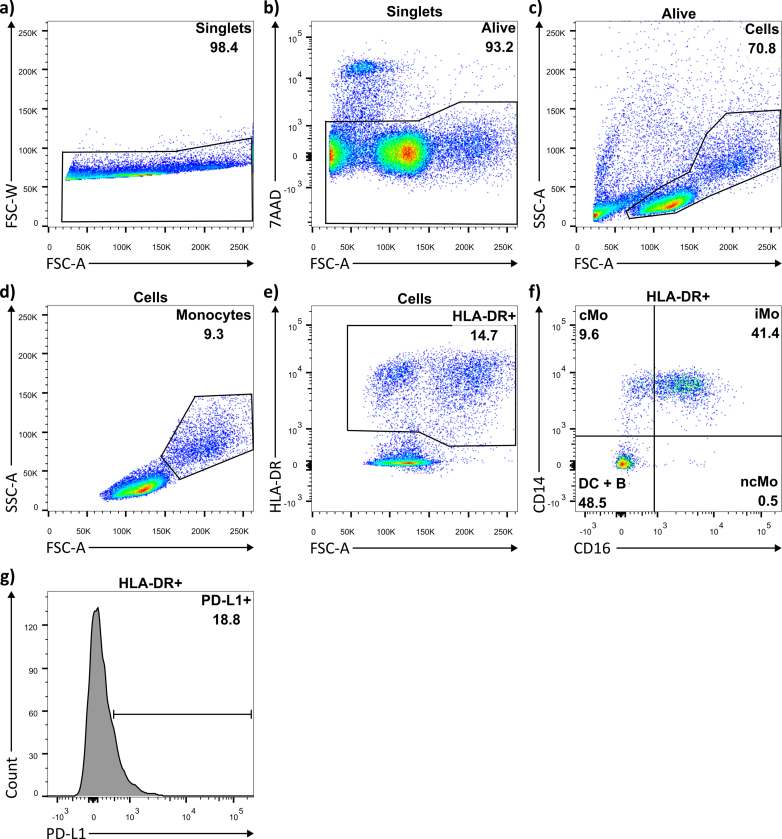
CpG-oligodeoxynucleotide (CpG ODN)-based Toll-like receptor (TLR) agonists are promising immunostimulatory adjuvants; however, low entry into TLR-rich cellular endosomal compartments and poor lymphatic accumulation limit clinical translation. In this work, we introduce a recombinant human serum albumin (rHA)-CpG ODN covalent conjugate (rHA-CpG) designed to exploit the neonatal Fc receptor (FcRn)-driven albumin cellular sorting pathway to maximize CpG delivery into TLR9-rich endosomes and accumulate in lymph nodes. Site-selective conjugation of CpG to albumin cysteine 34, distant from its main FcRn-binding interface, resulted in a retained pH-dependent human FcRn binding, and receptor-driven endosomal trafficking in a cellular recycling assay. Induction of tumor necrosis factor (TNF) secretion in THP-1 cells and interferon alpha (IFN-α) in human hematopoietic stem and progenitor cell (HSPC)-derived plasmacytoid dendritic cells (pDCs), in contrast, to a myeloid differentiation primary response 88 (MyD88) and TLR9 knockout cells, respectively, support TLR9-engagement. The rHA-CpG construct induced greater TNF-α than free CpG ODN in mouse RAW 264.7 cells, and in human peripheral blood mononuclear cells (PBMCs) and expansion of classical (CD14CD16) monocytes. Furthermore, greater accumulation of Cy5.5-labelled CpG in the inguinal (>3-fold) and axillary (>18-fold) lymph nodes was observed when conjugated to rHA compared to an unconjugated rHA/CpG mix following subcutaneous injection in mice. Moreover, increased LN accumulation of an rHA variant engineered with high FcRn-binding affinity supports an FcRn-driven mechanism. Demonstration of FcRn-mediated albumin targeting at intra- and extracellular sites provides the mechanistic basis for the potent immune induction observed using the novel rHA-CpG conjugate design class introduced in this work.
基于胞嘧啶-磷酸-鸟嘌呤寡脱氧核苷酸(CpG ODN)的Toll样受体(TLR)激动剂是很有前景的免疫刺激佐剂;然而,进入富含TLR的细胞内体区室的效率较低以及在淋巴管中的蓄积不良限制了其临床应用。在这项研究中,我们引入了一种重组人血清白蛋白(rHA)-CpG ODN共价偶联物(rHA-CpG),其设计目的是利用新生儿Fc受体(FcRn)驱动的白蛋白细胞分选途径,以最大限度地将CpG递送至富含TLR9的内体中并在淋巴结中蓄积。将CpG位点选择性地偶联至白蛋白的半胱氨酸34,该位点远离其主要的FcRn结合界面,导致其保留了pH依赖性的人FcRn结合能力,并在细胞回收试验中实现了受体驱动的内体运输。相反,在人造血干细胞和祖细胞(HSPC)来源的浆细胞样树突状细胞(pDC)中,分别诱导肿瘤坏死因子(TNF)分泌和干扰素α(IFN-α),而在髓样分化初级反应88(MyD88)和TLR9基因敲除细胞中则无此现象,这支持了TLR9的参与。rHA-CpG构建体在小鼠RAW 264.7细胞、人外周血单核细胞(PBMC)中诱导产生的TNF-α比游离CpG ODN更多,并能促进经典型(CD14CD16)单核细胞的扩增。此外,与皮下注射未偶联的rHA/CpG混合物相比,在小鼠中皮下注射偶联至rHA的Cy5.5标记的CpG后,在腹股沟淋巴结(>3倍)和腋窝淋巴结(>18倍)中观察到了更多的蓄积。此外,工程化改造的具有高FcRn结合亲和力的rHA变体在淋巴结中的蓄积增加,这支持了FcRn驱动的机制。在细胞内和细胞外位点证明FcRn介导的白蛋白靶向作用,为使用本研究中引入的新型rHA-CpG偶联物设计类别所观察到的强效免疫诱导提供了机制基础。