
铁蛋白在传染病中的作用:探索致病机制与临床意义。
Ferritin's role in infectious diseases: Exploring pathogenic mechanisms and clinical implications.
作者信息
Liao Yingying, Zeng Tao, Guo Xiaoyan, Li Xinhua
机构信息
Department of Infectious Diseases, The Third Affiliated Hospital of Sun Yat-sen University, Guangzhou, 510630, China.
出版信息
New Microbes New Infect. 2025 Mar 20;65:101582. doi: 10.1016/j.nmni.2025.101582. eCollection 2025 Jun.
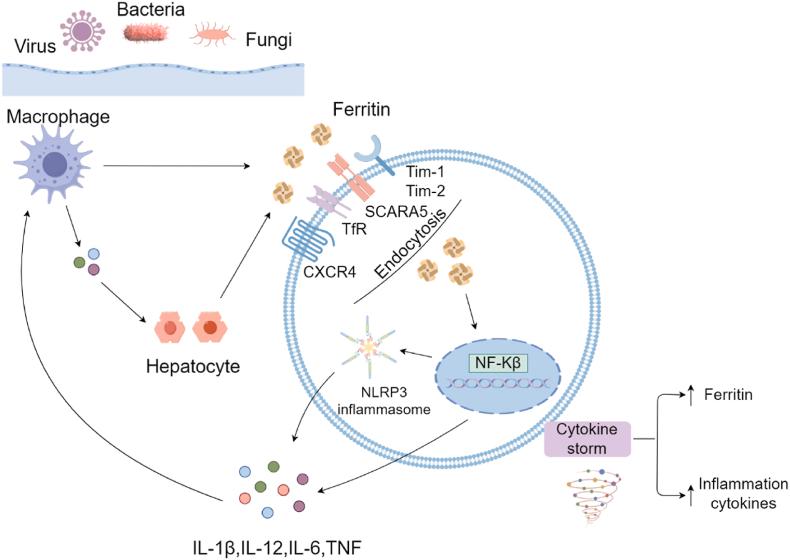
Ferritin, an iron storage protein, is crucial for maintaining iron metabolism balance throughout the body and serves as a key biomarker for evaluating the body's iron reserves. Reduced ferritin levels typically indicate iron deficiency, whereas elevated ferritin levels indicate an acute inflammatory response in infectious diseases. Recent research has established a significant link between elevated ferritin levels and disease severity and prognosis. The concept of hyperferritinemic syndrome has underscored ferritin's role as a pathogenic mediator. During infections, ferritin not only serves as a biomarker of inflammation but also exerts pro-inflammatory functions, which is a key factor in perpetuating the vicious pathogenic cycle. This review offers a comprehensive exploration of ferritin, covering its structural characteristics, regulatory mechanisms, and how diverse pathogens modulate ferritin. Understanding its pivotal role in infectious diseases is essential for identifying novel therapeutic prospects and enhancing disease management and prevention.
铁蛋白是一种铁储存蛋白,对于维持全身铁代谢平衡至关重要,并且是评估机体铁储备的关键生物标志物。铁蛋白水平降低通常表明缺铁,而铁蛋白水平升高则表明在感染性疾病中存在急性炎症反应。最近的研究已经确立了铁蛋白水平升高与疾病严重程度及预后之间的重要联系。高铁蛋白血症综合征的概念强调了铁蛋白作为致病介质的作用。在感染期间,铁蛋白不仅作为炎症的生物标志物,还发挥促炎功能,这是使恶性循环持续存在的关键因素。本综述全面探讨了铁蛋白,涵盖其结构特征、调节机制以及多种病原体如何调节铁蛋白。了解其在感染性疾病中的关键作用对于确定新的治疗前景以及加强疾病管理和预防至关重要。


 Zotero 插件