Liao Xuanying, Yang Hongyun
School of Computer and Information Engineering, Jiangxi Agricultural University, Nanchang, 330000, China.
School of Software, Jiangxi Agricultural University, Nanchang, 330000, China.
Sci Rep. 2025 Apr 15;15(1):13014. doi: 10.1038/s41598-025-97585-0.
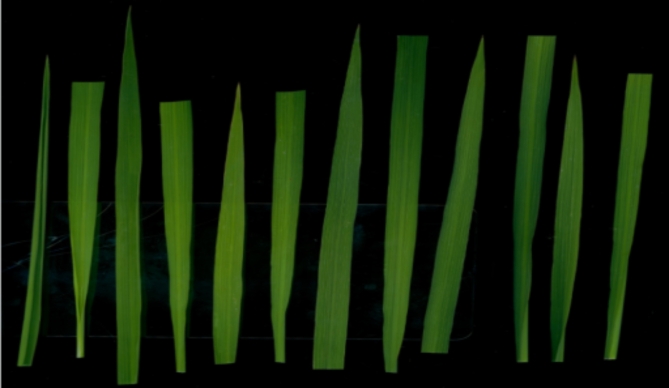
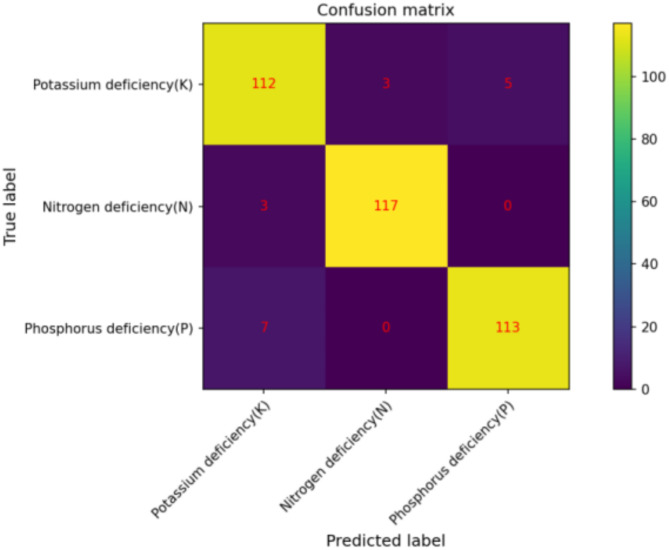
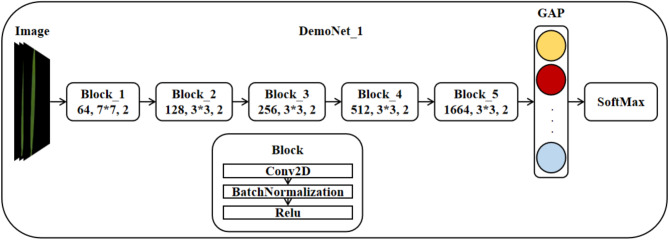
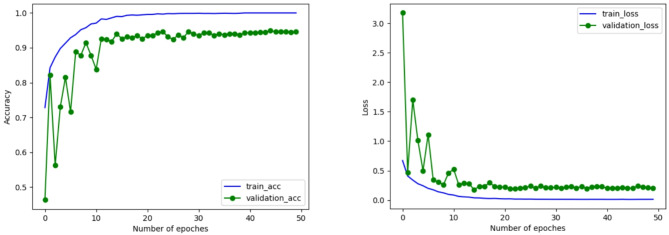
Rapid, non-destructive, lightweight and accurate diagnosis of early stage nutrient deficiency in rice is essential for both yield and quality. Traditional diagnostic methods often exhibit low efficiency, reduced accuracy, and a lack of timeliness. To address these issues, a diagnostic method for the early detection of nitrogen, phosphorus, and potassium deficiencies in rice, based on multimodal integration and knowledge distillation, is proposed. In this study, the late rice variety 'Huanghuazhan rice' was selected as the experimental subject for field trials. First, leave images of rice plant were captured using a scanner, and some data preprocessing techniques were utilized to extract image samples from the leaf tip areas of the top one leaf, the top two leaf and the top three leaf. Second, the teacher model was obtained through transfer learning, fine-tuning training and model fusion. The custom neural network model was heuristically customized based on the conventional model. The teacher model then performs knowledge distillation on the custom neural network model, resulting in a lightweight model with high accuracy and low memory consumption, which serves as a feature extractor. Finally, the multimodal features were input into LightGBM for training and the rice nutrient deficiency recognition model, S-RiceNet-D-LightGBM (SRDL), was constructed. The experimental results demonstrate that the SRDL model is an efficient, lightweight model characterized by high accuracy and low memory consumption. It achieved an accuracy score of 0.9501, a macro precision score of 0.9501, a macro recall score of 0.9499, and a macro F1 score of 0.9500, outperforming the VGG16, ResNet101, DenseNet169, InceptionNetV3, MobileNetV2, second only to the performance of the ensemble model. The memory footprint is 23.6 MB, which is slightly higher than that of the MobileNetV3S model. This study provides new insights and viable avenues for the practical implementation of a lightweight model designed for the intelligent diagnosis of crop nutrient deficiency.
快速、无损、轻便且准确地诊断水稻早期营养缺乏状况对于产量和品质而言至关重要。传统诊断方法往往效率低下、准确性降低且缺乏及时性。为解决这些问题,提出了一种基于多模态集成和知识蒸馏的水稻氮、磷、钾缺乏早期检测诊断方法。在本研究中,选用晚稻品种“黄花占水稻”作为田间试验的实验对象。首先,使用扫描仪采集水稻植株的叶片图像,并利用一些数据预处理技术从顶部第一片叶、顶部第二片叶和顶部第三片叶的叶尖区域提取图像样本。其次,通过迁移学习、微调训练和模型融合获得教师模型。基于传统模型启发式定制了自定义神经网络模型。然后教师模型对自定义神经网络模型进行知识蒸馏,得到一个高精度、低内存消耗的轻量级模型,作为特征提取器。最后,将多模态特征输入LightGBM进行训练,构建了水稻营养缺乏识别模型S-RiceNet-D-LightGBM(SRDL)。实验结果表明,SRDL模型是一个高效、轻量级的模型,具有高精度和低内存消耗的特点。它的准确率得分为0.9501,宏精度得分为0.9501,宏召回率得分为0.9499,宏F1得分为0.9500,优于VGG16、ResNet101、DenseNet169、InceptionNetV3、MobileNetV2,仅次于集成模型的性能。内存占用为23.6MB,略高于MobileNetV3S模型。本研究为设计用于作物营养缺乏智能诊断的轻量级模型的实际应用提供了新的见解和可行途径。