Harhangi Madhavi S, Simons Sinno H P, Bijma Hilmar H, Nguyen Anna, Nguyen Tuong-Vi, Kaitu'u-Lino Tu'uhevaha, Reiss Irwin K M, Jan Danser A H, Broekhuizen Michelle
Division of Neonatology, Department of Neonatal and Pediatric Intensive Care (M.S.H., S.H.P.S., I.K.M.R., M.B.), Erasmus MC University Medical Center, Rotterdam, The Netherlands.
Division of Pharmacology and Vascular Medicine, Department of Internal Medicine (M.S.H., A.H.J.D., M.B.), Erasmus MC University Medical Center, Rotterdam, The Netherlands.
Hypertension. 2025 May;82(5):804-815. doi: 10.1161/HYPERTENSIONAHA.125.24934. Epub 2025 Apr 16.
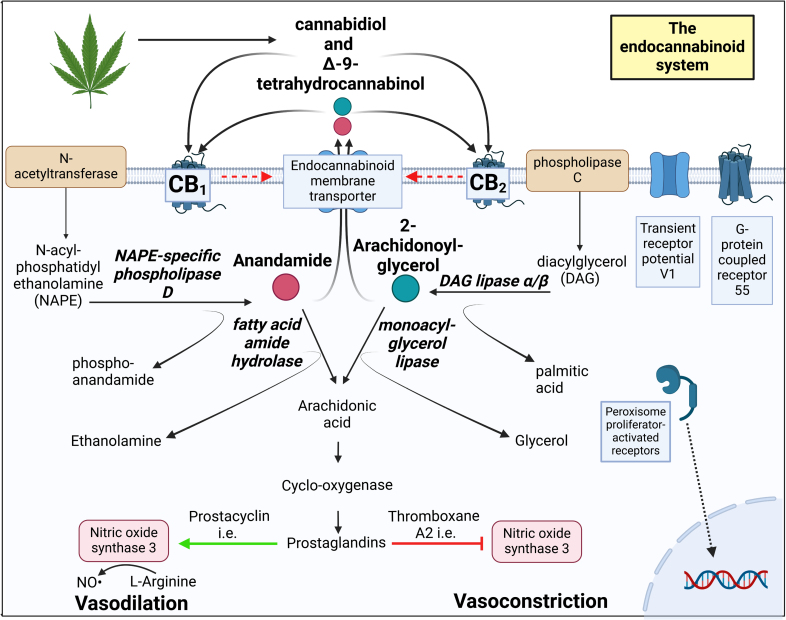
The endocannabinoid system (ECS) plays an important role in the early stages of pregnancy, while cannabis use during pregnancy associates with a greater risk of preeclampsia. This study quantified the placental ECS component mRNA levels in gestational age-matched healthy pregnant women, women with preeclampsia, and women who used cannabis throughout their pregnancy. Next, it compared the effects of the endogenous ECS agonists anandamide and 2-arachidonoylglycerol with those of the cannabinoid receptor type 1 and 2 agonists HU-210 and HU-308 in chorionic plate arteries.
Placental mRNA levels were quantified by quantitative polymerase chain reaction. Vascular reactivity was studied with and without selective cannabinoid receptor type 1 and 2 antagonists.
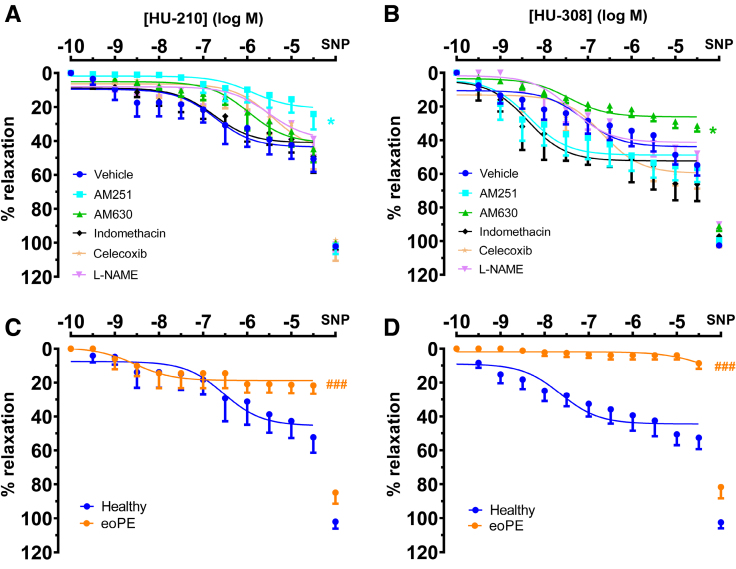
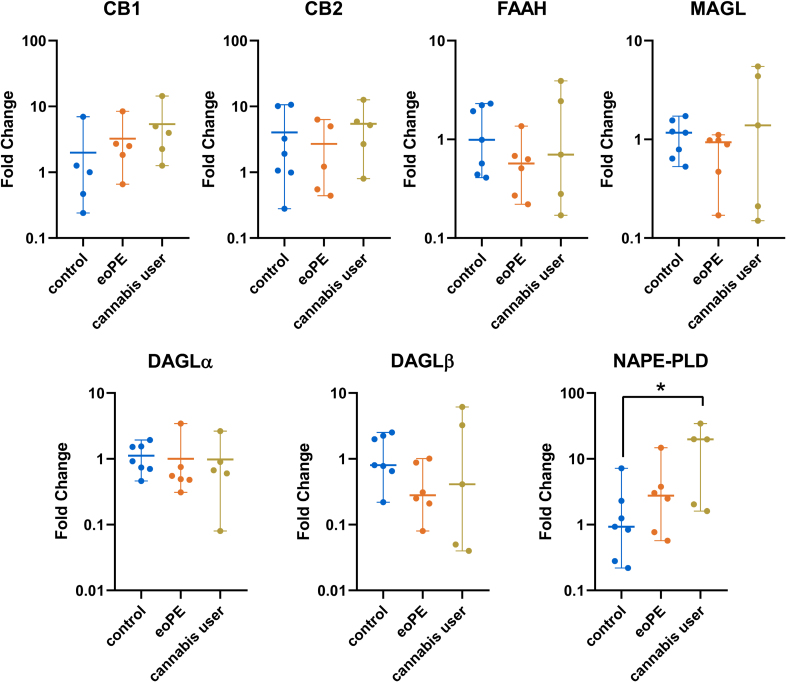
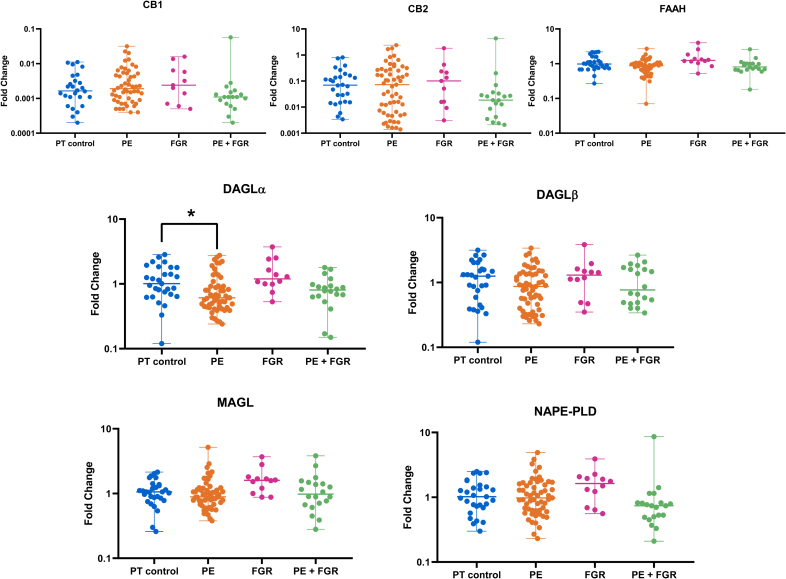
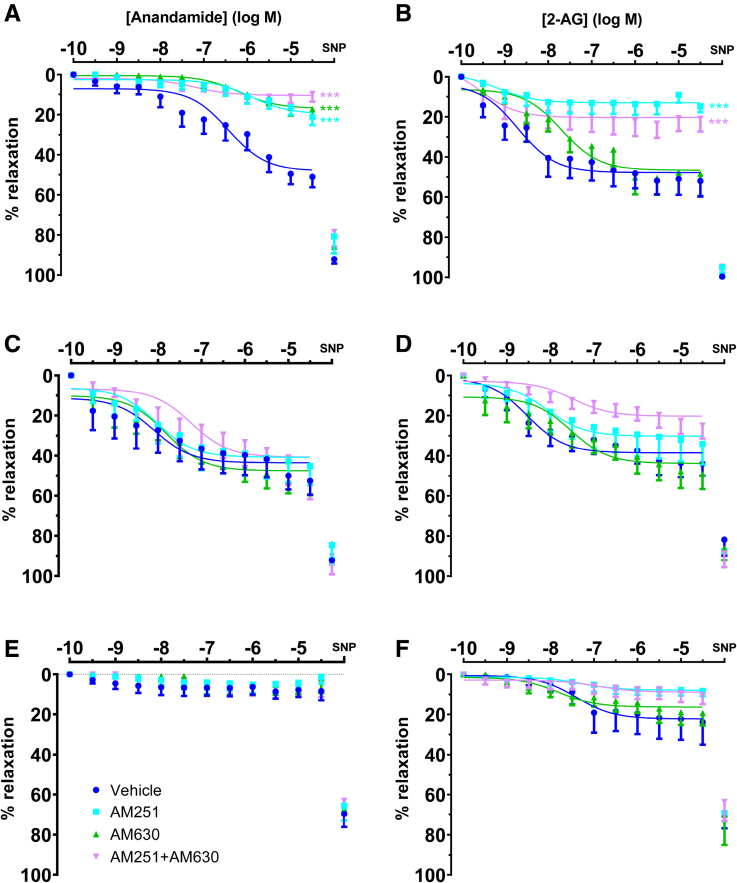
mRNA levels of 1,2-diacylglycerol lipase α, responsible for 2-arachidonoylglycerol generation, were lowered in preeclampsia, while mRNA levels of the anandamide-synthesizing enzyme -acyl phosphatidylethanolamine-specific phospholipase D were upregulated in cannabis users. Anandamide-induced relaxation in healthy pregnancy was mediated via cannabinoid receptors type 1 and 2, while 2-arachidonoylglycerol induced relaxation via cannabinoid receptor type 1. In preeclampsia, the effects of anandamide and 2-arachidonoylglycerol were unaltered but no longer involved cannabinoid receptors, while in cannabis users their effects were absent. HU-210 and HU-308 relaxed healthy, but not preeclamptic vessels. The NO donor sodium nitroprusside similarly relaxed healthy and preeclamptic vessels, while its effects in cannabis users were greatly reduced.
The ECS is disturbed in preeclampsia, and endogenous ECS agonists lose their capacity to dilate in cannabis users, while such use also diminishes NO signaling. These data provide mechanistic evidence against cannabis use during pregnancy.
内源性大麻素系统(ECS)在妊娠早期发挥重要作用,而孕期使用大麻与子痫前期风险增加相关。本研究对孕周匹配的健康孕妇、子痫前期孕妇以及孕期全程使用大麻的孕妇胎盘ECS成分的mRNA水平进行了量化。接下来,比较了内源性ECS激动剂花生四烯乙醇胺和2-花生四烯酸甘油酯与大麻素1型和2型受体激动剂HU-210和HU-308对绒毛膜板动脉的影响。
通过定量聚合酶链反应对胎盘mRNA水平进行量化。在有或无选择性大麻素1型和2型受体拮抗剂的情况下研究血管反应性。
负责生成2-花生四烯酸甘油酯的1,2-二酰基甘油脂肪酶α的mRNA水平在子痫前期降低,而在使用大麻的孕妇中,花生四烯乙醇胺合成酶——N-酰基磷脂酰乙醇胺特异性磷脂酶D的mRNA水平上调。花生四烯乙醇胺在健康妊娠中诱导的舒张是通过大麻素1型和2型受体介导的,而2-花生四烯酸甘油酯通过大麻素1型受体诱导舒张。在子痫前期,花生四烯乙醇胺和2-花生四烯酸甘油酯的作用未改变,但不再涉及大麻素受体,而在使用大麻的孕妇中它们没有作用。HU-210和HU-308使健康血管舒张,但不能使子痫前期血管舒张。一氧化氮供体硝普钠同样使健康血管和子痫前期血管舒张,但其在使用大麻的孕妇中的作用大大降低。
子痫前期中ECS受到干扰,内源性ECS激动剂在使用大麻的孕妇中失去舒张能力,同时这种使用也削弱了一氧化氮信号传导。这些数据为孕期禁用大麻提供了机制证据。