Li Xiaogang, Ji Jiamei, Li Ping, Yang De, Yedron Nyima, Lei Yanming, Chen Tao, Li Jianchu, Guo Ye, Yang Xiao, Shi Li, Qu Dan
Biobank Facility, National Infrastructures for Translational Medicine, State Key Laboratory of Complex Severe and Rare Diseases Peking Union Medical College Hospital, Chinese Academy of Medical Science and Peking Union Medical College Beijing China.
Department of Ultrasound, State Key Laboratory of Complex Severe and Rare Diseases, Peking Union Medical College Hospital Chinese Academy of Medical Science and Peking Union Medical College Beijing China.
Health Care Sci. 2025 Apr 6;4(2):144-153. doi: 10.1002/hcs2.70012. eCollection 2025 Apr.
Developmental dysplasia of the hip (DDH) is a prevalent pediatric condition with a multifactorial etiology. Its incidence varies geographically, with notably higher rates observed on the Tibet plateau. This study was performed to evaluate the lipidomics signatures associated with DDH by analyzing plasma samples.
Fifty infants were recruited, including 25 diagnosed with DDH and 25 age-matched healthy controls. In addition to plasma samples, comprehensive laboratory test results and medical records were collected for each participant. An untargeted lipidomics profiling approach was employed to identify distinguishing metabolic signatures.
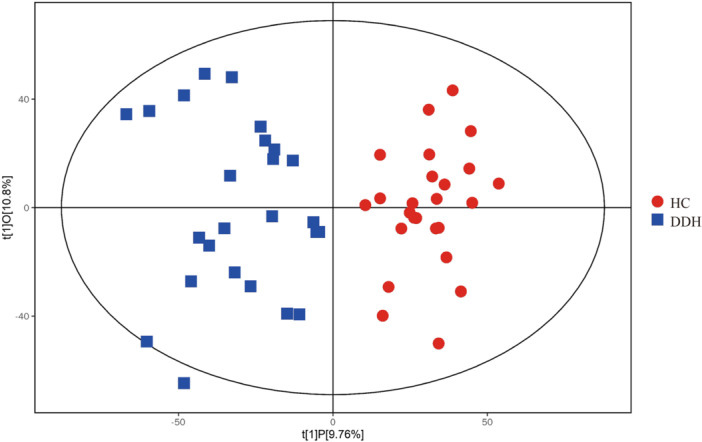
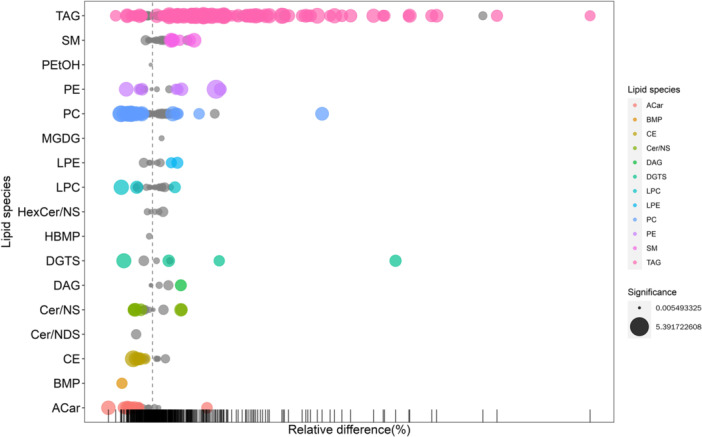
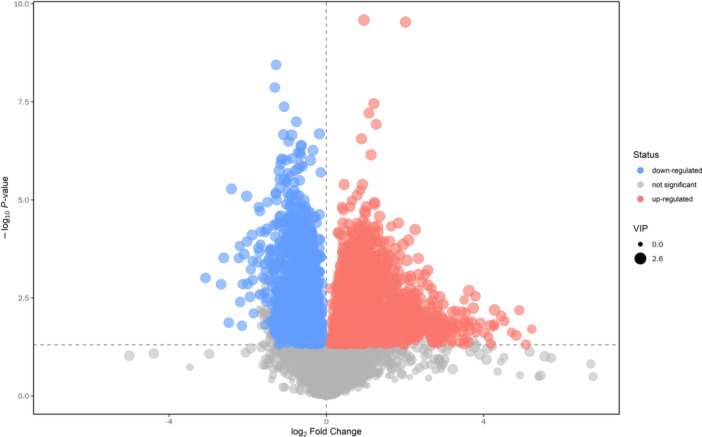
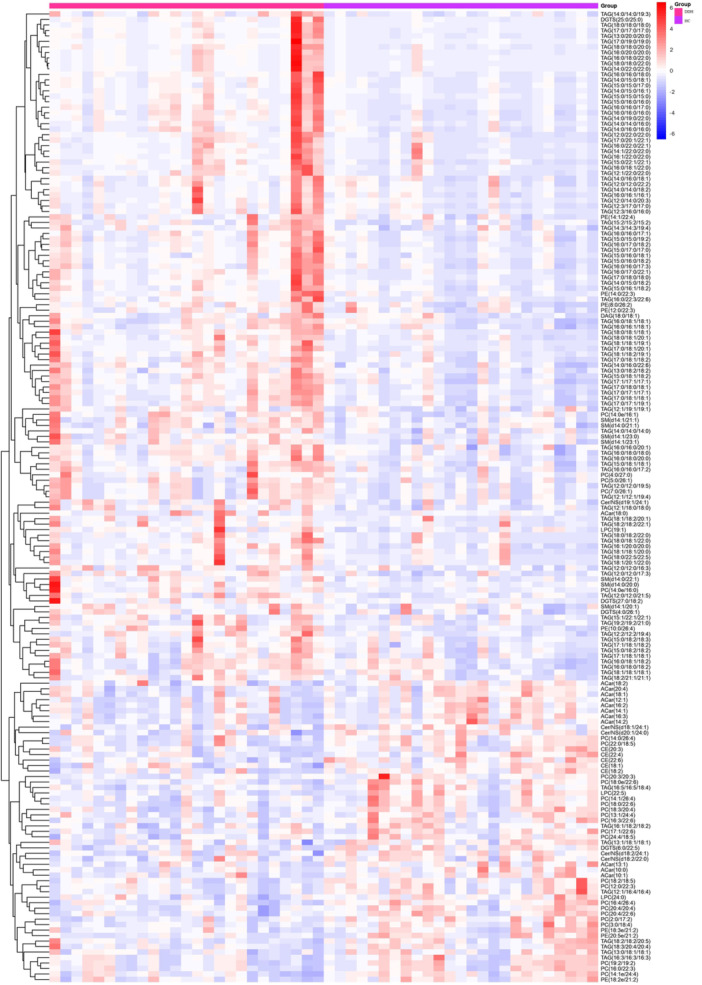
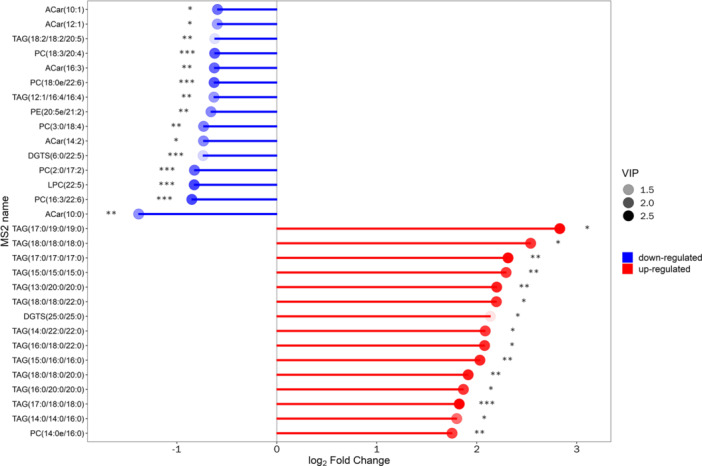
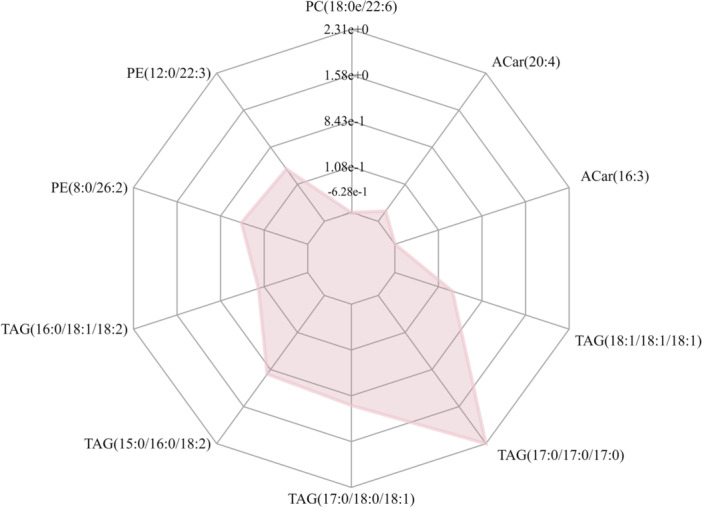
Lipidomics profiles differed significantly between patients with DDH and healthy controls. Several differential metabolites were identified, including triacylglycerol (TAG)(17:0/18:1/20:1), TAG(17:0/17:0/17:0), phosphatidylethanolamine (PE)(10:0/26:4), TAG(17:0/18:0/18:0), TAG(16:0/17:0/22:1), TAG(16:0/18:0/22:0), TAG(17:0/19:0/19:0), TAG(13:0/20:0/20:0), TAG(18:0/18:0/22:0), and TAG(16:0/20:0/20:0). The primary lipid species showing differences were TAGs and PE.
Distinct shifts in lipidomics profiles were observed in infants with DDH. To the best of our knowledge, this study is the first to explore lipidomics signatures in patients with DDH. The combined assessment of TAG(17:0/18:1/20:1) and TAG(17:0/17:0/17:0) may serve as a potential diagnostic tool for DDH.
发育性髋关节发育不良(DDH)是一种常见的儿科疾病,病因多因素。其发病率因地域而异,在青藏高原观察到的发病率显著更高。本研究旨在通过分析血浆样本评估与DDH相关的脂质组学特征。
招募了50名婴儿,包括25名诊断为DDH的婴儿和25名年龄匹配的健康对照。除了血浆样本外,还收集了每位参与者的综合实验室检查结果和病历。采用非靶向脂质组学分析方法来识别有区别的代谢特征。
DDH患者和健康对照之间的脂质组学谱有显著差异。鉴定出几种差异代谢物,包括三酰甘油(TAG)(17:0/18:1/20:1)、TAG(17:0/17:0/17:0)、磷脂酰乙醇胺(PE)(10:0/26:4)、TAG(17:0/18:0/18:0)、TAG(16:0/17:0/22:1)、TAG(16:0/18:0/22:0)、TAG(17:0/19:0/19:0)、TAG(13:0/20:0/20:0)、TAG(18:0/18:0/22:0)和TAG(16:0/20:0/20:0)。显示差异的主要脂质种类是TAG和PE。
在DDH婴儿中观察到脂质组学谱有明显变化。据我们所知,本研究是首次探索DDH患者的脂质组学特征。联合评估TAG(17:0/18:1/20:1)和TAG(17:0/17:0/17:0)可能作为DDH的潜在诊断工具。