Fang Duo, Zhao Hainan, Pei Lu, Jiang Kai, Gan Yuhan, Zhai Xuanlu, Zhang Liao, Cheng Ying, Liu Cong, Du Jicong, Gao Fu
School of Health Science and Engineering, University of Shanghai for Science and Technology, Shanghai, 200093, People's Republic of China.
Department of Radiation Medicine, Faculty of Naval Medicine, Naval Medical University, 800 Xiangyin Road, Shanghai, 200433, People's Republic of China.
Mol Med. 2025 Apr 17;31(1):139. doi: 10.1186/s10020-025-01198-2.
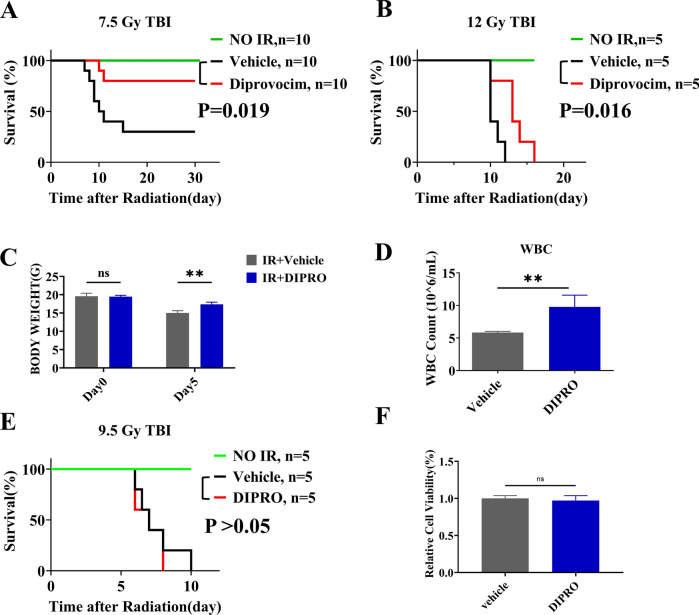
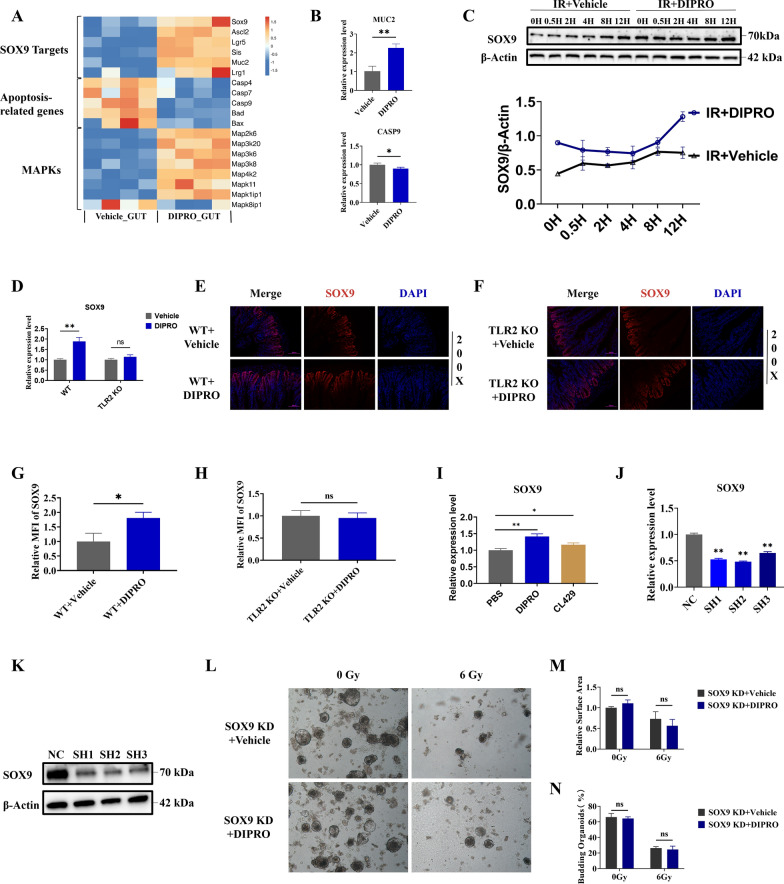
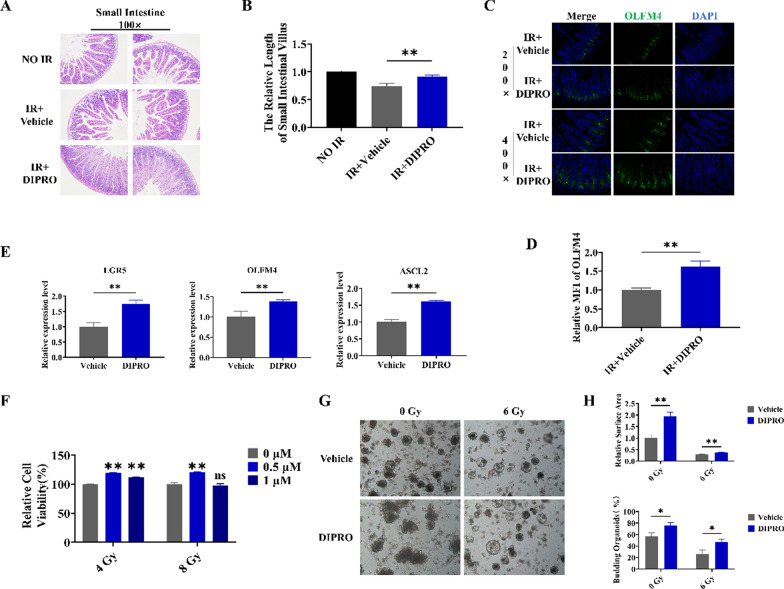
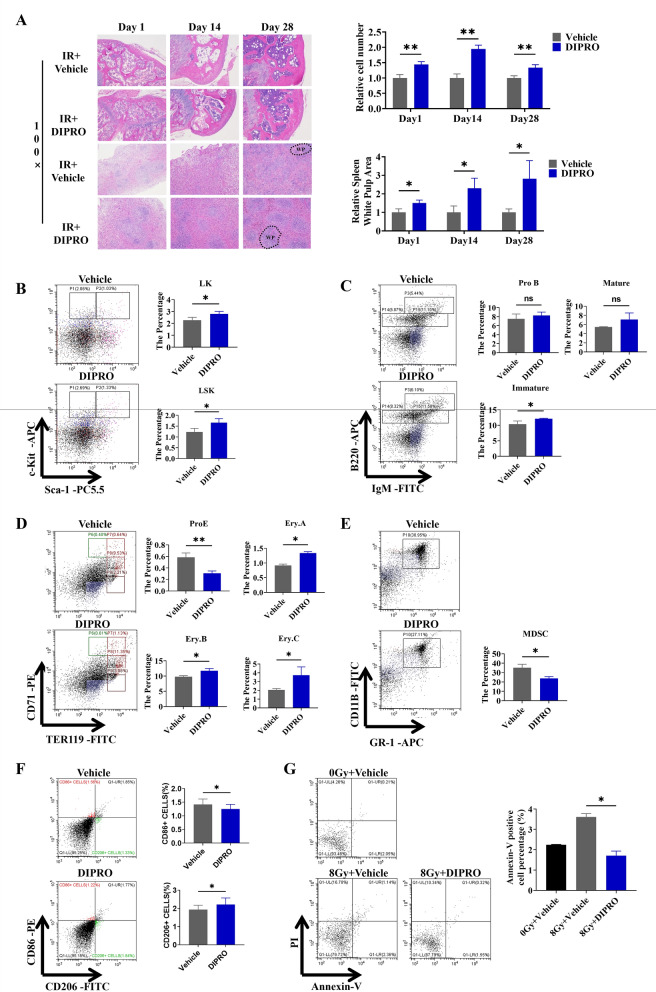
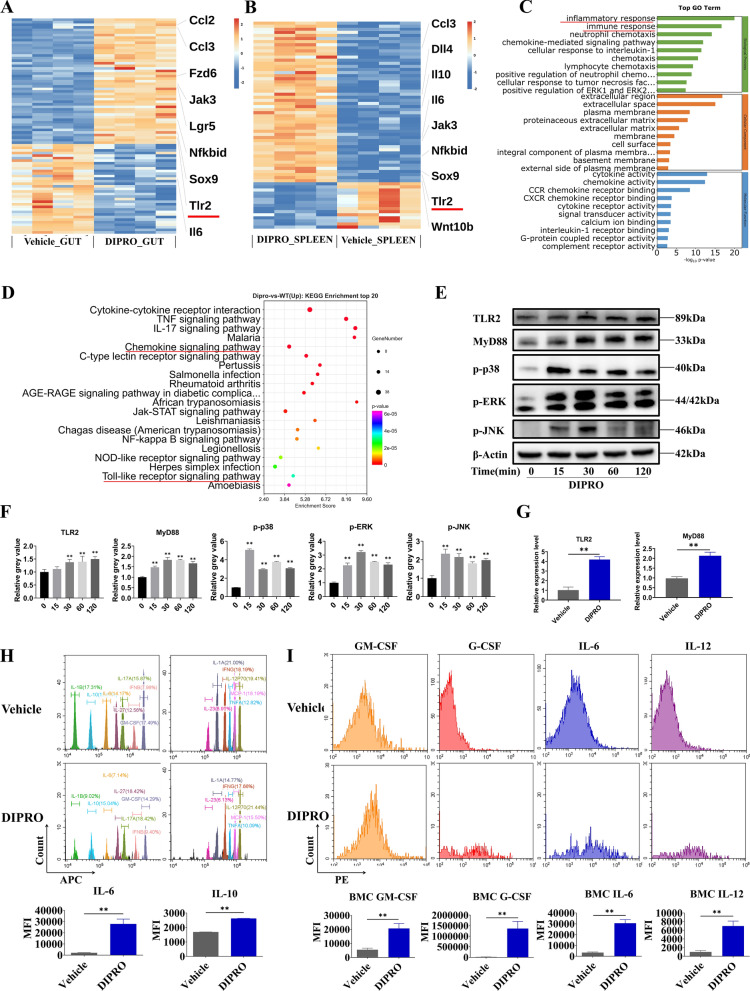
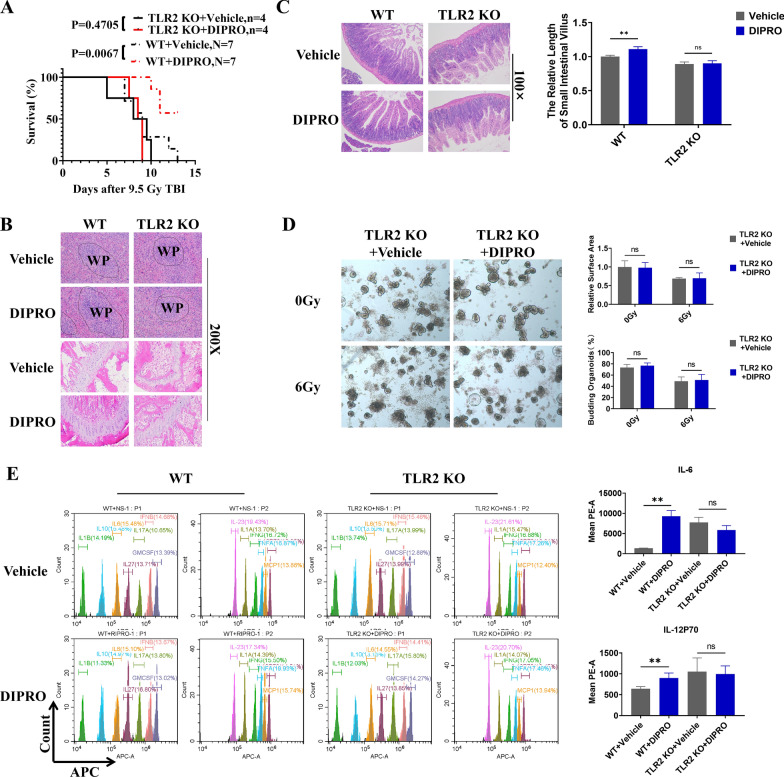
Severe ionizing radiation (IR) causes the acute lethal damage of hematopoietic system and gastrointestinal tract. By establishing a radiation injury model, we found that Diprovocim, a TLR2 agonist, protected mice against the lethal damage of hematopoietic system and gastrointestinal tract. Diprovocim inhibited the IR-induced damage, promoted erythrocyte differentiation and elevated the proportion of hematopoietic stem cells (HSCs) in irradiated mice, and promoted the proliferation and differentiation of intestinal stem cells (ISCs). In addition, the RNA seq results suggested that Diprovocim significantly upregulated the TLR2 signaling pathway, and Diprovocim had no radioprotective effect on TLR2 KO mice, suggesting that Diprovocim activated TLR2 signaling pathway to exert its radioprotective function. The RNA sequencing results also suggested that Diprovocim significantly up-regulated the expression of SOX9. Diprovocim had no radioprotective effect after SOX9 knockdown. In conclusion, we demonstrated that Diprovocim protected the radiation-induced damage and upregulated targeting TLR2-SOX9 axis and that Diprovocim might be a potential high-efficiency selective agent.
严重电离辐射(IR)会导致造血系统和胃肠道的急性致死性损伤。通过建立辐射损伤模型,我们发现Toll样受体2(TLR2)激动剂双丙戊酸可保护小鼠免受造血系统和胃肠道的致死性损伤。双丙戊酸可抑制IR诱导的损伤,促进红细胞分化,并提高受辐照小鼠体内造血干细胞(HSC)的比例,还能促进肠道干细胞(ISC)的增殖和分化。此外,RNA测序结果表明,双丙戊酸显著上调了TLR2信号通路,且双丙戊酸对TLR2基因敲除小鼠没有辐射防护作用,这表明双丙戊酸通过激活TLR2信号通路发挥其辐射防护功能。RNA测序结果还表明,双丙戊酸显著上调了SOX9的表达。SOX9基因敲低后,双丙戊酸没有辐射防护作用。总之,我们证明双丙戊酸可保护辐射诱导的损伤,并上调靶向TLR2 - SOX9轴,且双丙戊酸可能是一种潜在的高效选择剂。