Zandhuis Nordin D, Bradarić Antonia, van der Zwaan Carmen, Hoogendijk Arie J, Popović Branka, Wolkers Monika C
Department of Research, T Cell Differentiation Lab, Sanquin Blood Supply Foundation, Amsterdam, The Netherlands.
Amsterdam UMC Landsteiner Laboratory University of Amsterdam Cancer Center Amsterdam Cancer Immunology, and Amsterdam Institute for Infection & Immunity, Amsterdam, The Netherlands.
Eur J Immunol. 2025 Apr;55(4):e202451641. doi: 10.1002/eji.202451641.
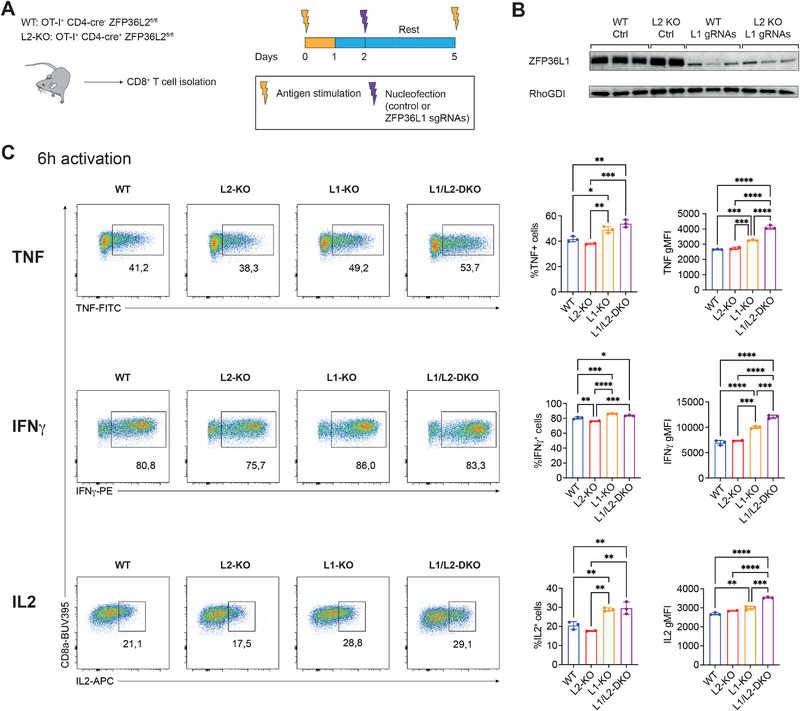
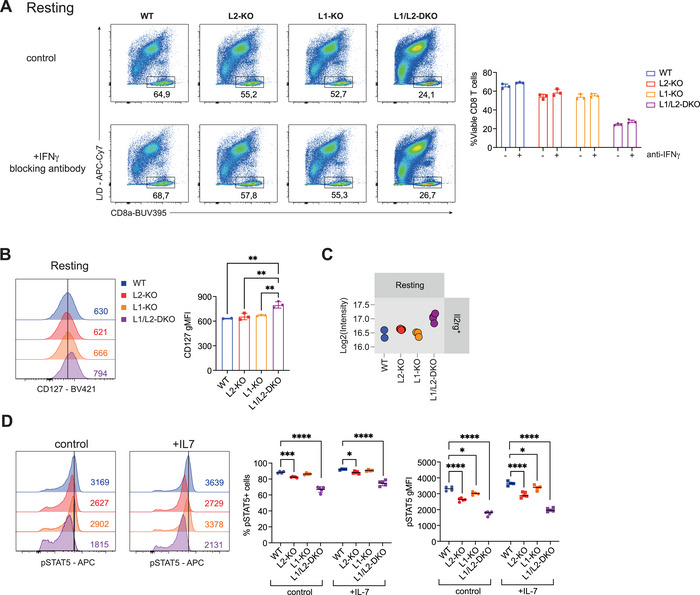
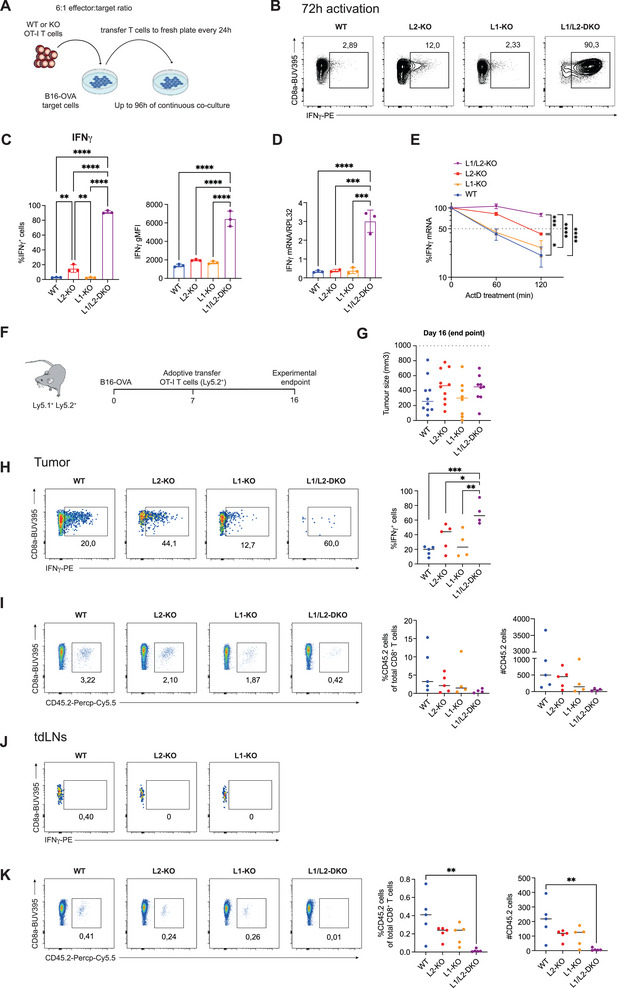
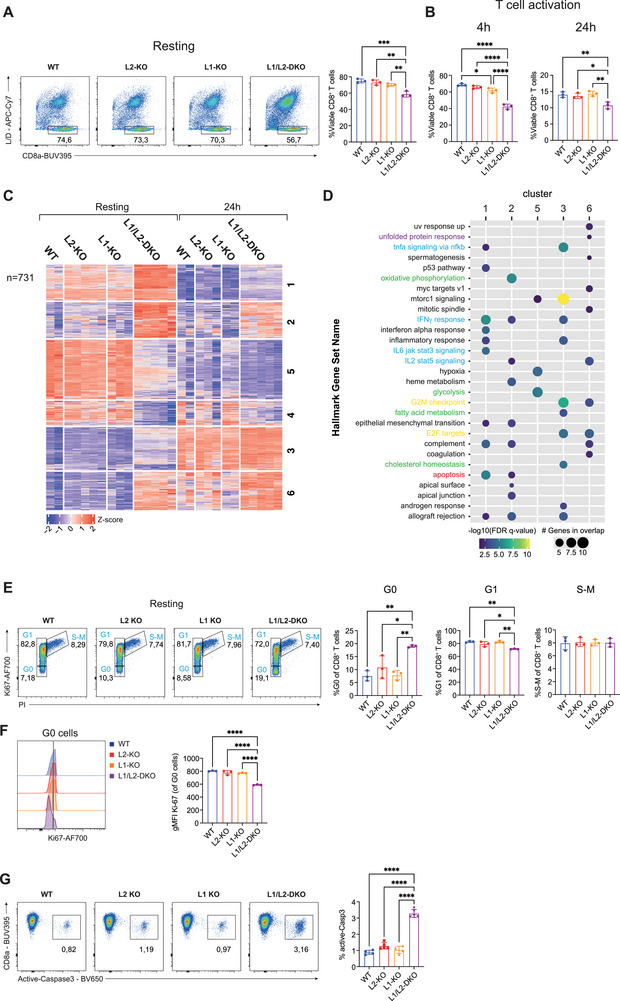
A key feature of cytotoxic CD8 T cells for eliminating pathogens and malignant cells is their capacity to produce proinflammatory cytokines, which include TNF and IFNγ. Provided that these cytokines are highly toxic, a tight control of their production is imperative. RNA-binding proteins (RBPs) are essential for the fine-tuning of cytokine production. The role of the RBP ZFP36L1 and its sister protein ZFP36L2 herein has been established, but their relative contribution to cytokine production is not well understood. We here compared the effect of ZFP36L1 and ZFP36L2 single and double deficiency in murine effector CD8 T cells. Whereas single deficient T cells significantly increased cytokine production, double deficiency completely unleashed the cytokine production. Not only the TNF production was substantially prolonged in double-deficient T cells. Also, the production of IFNγ reached unprecedented levels with >90% IFNγ-producing T cells compared with 3% in WT T cells after 3 days of continuous activation. This continuous cytokine production by double-deficient T cells was also observed in tumor-infiltrating lymphocytes in vivo, however, with no effect on tumor growth. ZFP36L1 and ZFP36L2 double deficiency resulted in decreased cell viability, impaired STAT5 signaling, and dysregulated cell cycle progression. In conclusion, while combined deletion in ZFP36L1 and ZFP36L2 can drive continuous cytokine production even upon chronic activation, safeguards are in place to counteract such super-cytokine producers.
细胞毒性CD8 T细胞消除病原体和恶性细胞的一个关键特征是它们产生促炎细胞因子的能力,其中包括肿瘤坏死因子(TNF)和干扰素γ(IFNγ)。鉴于这些细胞因子具有高度毒性,对其产生进行严格控制势在必行。RNA结合蛋白(RBP)对于细胞因子产生的微调至关重要。RBP锌指蛋白36样蛋白1(ZFP36L1)及其姊妹蛋白ZFP36L2在此的作用已得到确立,但其对细胞因子产生的相对贡献尚不清楚。我们在此比较了ZFP36L1和ZFP36L2单基因缺陷和双基因缺陷对小鼠效应CD8 T细胞的影响。单基因缺陷的T细胞显著增加了细胞因子的产生,而双基因缺陷则完全释放了细胞因子的产生。不仅双基因缺陷的T细胞中TNF的产生显著延长。而且,IFNγ的产生达到了前所未有的水平,持续激活3天后,超过90%的T细胞产生IFNγ,而野生型T细胞中这一比例为3%。在体内肿瘤浸润淋巴细胞中也观察到双基因缺陷的T细胞持续产生细胞因子,然而,这对肿瘤生长没有影响。ZFP36L1和ZFP36L2双基因缺陷导致细胞活力下降、信号转导和转录激活因子5(STAT5)信号受损以及细胞周期进程失调。总之,虽然ZFP36L1和ZFP36L2的联合缺失即使在慢性激活时也能驱动细胞因子的持续产生,但机体存在应对此类超级细胞因子产生者的保护机制。