Shetty Sujeeth K, Kasrija Rishabh
Department of Oral and Maxillofacial Surgery, Jagadguru Sri Shivarathreeshwara (JSS) Dental College and Hospital, Mysuru, IND.
Cureus. 2025 Mar 19;17(3):e80858. doi: 10.7759/cureus.80858. eCollection 2025 Mar.
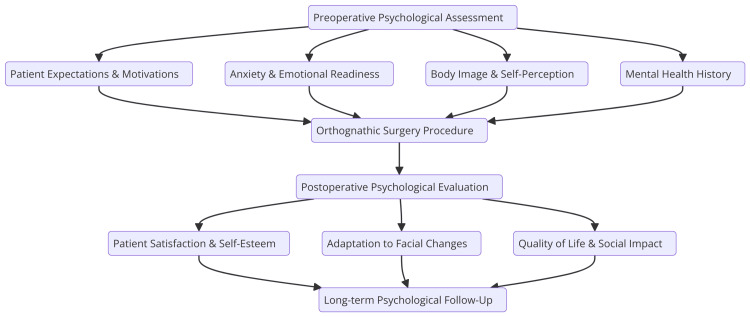
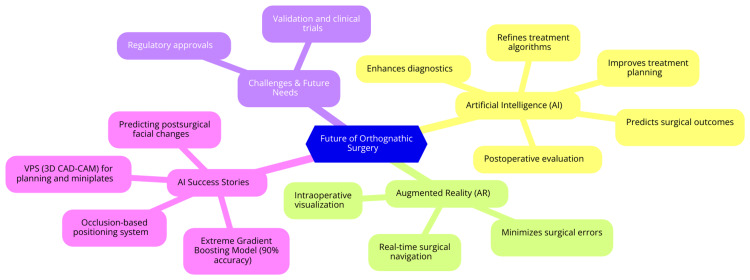
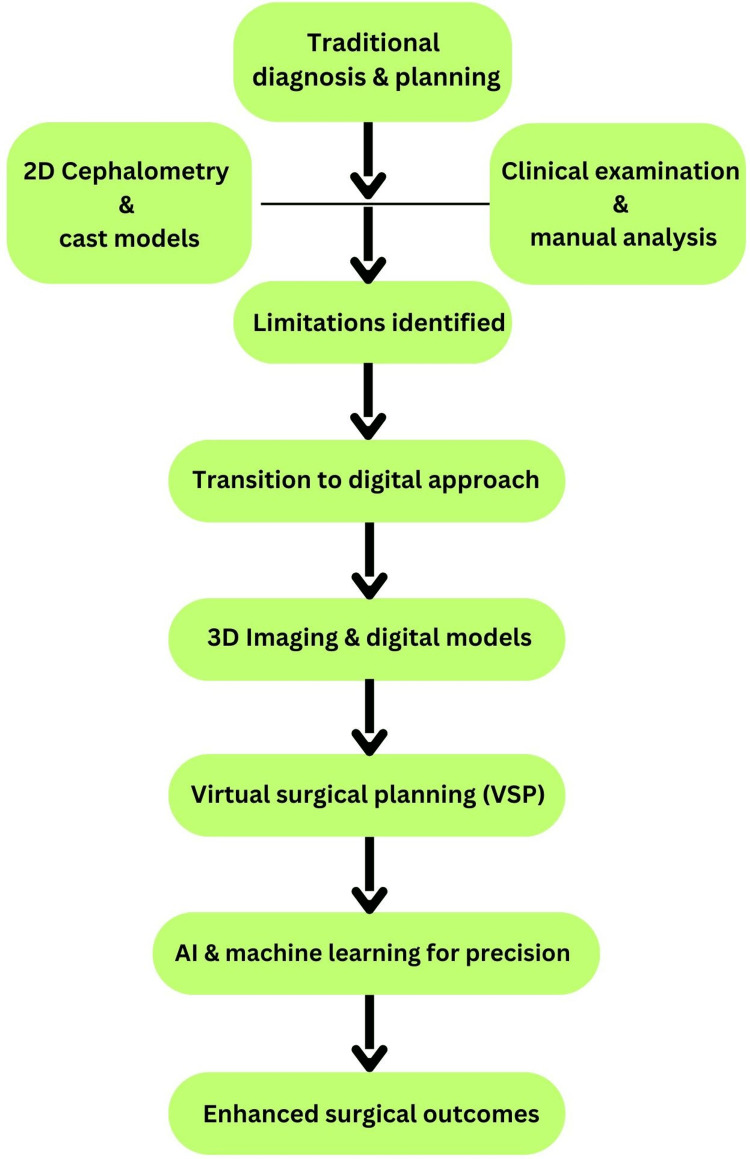
Orthognathic surgery is a transformative procedure for correcting skeletal and dental discrepancies and enhancing facial aesthetics, functionality, and quality of life. Patients with dentofacial deformities often experience mastication, speech, and respiration challenges. Advances in diagnostic tools, treatment planning, and surgical methodologies have significantly improved surgical precision and predictability. Accurate diagnosis relies on clinical assessments, cephalometric analysis, and advanced imaging techniques such as cone beam computed tomography and three-dimensional facial scanning. Traditional surgical planning using two-dimensional cephalometry and plaster models has been largely replaced by virtual surgical planning, which enables precise simulations, computer-aided design/computer-aided manufacturing-assisted surgical splint fabrication, and improved postoperative stability. Achieving a balance between function and aesthetics is crucial. Contemporary approaches emphasize both skeletal correction and soft tissue response, with airway management being a key consideration, particularly in cases of obstructive sleep apnea. The treatment pathway includes presurgical orthodontics, maxillary or mandibular repositioning, and postoperative rehabilitation. Artificial intelligence and augmented reality-assisted surgery drive future innovations to enhance surgical accuracy and treatment customization. Despite these advancements, challenges such as treatment duration, patient compliance, psychological readiness, and costs remain. Predicting soft tissue behavior and ensuring long-term stability require further research. This review aims to provide a comprehensive overview of advancements in orthognathic surgery, from diagnostic innovations to modern treatment planning and emerging technologies, highlighting their impact on surgical precision, efficiency, and patient outcomes. With continuous technological progress and interdisciplinary collaboration, orthognathic surgery is moving toward greater precision, efficiency, and improved patient outcomes.
正颌外科手术是一种用于矫正骨骼和牙齿差异、提升面部美观度、功能及生活质量的变革性手术。患有牙颌面畸形的患者常面临咀嚼、言语和呼吸方面的挑战。诊断工具、治疗计划及手术方法的进步显著提高了手术的精准度和可预测性。准确的诊断依赖于临床评估、头影测量分析以及锥束计算机断层扫描和三维面部扫描等先进成像技术。使用二维头影测量和石膏模型的传统手术规划已在很大程度上被虚拟手术规划所取代,虚拟手术规划能够实现精确模拟、计算机辅助设计/计算机辅助制造辅助手术夹板制作,并提高术后稳定性。在功能与美观之间取得平衡至关重要。当代方法强调骨骼矫正和软组织反应,气道管理是关键考量因素,尤其是在阻塞性睡眠呼吸暂停病例中。治疗途径包括术前正畸、上颌或下颌重新定位以及术后康复。人工智能和增强现实辅助手术推动着未来的创新,以提高手术准确性和治疗个性化程度。尽管取得了这些进展,但治疗时长、患者依从性、心理准备情况和成本等挑战依然存在。预测软组织行为并确保长期稳定性仍需进一步研究。本综述旨在全面概述正颌外科手术的进展,从诊断创新到现代治疗规划及新兴技术,突出它们对手术精准度、效率和患者预后的影响。随着技术的不断进步和跨学科合作,正颌外科手术正朝着更高的精准度、效率和改善患者预后的方向发展。