Jiang Yue-Peng, Wen Jun-Jun, Ma Xiao, Yuan Cun-Rui, Zhou Feng, Zheng Meng-Jia, Tang Xin, Yu Xi-Kang, Lai Wei-Dong, Zhou Yi-Han, Yu Wen-Hua, You Wen-Ting, Jin Yan, Park Ki Duk, Khanna Rajesh, Wen Cheng-Ping, Yu Jie
College of Basic Medical Science, The Second Affiliated Hospital, Zhejiang Chinese Medical University, Key Laboratory of Neuropharmacology and Translational Medicine of Zhejiang Province, Innovative Research Center for Basic Medicine on Autoimmune Diseases of Ministry of Education, Hangzhou, China.
Department of Neurosurgery, Hangzhou First People's Hospital Affiliated to Westlake University School of Medicine, Hangzhou, China.
Pain. 2025 Apr 22;166(9):2162-2180. doi: 10.1097/j.pain.0000000000003599.
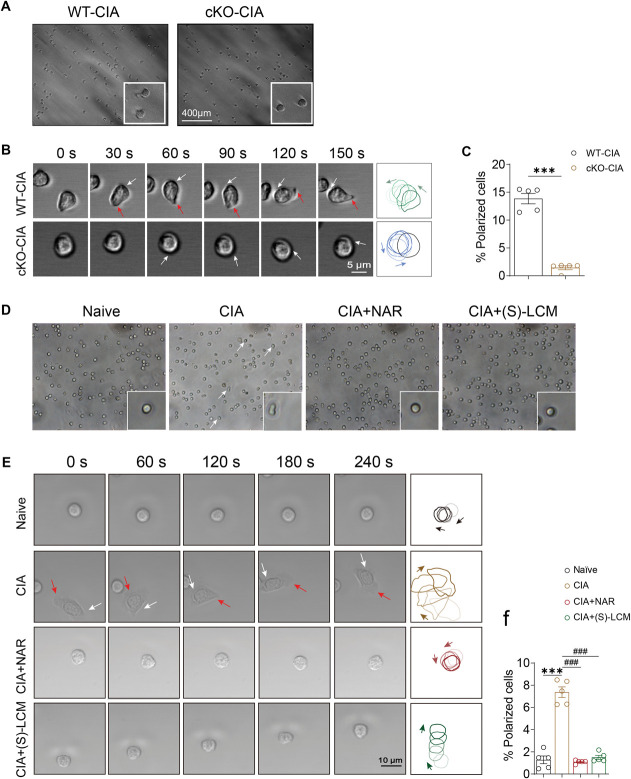
Chronic pain, a hallmark symptom of rheumatoid arthritis (RA), is strongly linked to central sensitization driven by spinal glial cell activation. Despite its clinical significance, the precise mechanisms remain unclear. Recent findings highlight the crucial role of interactions between circulating monocytes and central nervous system glial cells in chronic pain associated with autoimmune conditions. Our study focuses on CD4 + T-cell infiltration into the spinal dorsal horn (SDH) after collagen-induced arthritis (CIA) immunization. Immunohistochemistry results indicate that CD4 + T cells are critical in initiating arthritic pain. Intrathecal injection of CD4 + T cells in naïve mice induced glial activation and pain-like behaviors, while neutralizing antibodies suppressed these effects. Elevated phosphorylation of collapsin response mediator protein 2 (CRMP2) in CIA-derived CD4 + T lymphocytes was closely associated with pathological spinal infiltration. To modulate CRMP2 phosphorylation, we used naringenin (NAR), a known CRMP2 regulator, and (S)-Lacosamide ((S)-LCM), a specific inhibitor of phosphorylated CRMP2. Both compounds reduced CD4 + T-cell infiltration into the SDH and attenuated central sensitization in CIA rats. CRMP2 conditional knockout (cKO) in CD4 + T cells significantly alleviated arthritic pain. In addition, in vitro blood brain barrier models and Transwell assays showed impaired CD4 + T-cell migration and transendothelial invasion upon cKO or treatment with NAR and (S)-LCM. These interventions also decreased the proportion of polarized CD4 + T cells in CIA-induced mice. Our research highlights the role of CRMP2 phosphorylation in CD4 + T-cell behavior, spinal infiltration, and pain modulation, suggesting potential novel therapeutic strategies for RA-associated chronic pain.
慢性疼痛是类风湿性关节炎(RA)的标志性症状,与脊髓胶质细胞激活驱动的中枢敏化密切相关。尽管其具有临床意义,但其确切机制仍不清楚。最近的研究结果强调了循环单核细胞与中枢神经系统胶质细胞之间的相互作用在自身免疫性疾病相关慢性疼痛中的关键作用。我们的研究聚焦于胶原诱导性关节炎(CIA)免疫后CD4 + T细胞浸润到脊髓背角(SDH)的情况。免疫组织化学结果表明,CD4 + T细胞在引发关节炎疼痛中起关键作用。在未免疫的小鼠中鞘内注射CD4 + T细胞可诱导胶质细胞激活和疼痛样行为,而中和抗体可抑制这些作用。CIA来源的CD4 + T淋巴细胞中塌陷反应介导蛋白2(CRMP2)磷酸化水平升高与脊髓病理浸润密切相关。为了调节CRMP2磷酸化,我们使用了已知的CRMP2调节剂柚皮素(NAR)和磷酸化CRMP2的特异性抑制剂(S)-拉科酰胺((S)-LCM)。这两种化合物均减少了CD4 + T细胞向SDH的浸润,并减轻了CIA大鼠的中枢敏化。CD4 + T细胞中的CRMP2条件性敲除(cKO)显著减轻了关节炎疼痛。此外,体外血脑屏障模型和Transwell实验表明,cKO或用NAR和(S)-LCM处理后,CD4 + T细胞迁移和跨内皮侵袭受损。这些干预措施还降低了CIA诱导小鼠中极化CD4 + T细胞的比例。我们的研究突出了CRMP2磷酸化在CD4 + T细胞行为、脊髓浸润和疼痛调节中的作用,为RA相关慢性疼痛提示了潜在的新型治疗策略。