Ge Xiaolong, Jin Yujie, Liu Wei, Tong Yifan, Wan Zhe, Qi Weilin, Zhou Wei, Cai Xiujun
Department of General Surgery, School of Medicine, Sir Run Run Shaw Hospital, Zhejiang University, 3 East Qingchun Road, Hangzhou, 310016, China.
Int J Colorectal Dis. 2025 Apr 22;40(1):98. doi: 10.1007/s00384-025-04885-y.
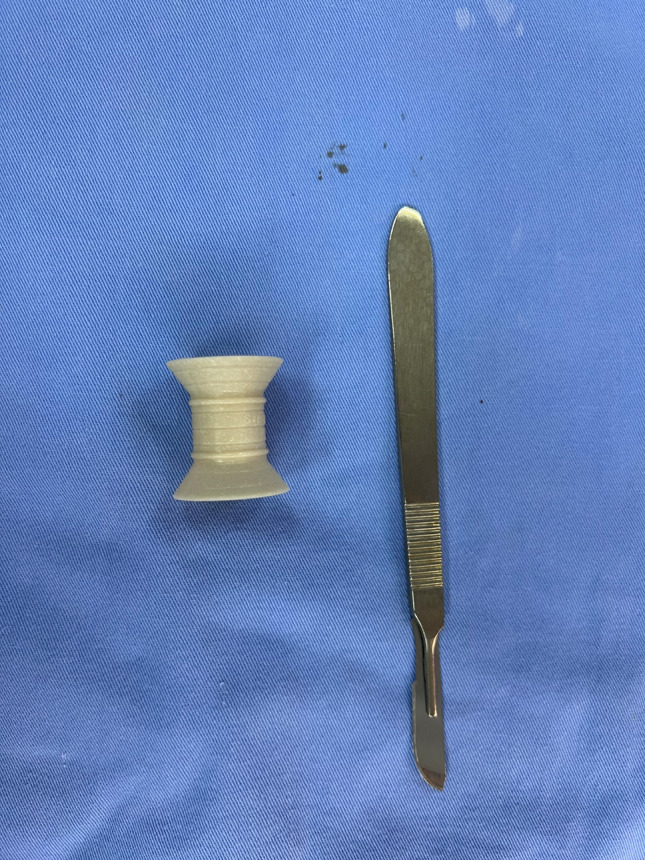
The KONO-S (antimesenteric functional end-to-end handsewn) anastomosis has been used for Crohn's disease (CD) recently, with its efficacy in reducing the risk of anastomotic surgical recurrence. However, the anastomotic leakage is also found in CD with this technique. This study aims to evaluate the safety and feasibility of the KONO-S anastomosis with biodegradable stent in CD.
We performed a study of 56 CD patients undergoing bowel resection by the KONO-S anastomosis technique with or without biodegradable stent. Postoperative complications, time to first flatus, time to first defecation, and healing of the anastomosis were recorded, especially in patients receiving biodegradable stent.
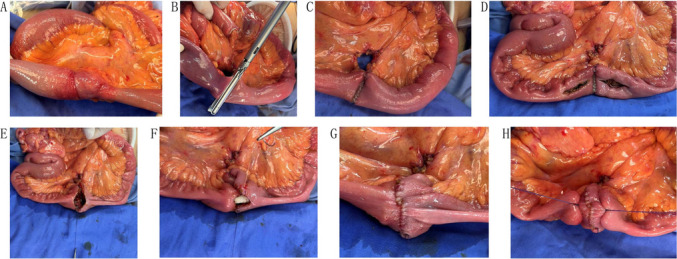
The study included 24 CD patients receiving KONO-S anastomosis with biodegradable stent and 32 patients receiving normal KONO-S anastomosis. In patients with biodegradable stent, 8 patients received small bowel resection, 15 received ileocecal resection, and 1 received colectomy; the mean time for the new anastomosis technique was 15.8 ± 2.0 min. No stent-related complications were observed postoperatively. The time to first flatus and defecation was 2.3 ± 0.5 days and 3.7 ± 0.8 days in patients with biodegradable stent, respectively. All the stents degraded at almost 4-5 weeks after surgery. The colonoscopy showed that the healing condition of the anastomosis was good without any recurrence during 6-month follow-up in the stent group.
This is a pilot study that showed that the KONO-S anastomosis technique with biodegradable stent was safe and feasible in CD with lower risk of anastomotic complications and no serious adverse events.
KONO-S(系膜对侧功能性端端手工缝合)吻合术近来已用于克罗恩病(CD),其在降低吻合口手术复发风险方面具有疗效。然而,采用该技术的CD患者中也发现有吻合口漏。本研究旨在评估KONO-S吻合术联合可生物降解支架在CD中的安全性和可行性。
我们对56例接受KONO-S吻合术行肠切除的CD患者进行了研究,部分患者使用了可生物降解支架。记录术后并发症、首次排气时间、首次排便时间以及吻合口愈合情况,尤其关注使用可生物降解支架的患者。
该研究纳入了24例接受KONO-S吻合术联合可生物降解支架的CD患者以及32例接受常规KONO-S吻合术的患者。使用可生物降解支架的患者中,8例行小肠切除术,15例行回盲部切除术,1例行结肠切除术;新吻合技术的平均时间为15.8±2.0分钟。术后未观察到与支架相关的并发症。使用可生物降解支架的患者首次排气时间和排便时间分别为2.3±0.5天和3.7±0.8天。所有支架在术后约4-5周降解。结肠镜检查显示,在支架组6个月的随访期间,吻合口愈合情况良好,无任何复发。
这是一项初步研究,表明KONO-S吻合术联合可生物降解支架在CD中是安全可行的,吻合口并发症风险较低,且无严重不良事件。