Lv Zhong, Zhao Suchen, Wu Haoran
Department of Urology, Changzhou Medical Center, Changzhou Wujin People's Hospital, Nanjing Medical University, Changzhou, 213003, China.
Department of Urology, Wujin Hospital Affiliated with Jiangsu University, Changzhou, 213003, China.
BMC Med Genomics. 2025 Apr 23;18(1):78. doi: 10.1186/s12920-025-02146-z.
This study aimed to explore the effect of LIM domain and actin binding 1 (LIMA1) on bladder cancer (BCa) cells and to investigate its underlying molecular mechanisms.
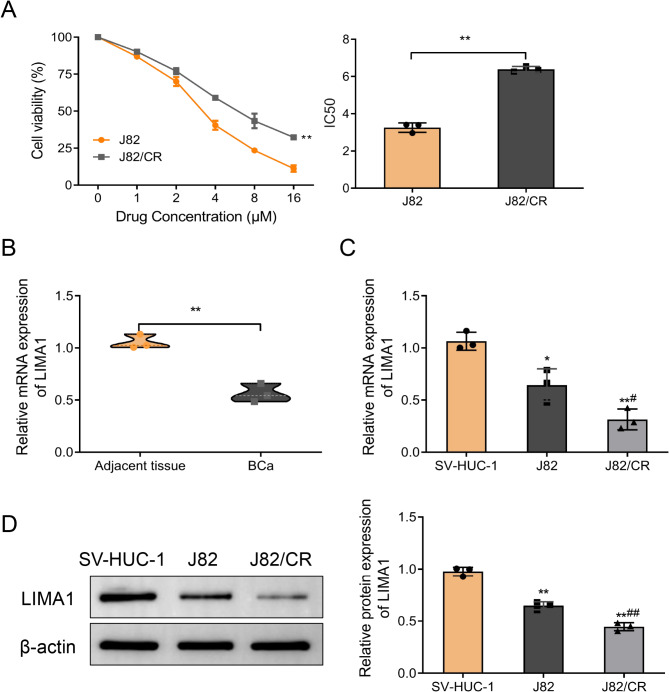
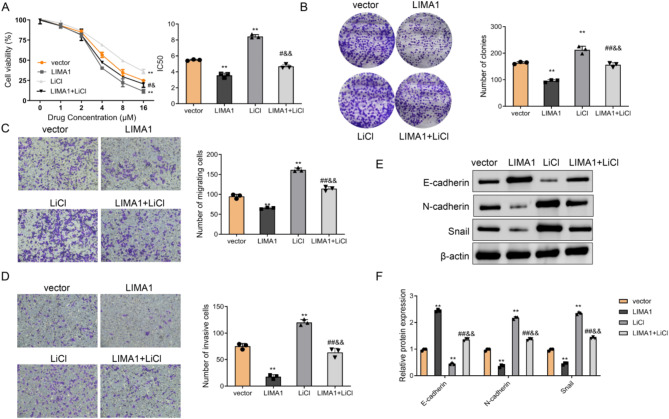
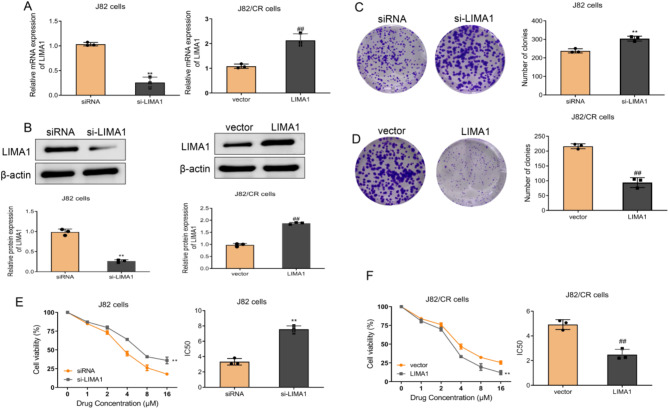
The expression of LIMA1 gene in clinical BCa tissue samples and BCa cell models was detected using real-time quantitative PCR and western blot. Subsequently, LIMA1 knockdown experiments were performed exclusively in the BCa J82 cell line, while LIMA1 overexpression was conducted only in the cisplatin-resistant J82/CR cell line. The proliferation of the cells was assessed by colony formation assay. Cisplatin resistance was evaluated by MTT assay. Migration and invasion of the cells were tested by Transwell assay. Additionally, the levels of key proteins in the Wnt/β-catenin signaling pathway were examined by western blotting.
We found that LIMA1 was underexpressed in BCa tissues and cells (P < 0.01). Overexpression of LIMA1 inhibited the proliferation, migration, invasion, and epithelial-mesenchymal transition of BCa cells (P < 0.01) and improved their cisplatin resistance (P < 0.01), whereas knocking down LIMA1 produced opposite results (P < 0.01). Furthermore, overexpression of LIMA1 could suppress the Wnt/β-catenin signaling pathway in BCa cells (P < 0.01), and activation of this pathway partially reversed the anti-tumor effects produced by overexpression of LIMA1 (P < 0.01).
LIMA1 could inhibit the malignant biological behavior of BCa cells and weaken their cisplatin resistance by negatively regulating the Wnt/β-catenin signaling pathway. Our findings provide new insights for the clinical treatment of BCa.
本研究旨在探讨LIM结构域和肌动蛋白结合蛋白1(LIMA1)对膀胱癌细胞的影响,并研究其潜在的分子机制。
采用实时定量PCR和蛋白质免疫印迹法检测临床膀胱癌组织样本和膀胱癌细胞模型中LIMA1基因的表达。随后,仅在膀胱癌细胞系J82中进行LIMA1基因敲低实验,而仅在顺铂耐药的J82/CR细胞系中进行LIMA1过表达实验。通过集落形成试验评估细胞增殖。通过MTT试验评估顺铂耐药性。通过Transwell试验检测细胞的迁移和侵袭能力。此外,通过蛋白质免疫印迹法检测Wnt/β-连环蛋白信号通路中关键蛋白的水平。
我们发现LIMA1在膀胱癌组织和细胞中表达下调(P < 0.01)。LIMA1过表达抑制了膀胱癌细胞的增殖、迁移、侵袭和上皮-间质转化(P < 0.01),并提高了其对顺铂的耐药性(P < 0.01),而敲低LIMA1则产生相反的结果(P < 0.01)。此外,LIMA1过表达可抑制膀胱癌细胞中的Wnt/β-连环蛋白信号通路(P < 0.01),该信号通路的激活部分逆转了LIMA1过表达产生的抗肿瘤作用(P < 0.01)。
LIMA1可通过负向调节Wnt/β-连环蛋白信号通路抑制膀胱癌细胞的恶性生物学行为并减弱其对顺铂的耐药性。我们的研究结果为膀胱癌的临床治疗提供了新的见解。