de Vasconcellos Jaira Ferreira, Westbrook Phillip, Dingle Marvin, Dimtchev Alexander, Raiciulescu Sorana, Schellhase Christopher W, Piscoya Andres, Putko Robert, Bedrin Michael, Cole Hisae, Cubbage Nicole, Dargan Lauren Jeannette, Pellegrini Vincent D, Nesti Leon J
Department of Biology, James Madison University, 951 Carrier Drive, MSC 7801, Harrisonburg, VA, 22807, USA.
Department of Orthopaedics and Physical Medicine, Medical University of South Carolina, Charleston, SC, 29425, USA.
Sci Rep. 2025 Apr 24;15(1):14277. doi: 10.1038/s41598-025-96961-0.
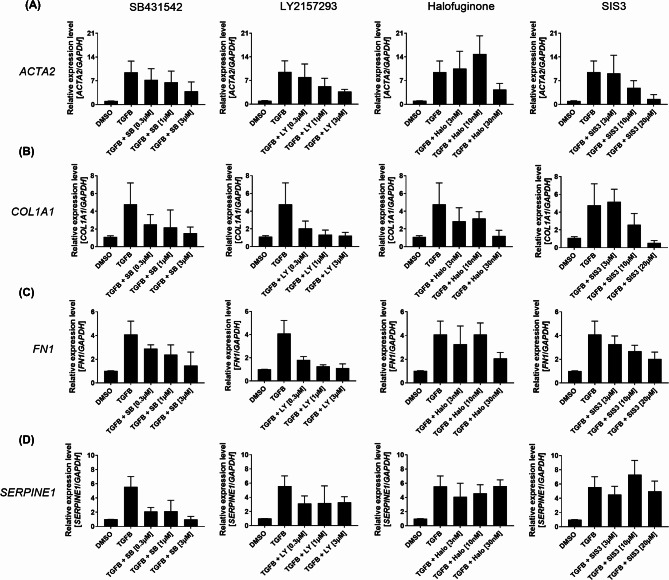
Heterotopic ossification (HO) is characterized by the abnormal growth of ectopic bone in non-skeletal soft tissues through a fibrotic pathway and is a frequent complication in a wide variety of musculoskeletal injuries. We have previously demonstrated that TGFβ levels are elevated in the soft tissues following extremity injuries. Since TGFβ mediates the initial inflammatory and wound-healing response in the traumatized muscle bed, we hypothesized that targeted inhibition of the TGFβ pathway may be able to abrogate the unbalanced fibrotic phenotype and bone-forming response observed in post-traumatic HO. Primary mesenchymal progenitor cells (MPCs) harvested from debrided traumatized human muscle tissue were used in this study. After treatment with TGFβ inhibitors (SB431542, Galunisertib/LY2157299, Halofuginone, and SIS3) cell proliferation/survival, fibrotic formation, osteogenic induction, gene expression, and phosphorylation of SMAD2/3 were assessed. In vivo studies were performed with a Sprague-Dawley rat blast model treated with the TGFβ inhibitors. The treatment effects on the rat tissues were investigated by radiographs, histology, and gene expression analyses. Primary MPCs treated with TGFβ had a significant increase in the number of fibrotic nodules compared to the control, while TGFβ inhibitors that directly block the TGFβ extracellular receptor had the greatest effect on reducing the number of fibrotic nodules and significantly reducing the expression of fibrotic genes. In vivo studies demonstrated a trend towards a lower extent of HO formation by radiographic analysis up to 4 months after injury when animals were treated with the TGFβ inhibitors SB431542, Halofuginone and SIS3. Altogether, our results suggest that targeted inhibition of the TGFβ pathway may be a useful therapeutic strategy for post-traumatic HO patients.
异位骨化(HO)的特征是通过纤维化途径在非骨骼软组织中异常生长异位骨,是多种肌肉骨骼损伤中常见的并发症。我们之前已经证明,肢体损伤后软组织中的转化生长因子β(TGFβ)水平会升高。由于TGFβ介导创伤性肌肉床中的初始炎症和伤口愈合反应,我们推测靶向抑制TGFβ信号通路可能能够消除创伤后HO中观察到的失衡纤维化表型和骨形成反应。本研究使用从清创后的创伤性人类肌肉组织中收获的原代间充质祖细胞(MPC)。在用TGFβ抑制剂(SB431542、加鲁尼西替/LY2157299、常山酮和SIS3)处理后,评估细胞增殖/存活、纤维化形成、成骨诱导、基因表达以及SMAD2/3的磷酸化。在体内研究中,使用TGFβ抑制剂处理Sprague-Dawley大鼠爆炸模型。通过X线片、组织学和基因表达分析研究对大鼠组织的治疗效果。与对照组相比,用TGFβ处理的原代MPC的纤维化结节数量显著增加,而直接阻断TGFβ细胞外受体的TGFβ抑制剂对减少纤维化结节数量和显著降低纤维化基因表达的效果最佳。体内研究表明,在用TGFβ抑制剂SB431542、常山酮和SIS3处理动物后,通过X线分析,在损伤后长达4个月时HO形成程度有降低的趋势。总之,我们的结果表明,靶向抑制TGFβ信号通路可能是创伤后HO患者的一种有用治疗策略。