Singano Nathan, Kainga Henson, Chatanga Elisha, Nkhoma Joseph, Njunga Gilson, Chulu Julius, Tembo Rabecca, Sawa Hirofumi, Muleya Walter
Department of Biomedical Sciences, School of Veterinary Medicine, The University of Zambia, Lusaka P.O. Box 32379, Zambia.
Department of Veterinary Epidemiology and Public Health, Faculty of Veterinary Medicine, Lilongwe University of Agriculture and Natural Resources, Lilongwe P.O. Box 219, Malawi.
Trop Med Infect Dis. 2025 Apr 4;10(4):95. doi: 10.3390/tropicalmed10040095.
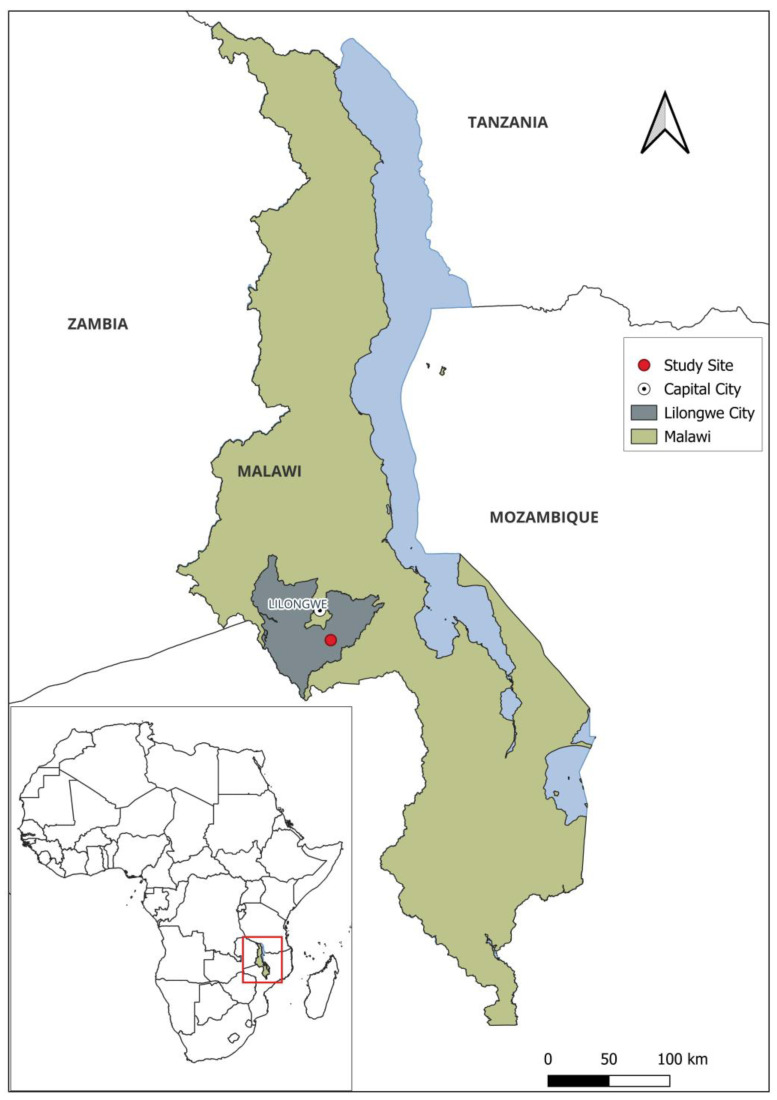
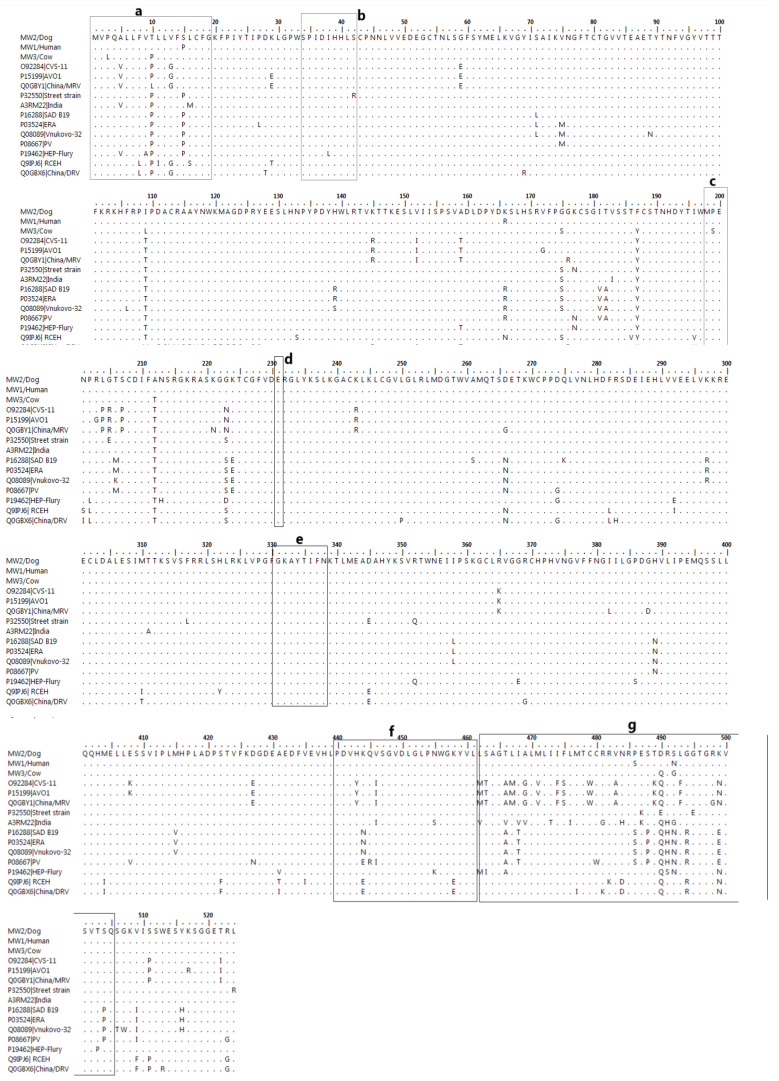
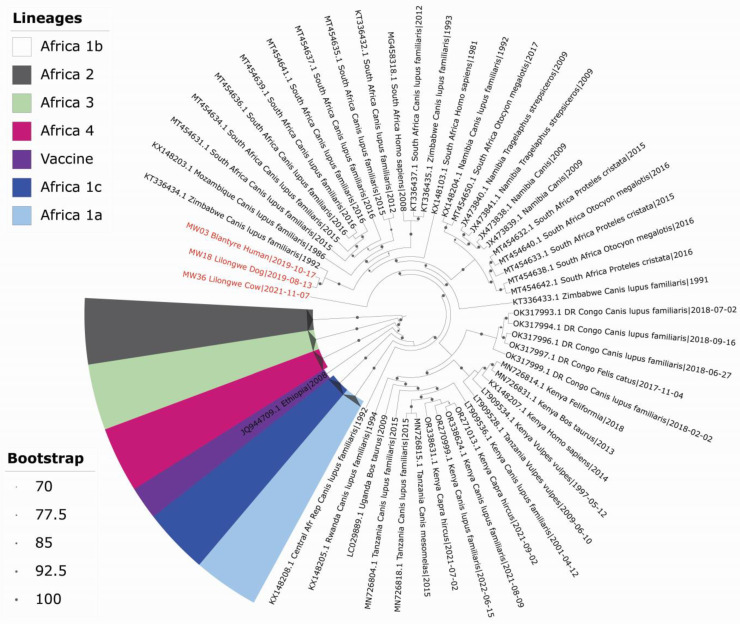
Rabies, a fatal zoonotic disease, affects humans, domestic animals, and wildlife predominantly in Africa, Asia, and Latin America. In Malawi, rabies virus (RABV) is primarily transmitted by infected dogs, impacting humans and cattle. Lyssavirus has also been documented in insectivorous bats. A community survey near bat roosts assessed knowledge, attitudes, and practices regarding bat-borne zoonoses. Bat samples were tested for lyssavirus using RT-PCR, and RABV genomes from humans and domestic animals were sequenced and analysed phylogenetically. The survey revealed that 50% of participants consumed bat meat, and 47% reported bats entering their homes. Reduced bat presence indoors significantly lowered contact risk (aOR: 0.075, = 0.021). All 23 bat samples tested negative for lyssavirus. Malawian RABV genomes, 11,801 nucleotides long, belonged to the Africa 1b lineage, showing >95% similarity with GenBank sequences. Phylogenetic analysis indicated close clustering with strains from Tanzania, Zimbabwe, and South Africa. Human and cattle strains shared 99% and 92% amino acid similarity with dog strains, respectively, with conserved critical sites and unique substitutions across all five RABV genes. Frequent human-bat interactions pose zoonotic risks. While no lyssavirus was detected in bats, ongoing surveillance is crucial. This first comprehensive genome analysis of Malawian RABVs highlights their regional transmission and signifies the need for regional collaboration in rabies control, community education, and further study of genetic adaptations.
狂犬病是一种致命的人畜共患病,主要影响非洲、亚洲和拉丁美洲的人类、家畜和野生动物。在马拉维,狂犬病病毒(RABV)主要通过受感染的狗传播,对人类和牛造成影响。食虫蝙蝠中也有狂犬病病毒的记录。在蝙蝠栖息地附近进行的一项社区调查评估了人们对蝙蝠传播的人畜共患病的知识、态度和行为。使用逆转录聚合酶链反应(RT-PCR)对蝙蝠样本进行狂犬病病毒检测,并对来自人类和家畜的RABV基因组进行测序和系统发育分析。调查显示,50%的参与者食用过蝙蝠肉,47%的人报告蝙蝠进入过他们的家中。室内蝙蝠出现次数减少显著降低了接触风险(调整优势比:0.075,P = 0.021)。所有23个蝙蝠样本的狂犬病病毒检测均为阴性。马拉维的RABV基因组长度为11,801个核苷酸,属于非洲1b谱系,与GenBank序列的相似度>95%。系统发育分析表明,它们与来自坦桑尼亚、津巴布韦和南非的毒株紧密聚类。人类和牛的毒株与狗的毒株分别有99%和92%的氨基酸相似度,所有五个RABV基因都有保守的关键位点和独特的替换。人类与蝙蝠的频繁互动带来了人畜共患病风险。虽然在蝙蝠中未检测到狂犬病病毒,但持续监测至关重要。这项对马拉维狂犬病病毒的首次全面基因组分析突出了它们的区域传播情况,表明在狂犬病控制、社区教育以及遗传适应性的进一步研究方面需要开展区域合作。