Bennis Nechba Rhita, Belayachi Jihane, Agrou Mina, El Fahime Elmostapha, Meknassi Nawal, Louriz Maha, Madani Naoufel, Abouqal Redouane
Acute Medical Unit, Ibn Sina University Hospital, Rabat 10000, Morocco.
Laboratory of Biostatistics, Clinicial, and Epidemiological Research, Faculty of Medecine and Pharmacy, Mohammed V University of Rabat, Rabat 10000, Morocco.
Life (Basel). 2025 Apr 21;15(4):676. doi: 10.3390/life15040676.
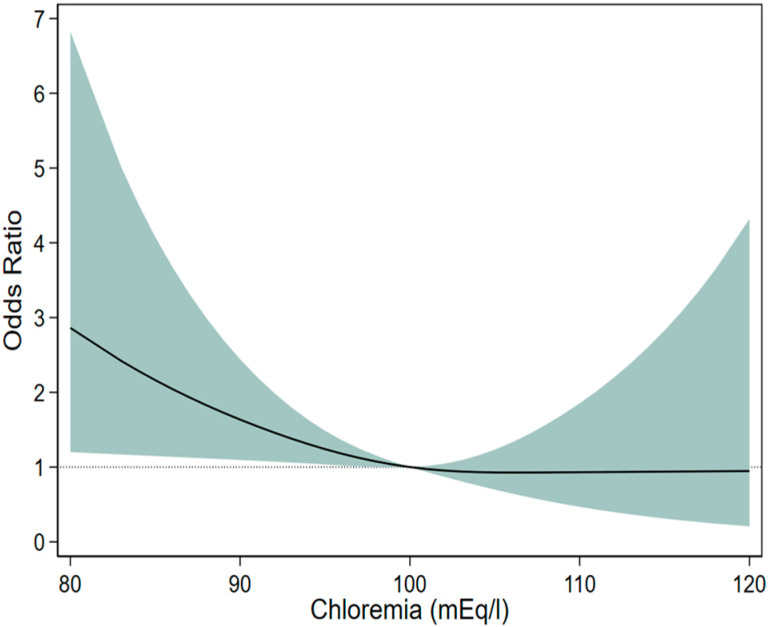
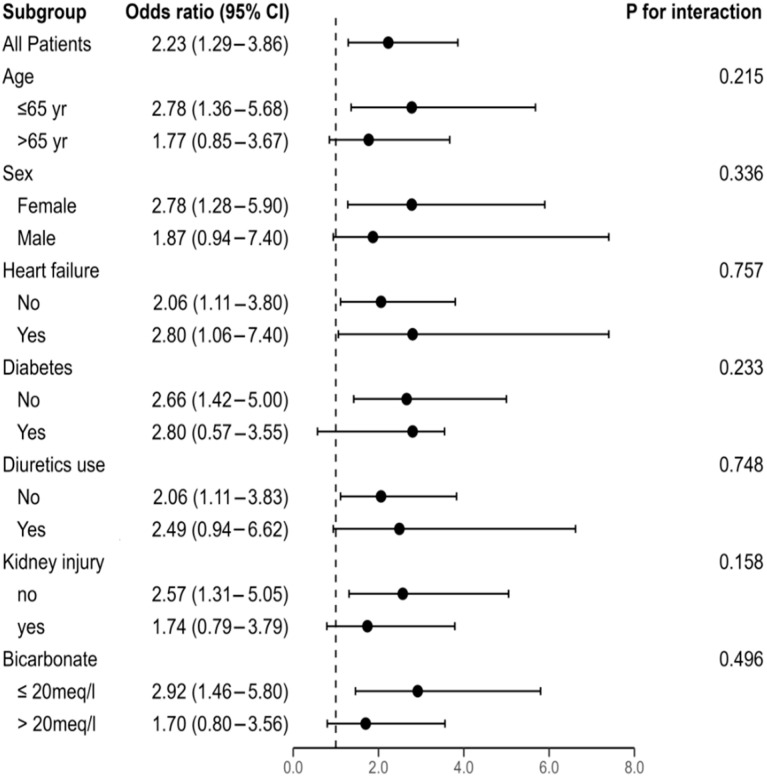
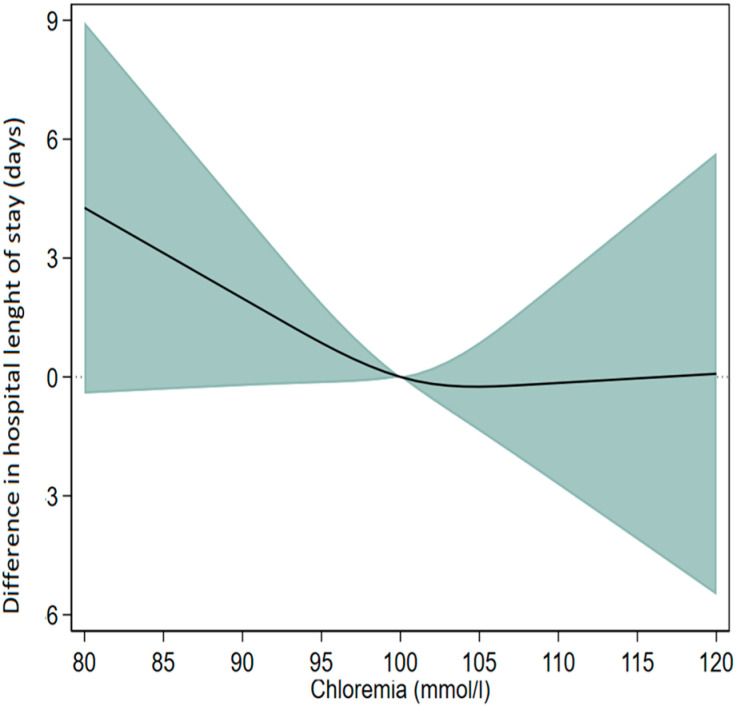
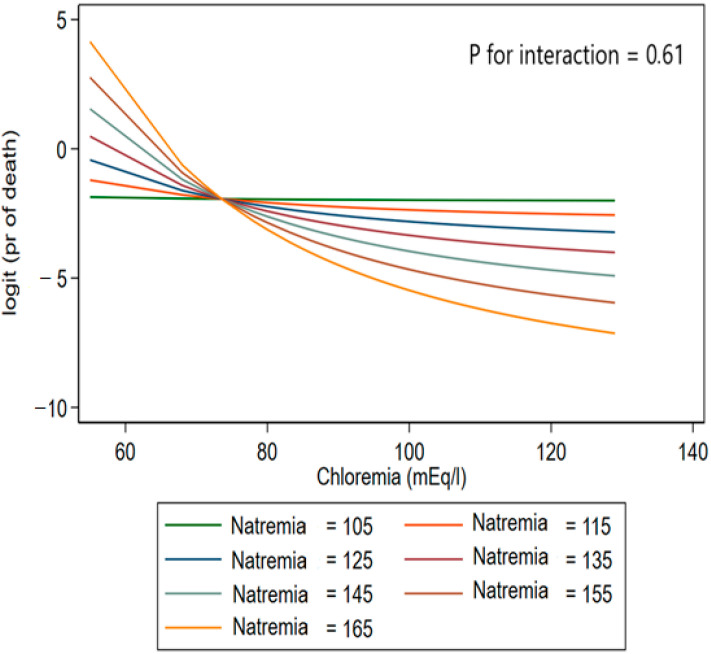
Chloride plays a considerable role in physiology. This study aimed to assess the association between serum chloride and prognosis in the population of adults with acute medical conditions. A prospective cohort study was conducted in an acute medical unit. Chloride levels at admission were the main exposure factor, categorized into hypochloremia, normochloremia, and hyperchloremia. The outcomes were in-hospital mortality and length of hospital stay (LOHS). A total of 798 patients were included. The mean age was 57.3 ± 18.3 years. The prevalence of dyschloremia was 40.9%. Restricted cubic splines revealed a linear association between hypochloremia and in-hospital mortality, as well as between hypochloremia and LOHS. After adjusting for age, sex, heart failure, diabetes, sodium, bicarbonates, creatinine, and diuretic use, hypochloremia was significantly associated with in-hospital mortality (OR = 2.23; 95% CI: 1.29, 3.86, = 0.006), but not hyperchloremia ( = 0.57). Similarly, it was associated with a longer LOHS (β = 2.19; 95% CI: 0.01, 4.39, = 0.05), but not hyperchloremia ( = 0.8). The interaction between chloride and sodium levels was not significant ( = 0.61). Subgroup analysis showed that the effect of hypochloremia on in-hospital mortality was consistent across subgroups. The prevalence of dyschloremia in this study was high at 40.9%. Hypochloremia increased the risk of in-hospital mortality and extended the LOHS. Differentiating the effects of chloride levels from those of sodium can enhance clinical risk stratification and enable a more targeted management approach for acutely ill patients. Recognizing this distinction is essential for optimizing prognostic assessment and tailoring treatment strategies accordingly.
氯离子在生理学中起着相当重要的作用。本研究旨在评估急性内科疾病成年人群血清氯离子水平与预后之间的关联。在一个急性内科病房进行了一项前瞻性队列研究。入院时的氯离子水平是主要暴露因素,分为低氯血症、正常氯血症和高氯血症。结局指标为住院死亡率和住院时间(LOHS)。共纳入798例患者。平均年龄为57.3±18.3岁。氯代谢紊乱的患病率为40.9%。限制性立方样条显示低氯血症与住院死亡率之间以及低氯血症与住院时间之间存在线性关联。在调整年龄、性别、心力衰竭、糖尿病、钠、碳酸氢盐、肌酐和利尿剂使用情况后,低氯血症与住院死亡率显著相关(OR = 2.23;95%CI:1.29,3.86,P = 0.006),但高氯血症与住院死亡率无关(P = 0.57)。同样,低氯血症与较长的住院时间相关(β = 2.19;95%CI:0.01,4.39,P = 0.05),但高氯血症与住院时间无关(P = 0.8)。氯离子和钠水平之间的相互作用不显著(P = 0.61)。亚组分析表明,低氯血症对住院死亡率的影响在各亚组中是一致的。本研究中氯代谢紊乱的患病率较高,为40.9%。低氯血症增加了住院死亡率风险并延长了住院时间。区分氯离子水平和钠水平的影响可以加强临床风险分层,并为急性病患者提供更有针对性的管理方法。认识到这种区别对于优化预后评估和相应调整治疗策略至关重要。