Sirakanyan Samvel N, Hakobyan Elmira K, Geronikaki Athina, Spinelli Domenico, Petrou Anthi, Kartsev Victor G, Yegoryan Hasmik A, Jughetsyan Hasmik V, Manukyan Mariam E, Paronikyan Ruzanna G, Araqelyan Tatevik A, Hovakimyan Anush A
Scientific Technological Center of Organic and Pharmaceutical Chemistry of National Academy of Science of Republic of Armenia, Institute of Fine Organic Chemistry of A.L. Mnjoyan, Yerevan 0014, Armenia.
Department of Pharmacy, School of Health, Aristotle University of Thessaloniki, 54124 Thessaloniki, Greece.
Pharmaceuticals (Basel). 2025 Apr 19;18(4):597. doi: 10.3390/ph18040597.
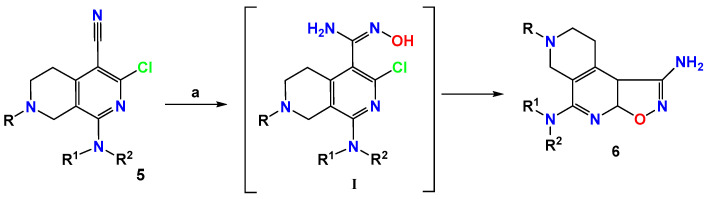
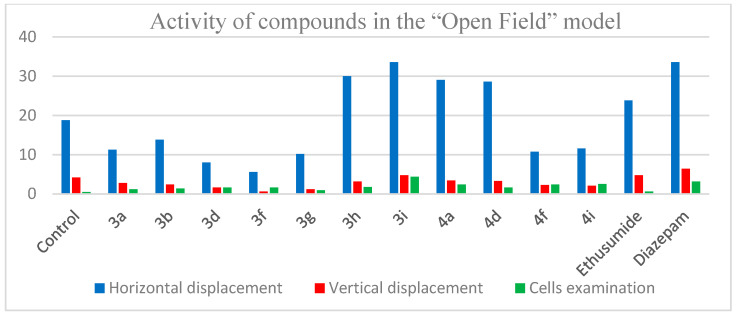
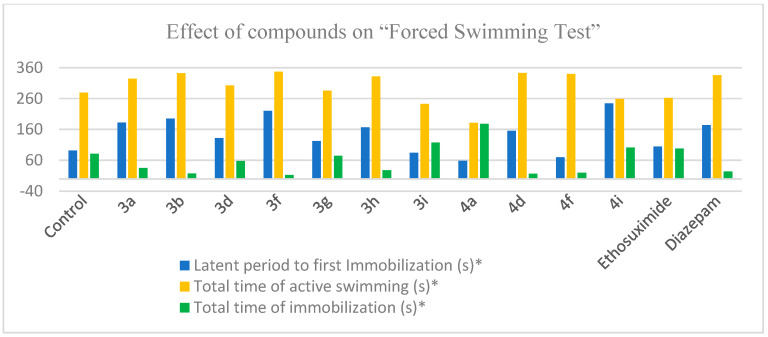
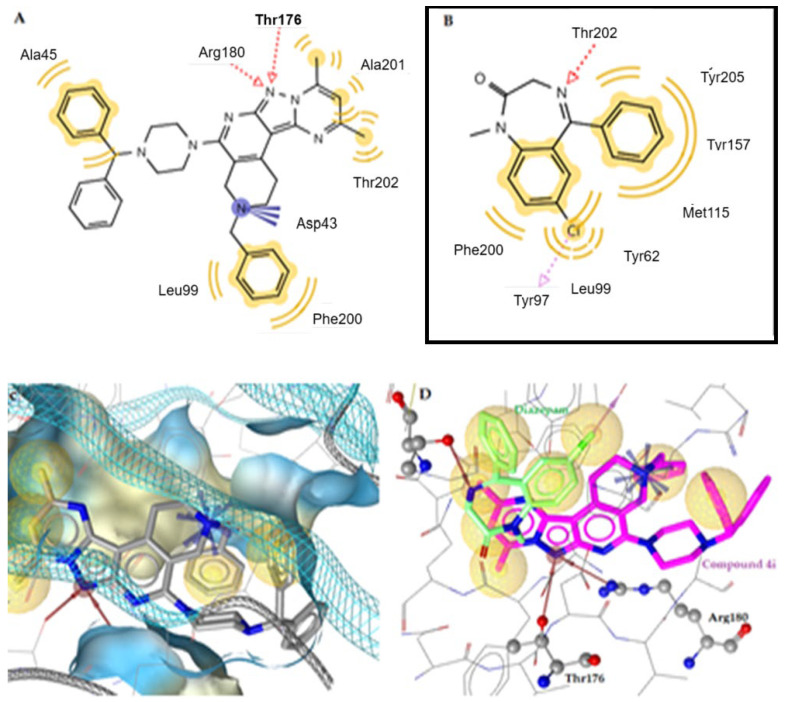
: Approximately 1% of people worldwide suffer from epilepsy. The development of safer and more effective antiepileptic medications (AEDs) is still urgently needed because all AEDs have some unwanted side effects and roughly 30% of epileptic patients cannot stop having seizures when taking current AEDs. It should be noted that the derivatives of pyrazolo[3,4-]pyridine are important core structures in many drug substances. The aim of this study is to synthesize new derivatives of piperazino-substituted pyrazolo[3,4-]-2,7-naphthyridines and 9,11-dimethylpyrimido[1',2':1,5]pyrazolo[3,4-]-2,7-naphthyridines for the evaluation of their neurotropic activity. : The synthesis of the target compounds was performed starting from 1-amino-3-chloro-2,7-naphthyridines and using well-known methods. The structures of all the synthesized compounds were confirmed by spectroscopic data. Compounds were studied for their potential neurotropic activities (anticonvulsant, sedative, anti-anxiety, and antidepressive), as well as side effects, in 450 white mice of both sexes and 50 male Wistar rats. The anticonvulsant effect of the newly synthesized compounds was investigated by using the following tests: pentylenetetrazole, thiosemicarbazide-induced convulsions, and maximal electroshock. The psychotropic properties of the selected compounds were evaluated by using the following tests: the Open Field test, the Elevated Plus Maze (EPM), the Forced Swimming test, and Rotating Rod Test to study muscle relaxation. For the docking studies, AutoDock 4 (version 4.2.6) was used, as well as the structures of the GABA receptor (PDB ID: 4COF), the SERT transporter (PDB ID: 3F3A), and the 5-HT receptor (PDB ID: 3NYA) obtained from the Protein Data Bank. A series of piperazino-substituted pyrazolo[3,4-]-2,7-naphthyridines (-) and 9,11-dimethylpyrimido[1',2':1,5]pyrazolo[3,4-]-2,7-naphthyridines (-), as well as new heterocyclic systems, i.e., isoxazolo[5,4-]-2,7-naphthyridines -, were synthesized and evaluated for their neurotropic activity. The investigation showed that some of these compounds (,,,- and ,,,) display high anticonvulsant activity, especially in the test of antagonism with pentylenetetrazol, surpassing the well-known antiepileptic drug ethosuximide. Thus, the most active compounds in the pentylenpotetrazole test are , , and ; the ED50 of compound is 23.8, and the therapeutic index is more than 33.6, which is the highest among these three active compounds. On the other hand, they simultaneously exhibit psychotropic (anxiolytic, antidepressant, or sedative) or behavioral depressant) effects. The effective compounds do not cause myorelaxation at the tested doses and have high therapeutic indices. Docking on the most active compounds, i.e., , , and , is in agreement with the experimental results. The studies reveled that some of these compounds (, , and ) display high anticonvulsant and psychotropic activities. The most active compounds contained methyl and diphenylmethyl groups in the piperazine ring. The docking studies identified compounds , , and as the most potent anticonvulsants, showing strong affinity for GABA, 5-HT receptors, and the SERT transporter. Notably, compound formed two hydrogen bonds with Thr176 and Arg180 on GABA and exhibited a binding energy (-8.81 kcal/mol) comparable to that of diazepam (-8.90 kcal/mol). It also showed the strongest binding to SERT (-7.28 kcal/mol), stabilized by interactions with Gly439, Ile441, and Arg11. Furthermore, 4i displayed the best docking score with 5-HT (-9.10 kcal/mol) due to multiple hydrogen bonds and hydrophobic interactions, supporting its potential as a dual-acting agent targeting both SERT and 5-HT.
全球约1%的人患有癫痫。由于所有抗癫痫药物(AEDs)都有一些不良副作用,并且大约30%的癫痫患者在服用当前的抗癫痫药物时仍无法停止发作,因此仍迫切需要开发更安全、更有效的抗癫痫药物。应当指出,吡唑并[3,4 - ]吡啶的衍生物是许多药物中的重要核心结构。本研究的目的是合成哌嗪取代的吡唑并[3,4 - ] - 2,7 - 萘啶和9,11 - 二甲基嘧啶并[1',2':1,5]吡唑并[3,4 - ] - 2,7 - 萘啶的新衍生物,以评估它们的神经活性。
目标化合物的合成从1 - 氨基 - 3 - 氯 - 2,7 - 萘啶开始,采用已知方法进行。所有合成化合物的结构均通过光谱数据得到证实。在450只雌雄白色小鼠和50只雄性Wistar大鼠中研究了化合物的潜在神经活性(抗惊厥、镇静、抗焦虑和抗抑郁)以及副作用。通过以下试验研究新合成化合物的抗惊厥作用:戊四氮、氨基硫脲诱导的惊厥和最大电休克。通过以下试验评估所选化合物的精神特性:旷场试验、高架十字迷宫(EPM)、强迫游泳试验和转棒试验以研究肌肉松弛。对于对接研究,使用了AutoDock 4(版本4.2.6)以及从蛋白质数据库获得的GABA受体(PDB ID:4COF)、5 - 羟色胺转运体(PDB ID:3F3A)和5 - 羟色胺受体(PDB ID:3NYA)的结构。
合成了一系列哌嗪取代的吡唑并[3,4 - ] - 2,7 - 萘啶( - )和9,11 - 二甲基嘧啶并[1',2':1,5]吡唑并[3,4 - ] - 2,7 - 萘啶( - )以及新的杂环体系,即异恶唑并[5,4 - ] - 2,7 - 萘啶( - ),并评估了它们的神经活性。研究表明,其中一些化合物( - 、 - 、 - 、 - 以及 - 、 - 、 - )表现出高抗惊厥活性,特别是在与戊四氮拮抗试验中,超过了著名的抗癫痫药物乙琥胺。因此,在戊四氮试验中最具活性的化合物是 - 、 - 和 - ;化合物 - 的半数有效剂量(ED50)为23.8,治疗指数超过33.6,是这三种活性化合物中最高的。另一方面,它们同时表现出精神(抗焦虑、抗抑郁或镇静)或行为抑制作用。有效化合物在测试剂量下不会引起肌肉松弛,并且具有高治疗指数。对最具活性的化合物 - 、 - 和 - 进行对接与实验结果一致。研究表明,其中一些化合物( - 、 - 和 - )表现出高抗惊厥和精神活性。最具活性的化合物在哌嗪环中含有甲基和二苯甲基基团。对接研究确定化合物 - 、 - 和 - 为最有效的抗惊厥剂,对GABA、5 - 羟色胺受体和5 - 羟色胺转运体表现出强亲和力。值得注意的是,化合物 - 与GABA上的Thr176和Arg180形成两个氢键,并且表现出与地西泮( - 8.90 kcal/mol)相当的结合能( - 8.81 kcal/mol)。它还显示出与5 - 羟色胺转运体最强的结合( - 7.28 kcal/mol),通过与Gly439、Ile441和Arg11的相互作用而稳定。此外,4i由于多个氢键和疏水相互作用,与5 - 羟色胺表现出最佳对接分数( - 9.10 kcal/mol),支持其作为同时靶向5 - 羟色胺转运体和5 - 羟色胺的双重作用剂的潜力。