Jia Hui, Li Pan, Li Minye, Liu Ning, Dong Jingao, Qu Qing, Cao Zhiyan
State Key Laboratory of North China Crop Improvement and Regulation, Hebei Agricultural University, Baoding 071000, China.
College of Life Sciences, Fujian Normal University, Fuzhou 350117, China.
Plants (Basel). 2025 Apr 20;14(8):1250. doi: 10.3390/plants14081250.
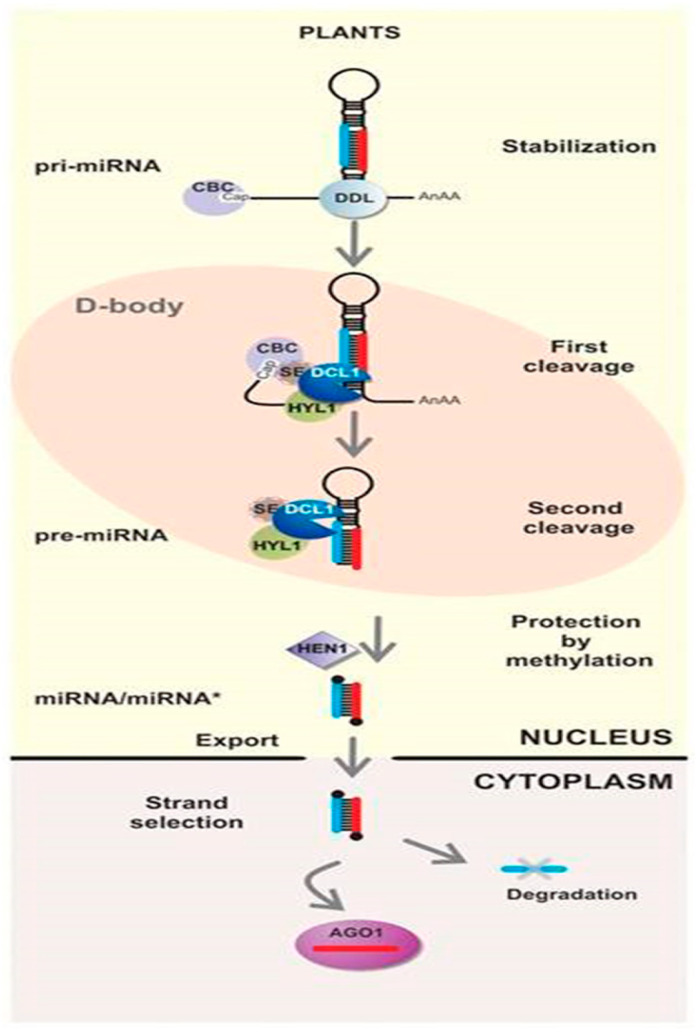
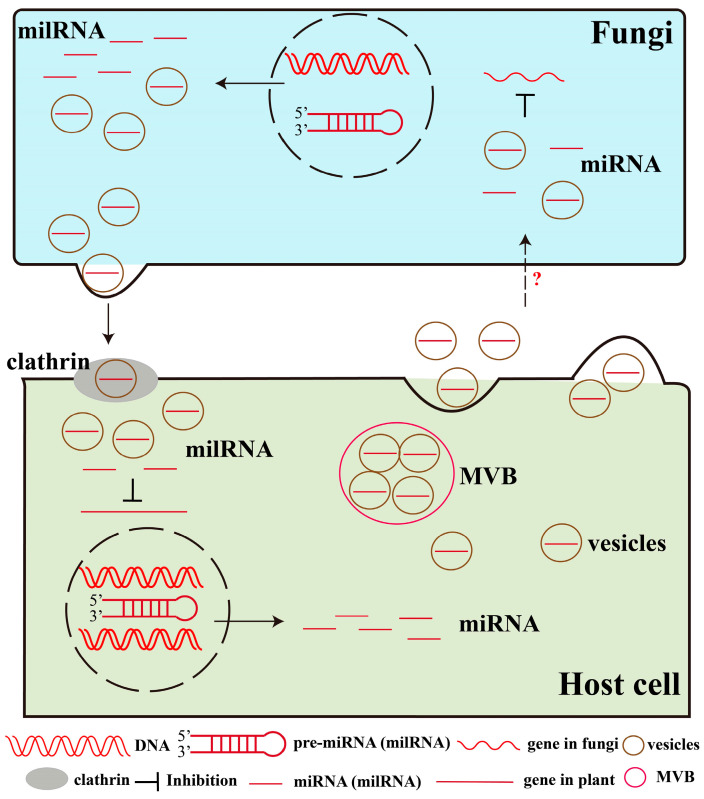
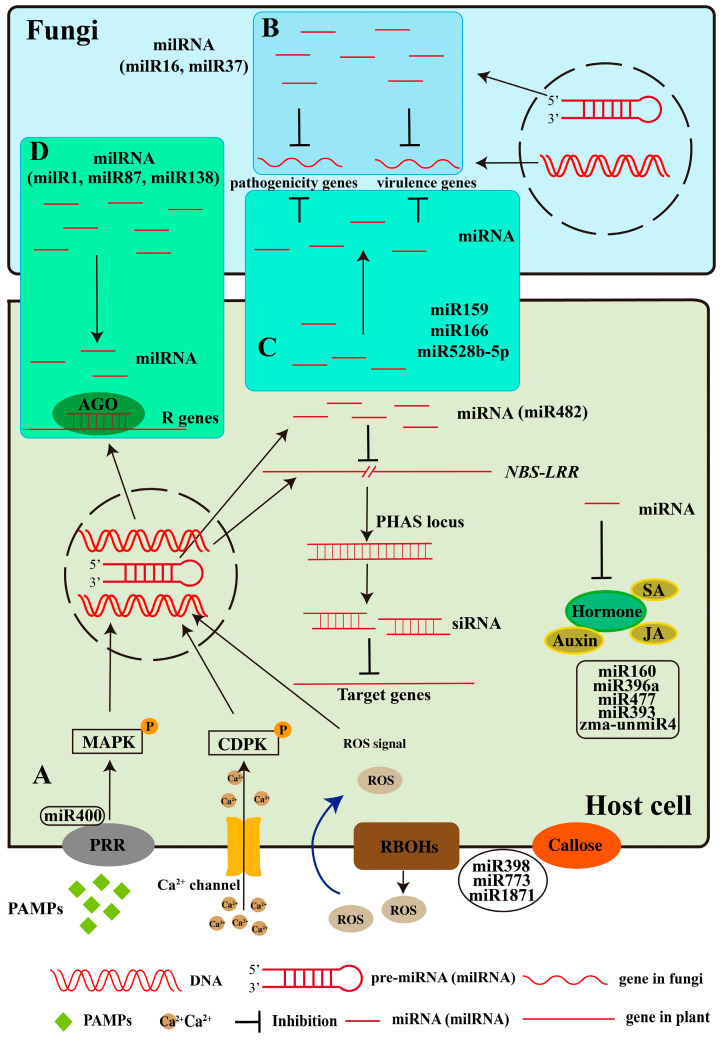
MicroRNAs (miRNAs) are a class of non-coding RNAs approximately 20-24 nucleotides in length, which play a crucial role during gene regulation in plant-pathogen interaction. They negatively regulate the expression of target genes, primarily at the transcriptional or post-transcriptional level, through complementary base pairing with target gene sequences. Recent studies reveal that during pathogen infection, miRNAs produced by plants and miRNA-like RNAs (milRNAs) produced by fungi can regulate the expression of endogenous genes in their respective organisms and undergo trans-kingdom transfer. They can thereby negatively regulate the expression of target genes in recipient cells. These findings provide novel perspectives for deepening our understanding of the regulatory mechanisms underlying plant-pathogen interactions. Here, we summarize and discuss the roles of miRNAs and milRNAs in mediating plant-pathogen interactions via multiple pathways, providing new insights into the functions of these RNAs and their modes of action. Collectively, these insights lay a theoretical foundation for the targeted management of crop diseases.
微小RNA(miRNA)是一类长度约为20 - 24个核苷酸的非编码RNA,在植物与病原体相互作用的基因调控过程中发挥着关键作用。它们主要通过与靶基因序列互补碱基配对,在转录或转录后水平对靶基因的表达进行负调控。最近的研究表明,在病原体感染期间,植物产生的miRNA和真菌产生的类miRNA(milRNA)可以调节各自生物体中内源基因的表达,并进行跨物种转移。它们从而可以对受体细胞中靶基因的表达进行负调控。这些发现为深入理解植物与病原体相互作用的调控机制提供了新的视角。在此,我们总结并讨论了miRNA和milRNA通过多种途径介导植物与病原体相互作用的作用,为这些RNA的功能及其作用模式提供了新的见解。总的来说,这些见解为作物病害的靶向管理奠定了理论基础。