Teng Wending, Xiao Jianfeng, Xu Qian, Li Penghao
Department of Reproductive Health and Infertility, Chengdu Women's and Children's Central Hospital, School of Medicine, University of Electronic Science and Technology of China, Sichuan, China.
Department of Reproductive Center, The First Affiliated Hospital of Shantou University Medical College, Shantou University, Guangdong, China.
Am J Mens Health. 2025 Mar-Apr;19(2):15579883251334561. doi: 10.1177/15579883251334561. Epub 2025 Apr 28.
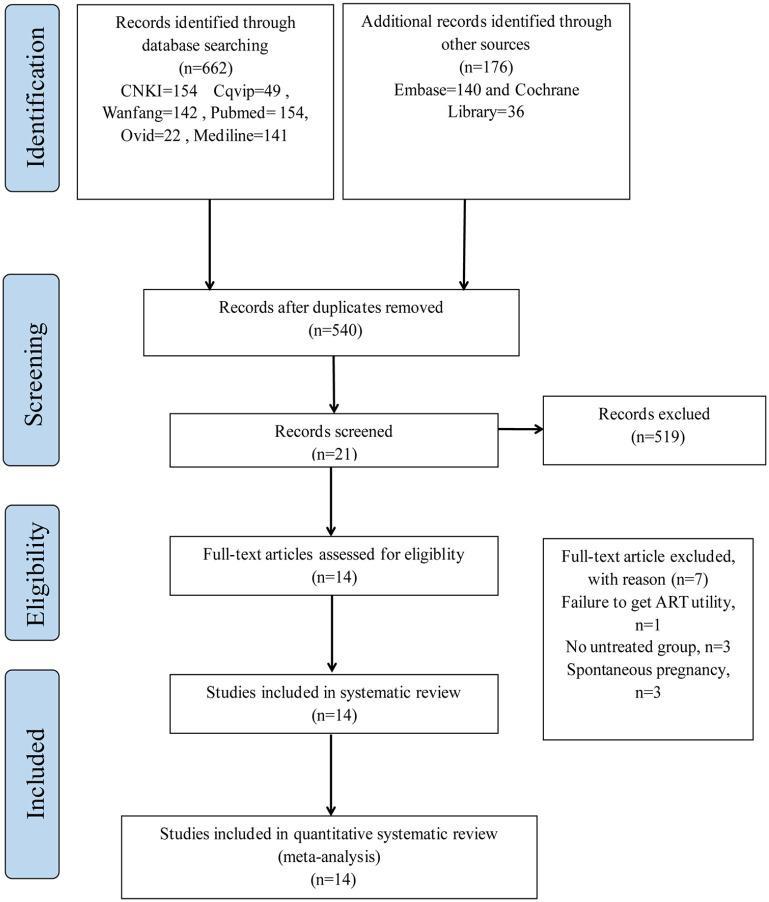
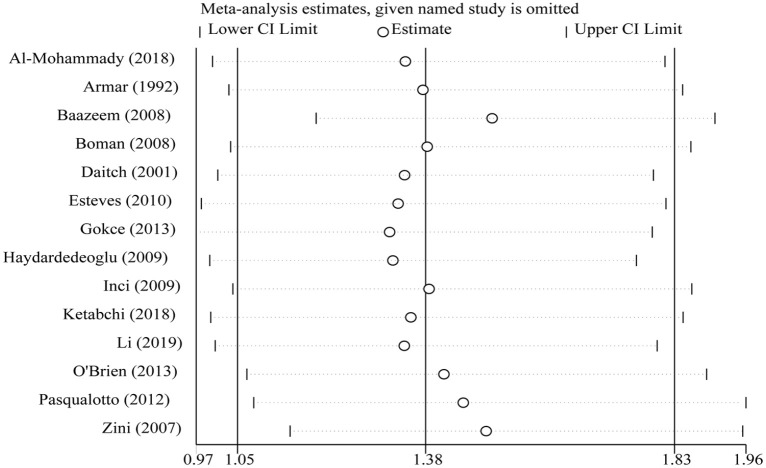
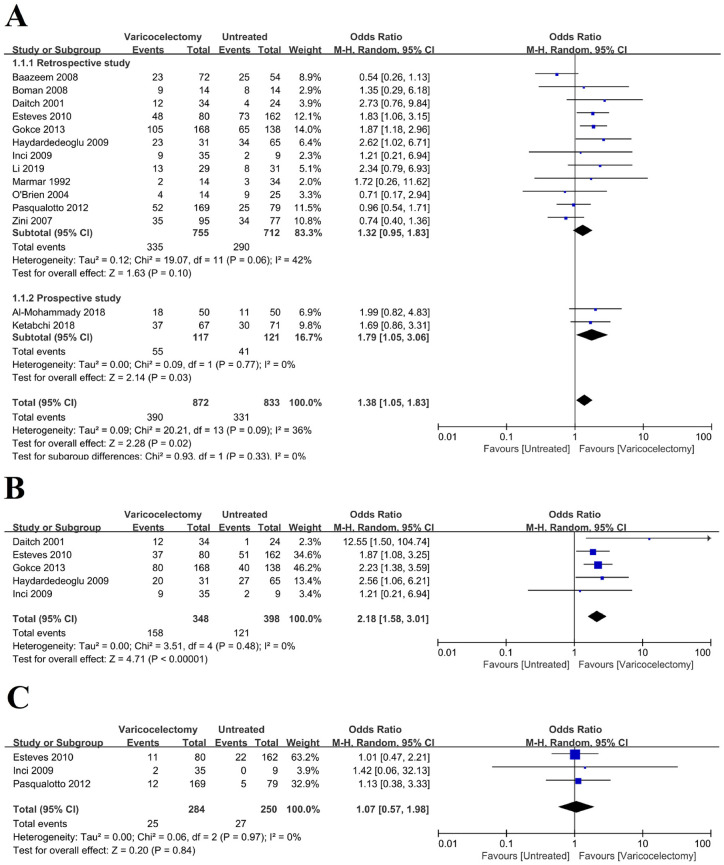
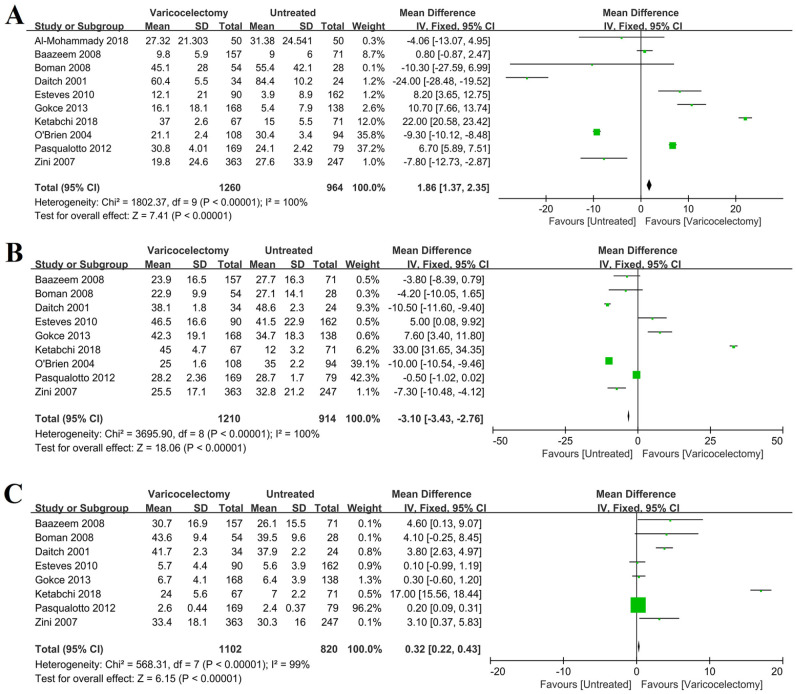
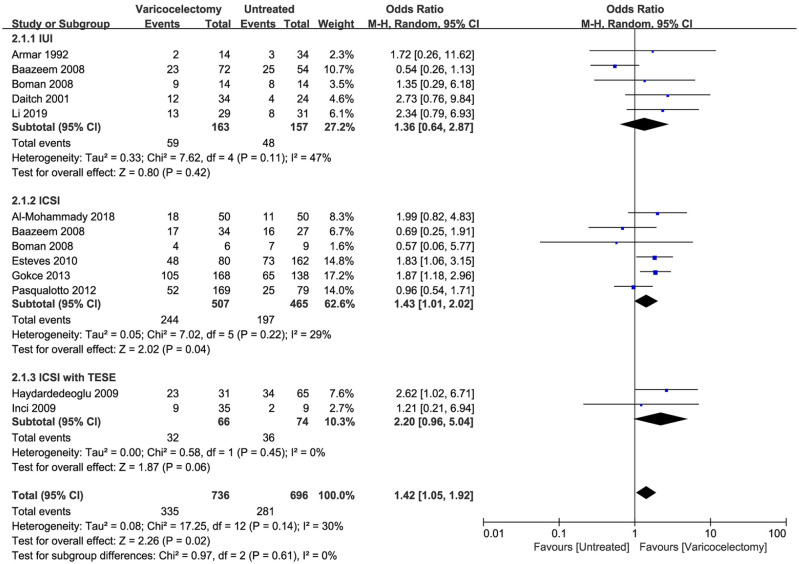
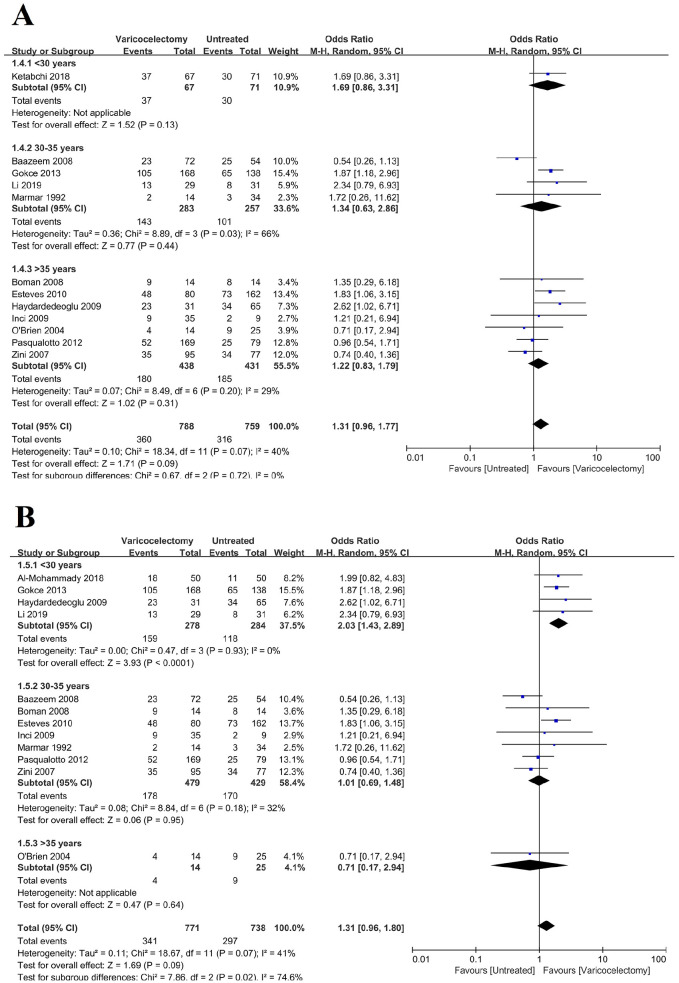
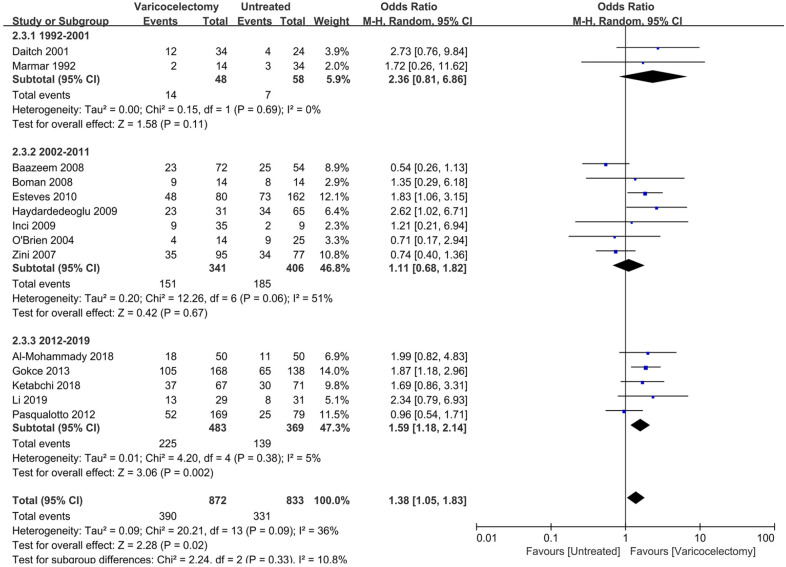
Varicocele can lead to impaired semen parameters and induce infertility. Varicocelectomy is considered the gold standard for varicocele treatment. However, its impact on improving assisted reproductive technologies (ARTs) outcomes remains contentious. This study seeks to compare reproductive outcomes between infertile men who underwent varicocelectomy and those who did not prior to ARTs. In addition, it evaluates the influence of types of fertilization, couples' ages, and treatment years on clinical pregnancy rates. A comprehensive search was conducted through February 2023 across eight electronic databases using combinations of relevant keywords. Observational and randomized controlled trials (RCTs) were included. Fourteen eligible studies ( = 1,705) were included: 12 retrospective studies ( = 1,467) and 2 prospective studies ( = 238). Pooled results indicated that infertile men who received varicocelectomy had a significantly higher clinical pregnancy rate compared to the control group (OR: 1.38, 95% CI [1.05, 1.83]; = 36%, = .02). The live birth rate was also significantly higher in the treatment group (OR: 2.18, [1.58, 3.01]; < .00001; = 0%). However, miscarriage rates did not significantly differ (OR: 1.07; [0.57, 1.98]; = 0%, = .84). Varicocelectomy significantly improved sperm concentration and normal morphology rate, but did not result in a significant enhancement in sperm motility. Men who underwent varicocelectomy between 2012 and 2019 and subsequently received intracytoplasmic sperm injection exhibited improved outcomes, particularly when their female partners were under 30 years of age. Larger, high-quality RCTs are needed to clarify benefits or avoid unnecessary treatments.
精索静脉曲张可导致精液参数受损并引发不育。精索静脉结扎术被认为是精索静脉曲张治疗的金标准。然而,其对改善辅助生殖技术(ARTs)结局的影响仍存在争议。本研究旨在比较接受精索静脉结扎术的不育男性与在进行ARTs之前未接受该手术的男性的生殖结局。此外,还评估了受精类型、夫妻年龄和治疗年份对临床妊娠率的影响。通过组合相关关键词,于2023年2月对八个电子数据库进行了全面检索。纳入了观察性研究和随机对照试验(RCTs)。共纳入14项符合条件的研究(n = 1705):12项回顾性研究(n = 1467)和2项前瞻性研究(n = 238)。汇总结果表明,与对照组相比,接受精索静脉结扎术的不育男性临床妊娠率显著更高(OR:1.38,95%CI[1.05,1.83];P = 36%,P = 0.02)。治疗组的活产率也显著更高(OR:2.18,[1.58,3.01];P < 0.00001;P = 0%)。然而,流产率无显著差异(OR:1.07;[0.57,1.98];P = 0%,P = 0.84)。精索静脉结扎术显著提高了精子浓度和正常形态率,但并未显著提高精子活力。2012年至2019年间接受精索静脉结扎术并随后接受卵胞浆内单精子注射的男性结局有所改善,尤其是当他们的女性伴侣年龄在30岁以下时。需要更大规模、高质量的RCTs来明确益处或避免不必要的治疗。