den Hartog Yvette, Malahe S Reshwan K, Rietdijk Wim J R, Dieterich Marjolein, Gommers Lennert, van Baarle Debbie, Diavatopoulos Dimitri A, Messchendorp A Lianne, van der Molen Renate G, Remmerswaal Ester B M, Bemelman Frederike J, Kho Marcia M L, GeurtsvanKessel Corine H, Koopmans Marion P G, Gansevoort Ron T, Hilbrands Luuk B, Sanders Jan-Stephan, Reinders Marlies E J, Baan Carla C, de Vries Rory D
Department of Internal Medicine, Nephrology and Transplantation, Erasmus MC Transplant Institute, University Medical Center Rotterdam, Rotterdam, The Netherlands.
Department of Hospital Pharmacy, Erasmus MC, University Medical Center Rotterdam, Rotterdam, The Netherlands.
Npj Viruses. 2024 Feb 14;2(1):7. doi: 10.1038/s44298-024-00015-7.
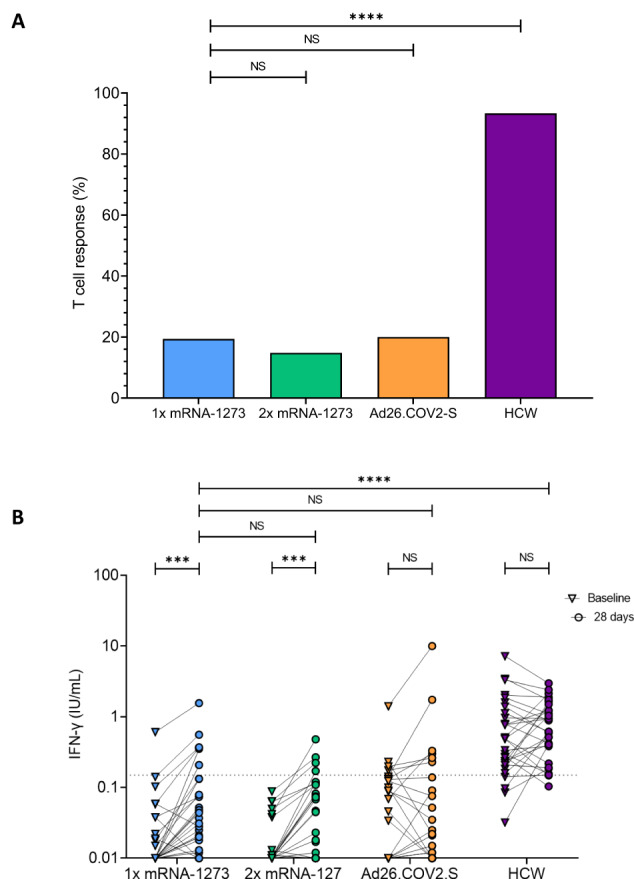
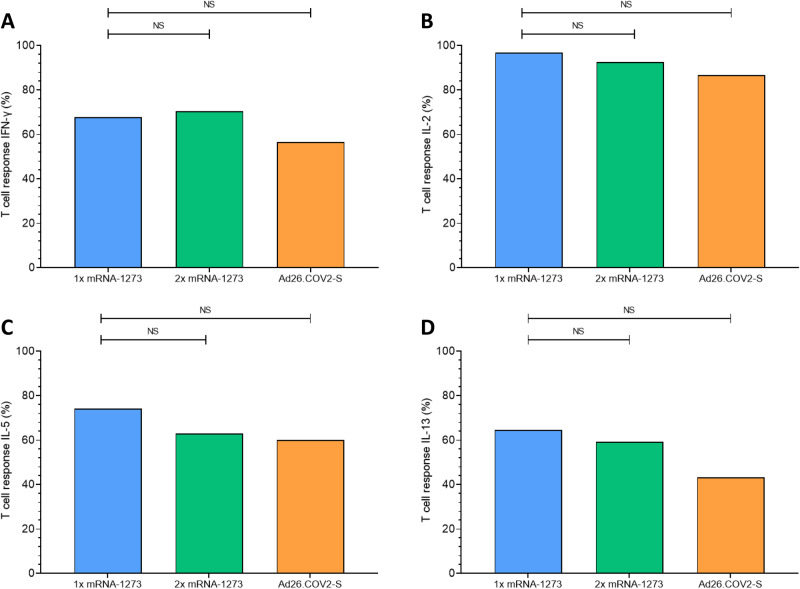
Kidney transplant recipients (KTRs) are at an increased risk of severe COVID-19 due to compromised immune responses. Although vaccination is critical in preventing severe disease, KTRs have attenuated vaccination-induced immune responses due to underlying kidney disease and immunosuppressive therapies. In this study, the effect of different COVID-19 booster strategies on SARS-CoV-2-specific T-cell responses was assessed in KTRs who showed a poor serological response after the first two mRNA-based primary vaccination doses. In these KTRs, a third vaccination dose led to an increase in antibody levels in the majority of patients. Production of IL-2 and IL-5 by SARS-CoV-2 specific T cells positively correlated with antibody levels, with stronger correlations compared to IFN-γ production, the 'traditional' cytokine to measure T-cell responses. Our study underscores the significance a balanced T-cell cytokine response to achieve robust antibody responses in KTRs. Furthermore, we show that multiple cytokines to assess T-cell responses should be explored to identify individuals in need of tailored vaccination strategies.
肾移植受者(KTRs)由于免疫反应受损,感染重症COVID-19的风险增加。尽管接种疫苗对于预防重症疾病至关重要,但由于潜在的肾脏疾病和免疫抑制治疗,KTRs的疫苗诱导免疫反应减弱。在本研究中,对在前两剂基于mRNA的初次疫苗接种后血清学反应不佳的KTRs评估了不同的COVID-19加强免疫策略对SARS-CoV-2特异性T细胞反应的影响。在这些KTRs中,第三剂疫苗接种导致大多数患者抗体水平升高。SARS-CoV-2特异性T细胞产生的IL-2和IL-5与抗体水平呈正相关,与用于测量T细胞反应的“传统”细胞因子IFN-γ产生相比,相关性更强。我们的研究强调了平衡的T细胞细胞因子反应对于在KTRs中实现强大抗体反应的重要性。此外,我们表明,应该探索多种细胞因子来评估T细胞反应,以确定需要定制疫苗接种策略的个体。