Bodensohn Uwe Sakamuzi, Dünschede Beatrix, Kuhlmann Chiara, Kumari Khushbu, Ladig Roman, Grefen Christopher, Schleiff Enrico, Fernandez Donna, Schünemann Danja
Institute for Molecular Biosciences, Goethe University Frankfurt, Max von Laue Str. 9, N200/3.02, 60438, Frankfurt, Germany.
Molecular Biology of Plant Organelles, Ruhr University Bochum, Universitätsstraße 150, 44780, Bochum, Germany.
Plant Cell Rep. 2025 Apr 29;44(5):108. doi: 10.1007/s00299-025-03500-2.
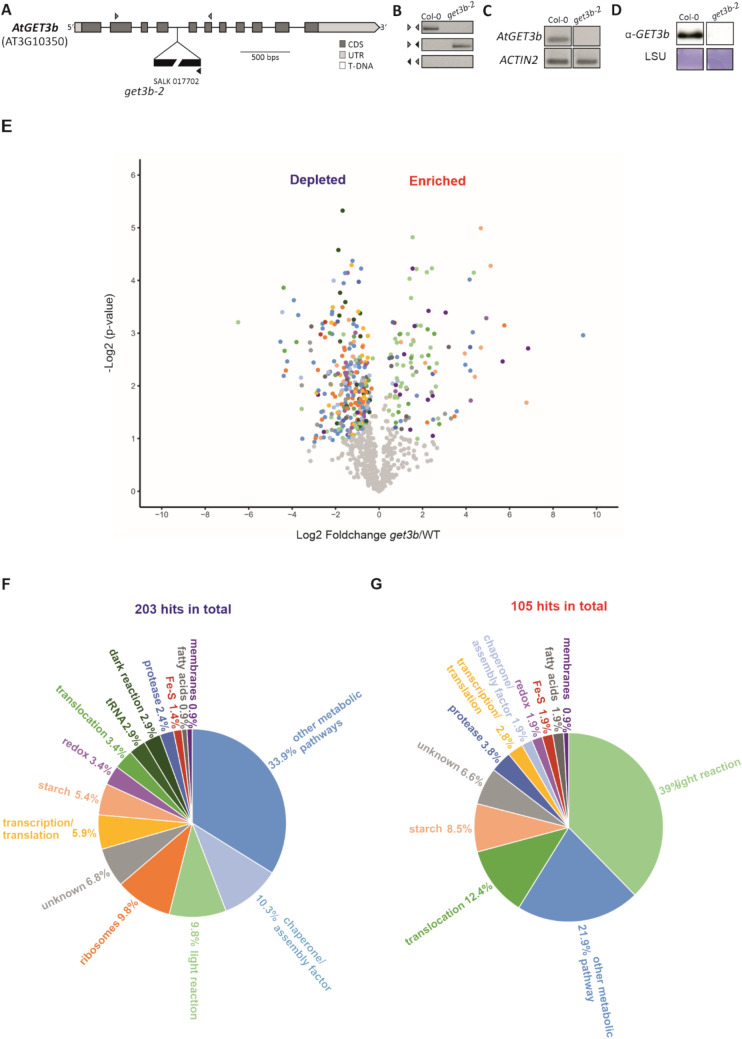
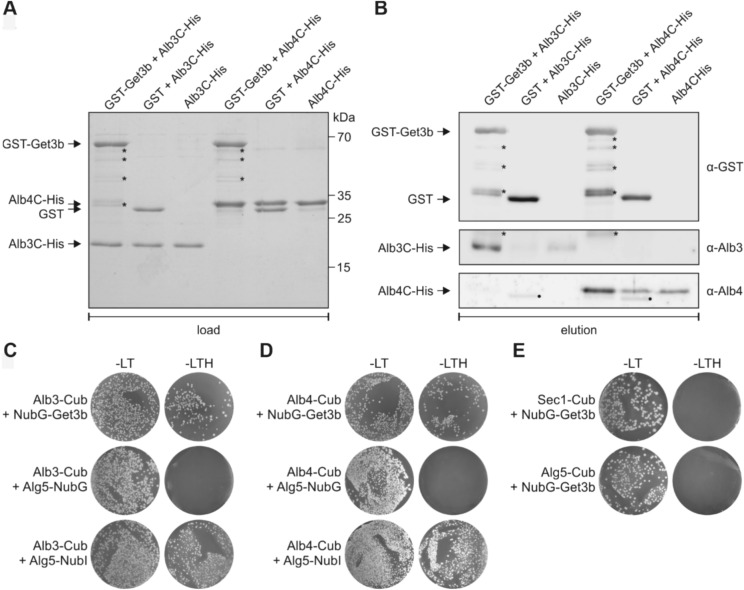
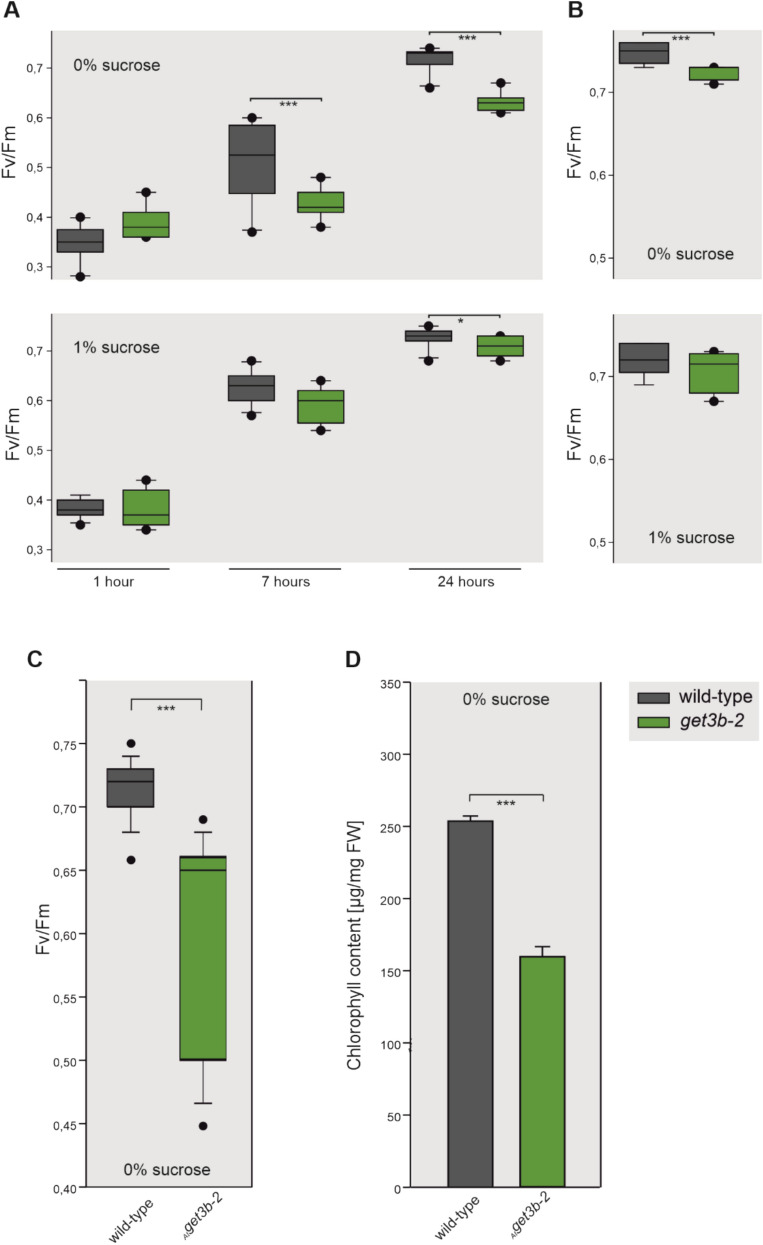
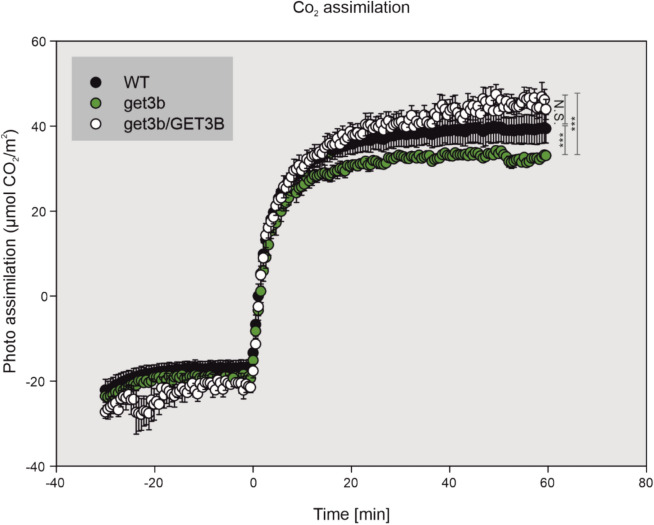
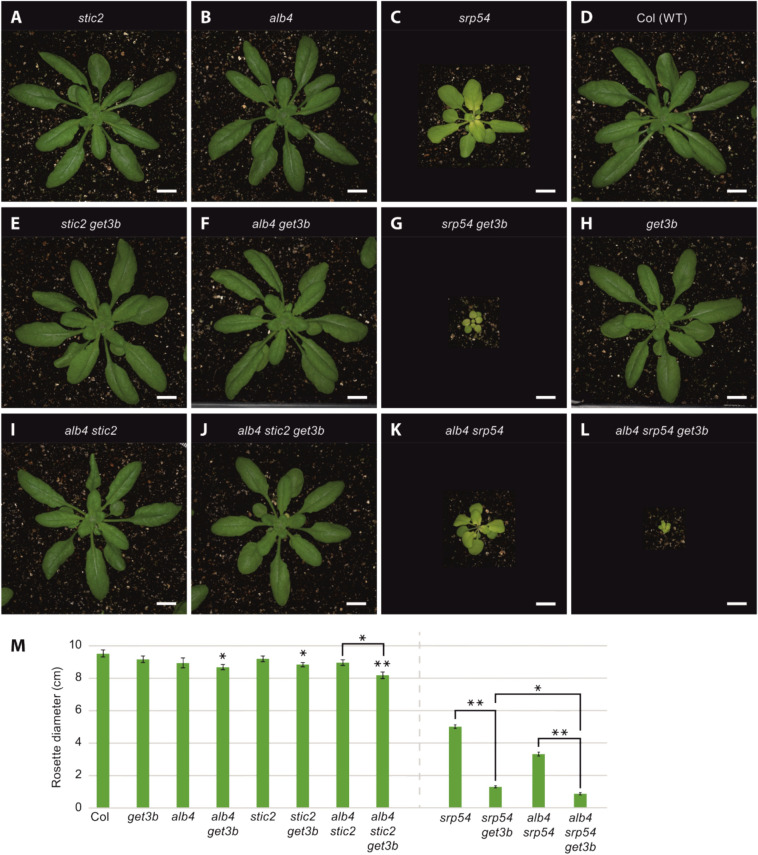
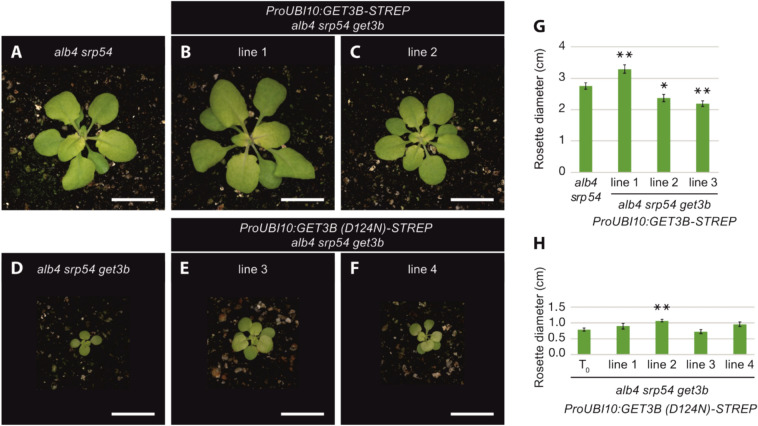
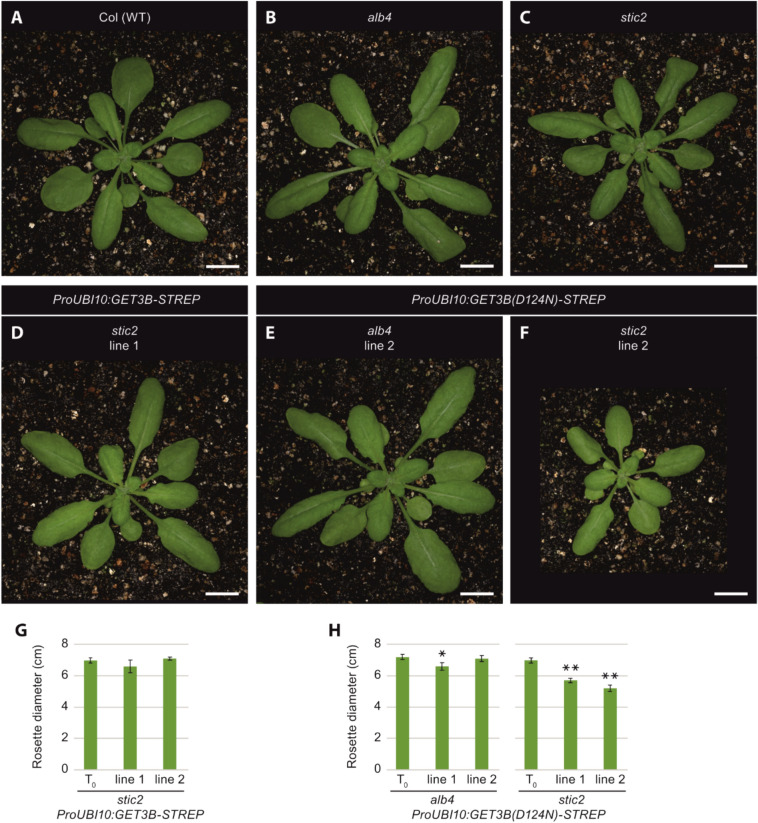
Proteomic, functional physiological analyses of get3b mutant plants highlight GET3B's role in chloroplast function. Genetic and interaction analyses indicate get3b and srp54 as mutual potentiators that might share terminal insertases. Protein targeting and insertion into membranes are essential for cellular organization and organelle function. The Guided Entry of Tail-anchored (GET) pathway facilitates the post-translational targeting and insertion of tail-anchored (TA) membrane proteins. Arabidopsis thaliana has four GET3 homologues, including AtGET3B and AtGET3D localized to chloroplasts. These photosynthetic organelles possess complex membrane systems, and the mechanisms underlying their protein targeting and membrane biogenesis are not fully understood. This study conducted a comprehensive proteomic analysis of get3b mutant plastids, which displayed significant alterations. Fluorometric based complex assembly as well as CO assimilation analyses confirmed that disruption of GET3B function displayed a significant impact on photosystem II assembly as well as carbon fixation, respectively, indicating a functional role in chloroplast biogenesis. Additionally, genetic interactions were found between GET3B and the two component STIC system, which cooperates with the cpSRP pathway which is involved in the co-translational sorting of thylakoid proteins. Further, physical interactions were observed between GET3B and the C-terminus of ALB3 and ALB4 in vitro and the full length proteins in vivo, indicating a role of GET3B in protein targeting and membrane integration within chloroplasts. These findings enhance our understanding of GET3B's involvement in stromal protein targeting and thylakoidal biogenesis.
对get3b突变体植物进行的蛋白质组学和功能生理学分析突出了GET3B在叶绿体功能中的作用。遗传和相互作用分析表明,get3b和srp54是相互增强因子,可能共享末端插入酶。蛋白质靶向和插入膜对于细胞组织和细胞器功能至关重要。尾锚定(GET)途径促进尾锚定(TA)膜蛋白的翻译后靶向和插入。拟南芥有四个GET3同源物,包括定位于叶绿体的AtGET3B和AtGET3D。这些光合细胞器拥有复杂的膜系统,其蛋白质靶向和膜生物发生的机制尚未完全了解。本研究对显示出显著改变的get3b突变体质体进行了全面的蛋白质组学分析。基于荧光的复合物组装以及CO同化分析证实,GET3B功能的破坏分别对光系统II组装和碳固定产生了显著影响,表明其在叶绿体生物发生中具有功能作用。此外,还发现GET3B与双组分STIC系统之间存在遗传相互作用,该系统与参与类囊体蛋白共翻译分选的cpSRP途径协同作用。此外,在体外观察到GET3B与ALB3和ALB4的C末端之间以及在体内观察到与全长蛋白之间存在物理相互作用,表明GET3B在叶绿体中的蛋白质靶向和膜整合中发挥作用。这些发现增强了我们对GET3B参与基质蛋白靶向和类囊体生物发生的理解。