Sheng Xia, Yang Liu, Huang Bichun, Lin Guijiao, Wang Yajiao, Wu Xinlei, Lin RuJia
School of Nursing, Fujian University of Traditional Chinese Medicine, Fuzhou, China.
Integr Cancer Ther. 2025 Jan-Dec;24:15347354241313344. doi: 10.1177/15347354241313344. Epub 2025 Apr 29.
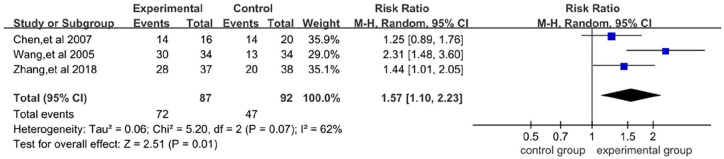
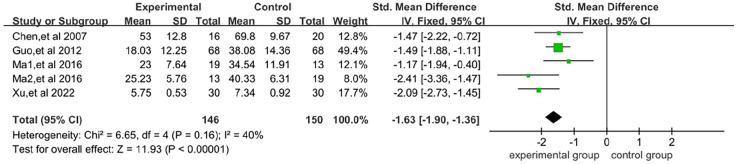
Cancer-related fatigue is the most common complication in patients. Astragalus membranaceus is widely used in many countries to treat cancer, but its efficacy and safety is uncertain. This study aimed to summarize the evidence on Astragalus membranaceus on cancer-related fatigue and quality of life in patients with cancer. Nine electronic databases were explored for the clinical randomized controlled trial of intervention with Astragalus membranaceus alone for cancer-related fatigue and quality of life in cancer patients from inception to July 1, 2022. The risk of bias assessment tool was adopted by Cochrane Handbook 6.1.0. The effect size was estimated using relative risk and mean difference with a corresponding 95% confidence interval. Review Manager 5.4 was used for meta-analysis. The evidence level was assessed using Grading of Recommendation, Assessment, Development and Evaluation (GRADE). Eight studies were included. The results of the meta-analysis showed that the addition of Astragalus membranaceus to the control group was effective in reducing cancer-related fatigue (SMD = -1.63, 95% CI [-1.90, -1.36], < .00001) and (RR = 1.55, 95% CI [1.19, 2.02], = 0.001) in patients with cancer and improving quality of life (SMD = 0.86, 95% CI [0.17, 1.55], = 0.01) and (RR = 1.57, 95% CI [1.10, 2.23], = 0.01). The current evidence is supportive of the efficacy of Astragalus membranaceus in patients with cancer-relate fatigue and their quality of life, but due to the small and low quality of the included literature and the lack of uniformity in terms of cancer type as well as treatment modalities, there is currently insufficient evidence to provide strong support for the clinical use of Astragalus membranaceus in the treatment of cancer-related fatigue. More high-quality evidence is needed in the future to further validate the use of Astragalus membranaceus in the treatment of clinical cancer-related fatigue. A review protocol was developed and registered in the International Prospective Register of Systematic Reviews (PROSPERO). Registration number: CRD42023442277. Registered 20 July 2023.
癌症相关疲劳是患者中最常见的并发症。黄芪在许多国家被广泛用于治疗癌症,但其疗效和安全性尚不确定。本研究旨在总结黄芪对癌症患者癌症相关疲劳和生活质量影响的证据。检索了九个电子数据库,以查找从开始到2022年7月1日,单独使用黄芪干预癌症患者癌症相关疲劳和生活质量的临床随机对照试验。采用Cochrane手册6.1.0中的偏倚风险评估工具。使用相对风险和平均差以及相应的95%置信区间估计效应量。使用Review Manager 5.4进行荟萃分析。使用推荐分级、评估、制定和评价(GRADE)评估证据水平。纳入了八项研究。荟萃分析结果表明,在对照组中添加黄芪可有效减轻癌症患者的癌症相关疲劳(标准化均数差 = -1.63,95%置信区间[-1.90,-1.36], < .00001),并改善生活质量(标准化均数差 = 0.86,95%置信区间[0.17,1.55], = 0.01),且(相对风险 = 1.55,95%置信区间[1.19,2.02], = 0.001),(相对风险 = 1.57,95%置信区间[1.10,2.23], = 0.01)。目前的证据支持黄芪对癌症相关疲劳患者及其生活质量的疗效,但由于纳入文献数量少、质量低,且癌症类型和治疗方式缺乏一致性,目前没有足够的证据为黄芪在治疗癌症相关疲劳中的临床应用提供有力支持。未来需要更多高质量的证据来进一步验证黄芪在治疗临床癌症相关疲劳中的应用。制定了一项综述方案,并在国际系统评价前瞻性注册库(PROSPERO)中进行了注册。注册号:CRD42023442277。于2023年7月20日注册。