
新型吲哚衍生物作为帕金森病中SIRTUIN3调节剂的治疗机制研究及体外评价
Therapeutic mechanistic study of novel indole derivatives as SIRTUIN3 modulators in Parkinson's disease with in vitro evaluation.
作者信息
Chand Jagdish, Jupudi Srikanth, Ahmad Sheikh F, Emran Talha Bin, Subramanian Gomathy
机构信息
Department of Pharmaceutical Chemistry, JSS College of Pharmacy, JSS Academy of Higher Education & Research, Ooty, The Nilgiris, Tamil Nadu, 643001, India.
Department of Pharmacology and Toxicology, College of Pharmacy, King Saud University, 11451, Riyadh, Saudi Arabia.
出版信息
Sci Rep. 2025 Apr 30;15(1):15196. doi: 10.1038/s41598-025-99534-3.
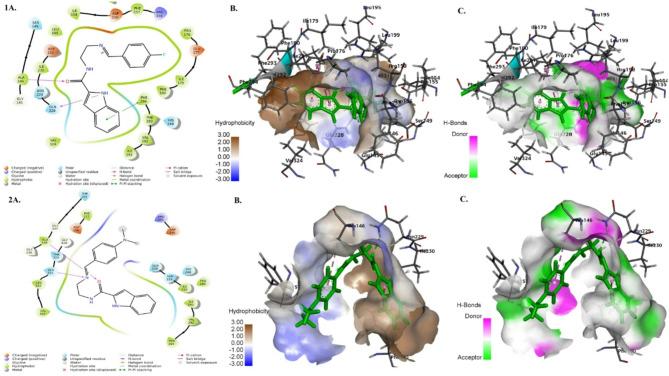
SIRT3 modulates reactive oxygen species and helps to reduce oxidative stress, resulting in a neuroprotective effect in Parkinson's disease. The work seeks to develop and synthesize novel, effective SIRT3 modulators, which will modify SIRT3 expression and generate the neuroprotective effect by downregulating reactive oxygen species. The synthesis of the new indole-based carboxamide derivatives IMW 1-16 was guided by molecular docking experiments with the SIRT3 wild-type protein. FT-IR, H-NMR, C-NMR, and mass spectrometry analyzed the synthesized compounds. The efficacy of the compounds IMW 1-16 was assessed using in-vitro assays such as the MTT assay, neuroprotection assay, lactate dehydrogenase assay, superoxide dismutase assay, glutathione peroxidase assay, reactive oxygen species estimation, mitochondrial membrane potential, and real-time polymerase chain reaction estimation. The synthesized compounds IMFW-1, IMTW-5, and IM24DCW-16 were determined to have the lowest cytotoxicity and the most neuroprotective effect. They were found to downregulate the lactate dehydrogenase enzyme levels. The compounds efficiently increased the expression of superoxide dismutase and glutathione peroxidase. They were shown to be beneficial in reducing reactive oxygen species levels. The compounds also significantly increased the expression of SIRT3, PGC-1α, and FOXO3, which are crucial for detoxifying reactive oxygen species. The synthesized novel indole-based carboxamide derivatives were effective modulators of SIRT3. Upregulating SIRT3 expression also upregulated other supporting proteins such as PGC-1α, SOD2, GPx, and FOXO3, and these targets have been known to downregulate the reactive oxygen species levels. The study's findings reveal the therapeutic potential of the developed and synthesized compounds and their involvement in such pathological situations; among all the compounds, IM24DCW-16 was discovered to be the most promising candidate for the modulation of the SIRT3 in PD.
SIRT3调节活性氧,有助于减轻氧化应激,从而在帕金森病中发挥神经保护作用。这项研究旨在开发和合成新型、有效的SIRT3调节剂,这些调节剂将改变SIRT3的表达,并通过下调活性氧产生神经保护作用。新型吲哚基羧酰胺衍生物IMW 1-16的合成以与SIRT3野生型蛋白的分子对接实验为指导。通过傅里叶变换红外光谱(FT-IR)、氢核磁共振(H-NMR)、碳核磁共振(C-NMR)和质谱对合成的化合物进行分析。使用MTT法、神经保护试验、乳酸脱氢酶试验、超氧化物歧化酶试验、谷胱甘肽过氧化物酶试验、活性氧估计、线粒体膜电位和实时聚合酶链反应估计等体外试验评估化合物IMW 1-16的功效。已确定合成的化合物IMFW-1、IMTW-5和IM24DCW-16具有最低的细胞毒性和最强的神经保护作用。它们被发现可下调乳酸脱氢酶水平。这些化合物有效增加了超氧化物歧化酶和谷胱甘肽过氧化物酶的表达。结果表明它们有助于降低活性氧水平。这些化合物还显著增加了对活性氧解毒至关重要的SIRT3、PGC-1α和FOXO3的表达。合成的新型吲哚基羧酰胺衍生物是SIRT3的有效调节剂。上调SIRT3的表达也上调了其他支持蛋白,如PGC-1α、SOD2、GPx和FOXO3,并且已知这些靶点可下调活性氧水平。该研究的结果揭示了所开发和合成的化合物的治疗潜力及其在此类病理情况下的作用;在所有化合物中,发现IM24DCW-16是帕金森病中调节SIRT3最有前景的候选物。




 Zotero 插件