State Key Laboratory of Cell Biology, CAS Center for Excellence in Molecular Cell Science, Shanghai Institute of Biochemistry and Cell Biology, Chinese Academy of Sciences, University of Chinese Academy of Sciences, Shanghai, China.
School of Life Science and Technology, ShanghaiTech University, Shanghai, China.
Oxid Med Cell Longev. 2020 Feb 13;2020:7698560. doi: 10.1155/2020/7698560. eCollection 2020.
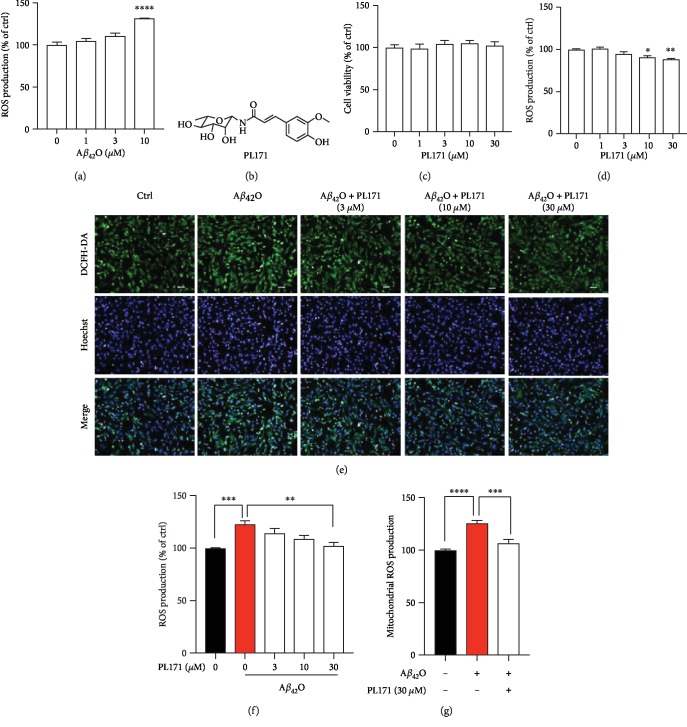
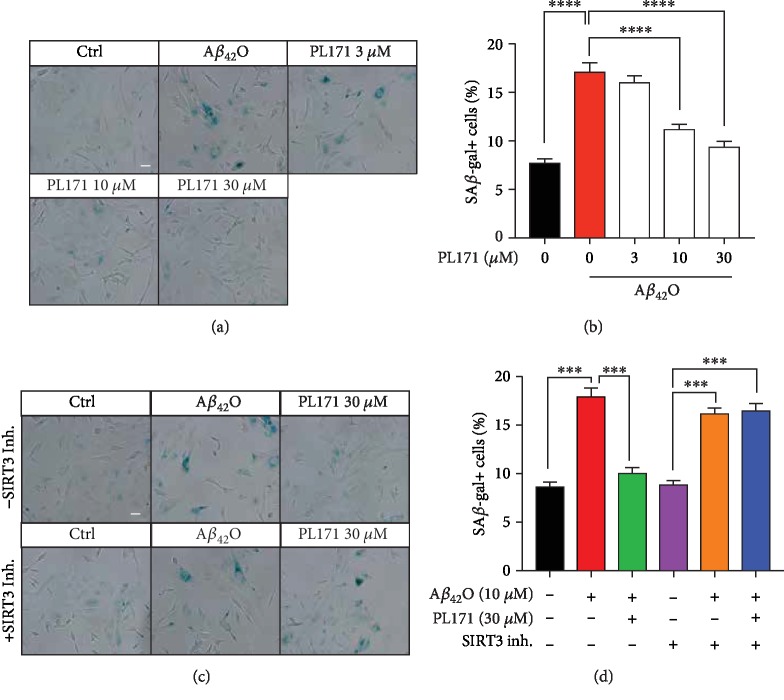
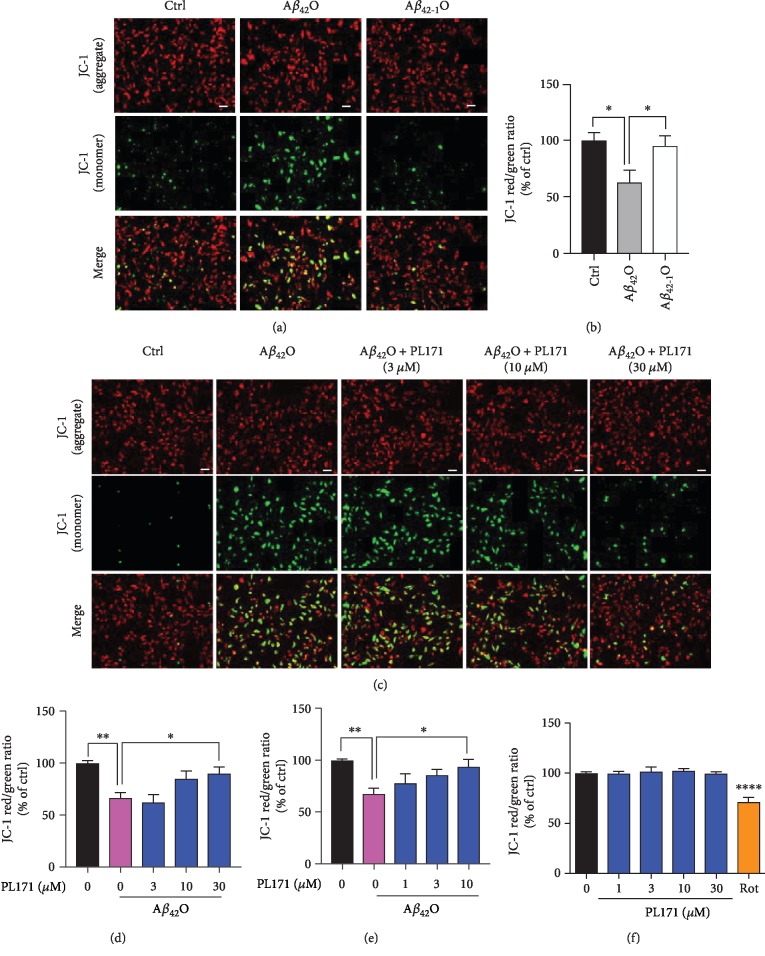
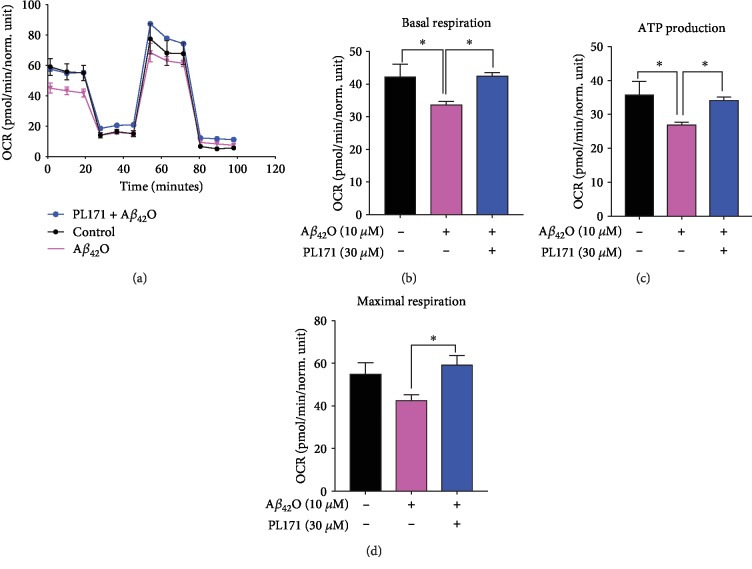
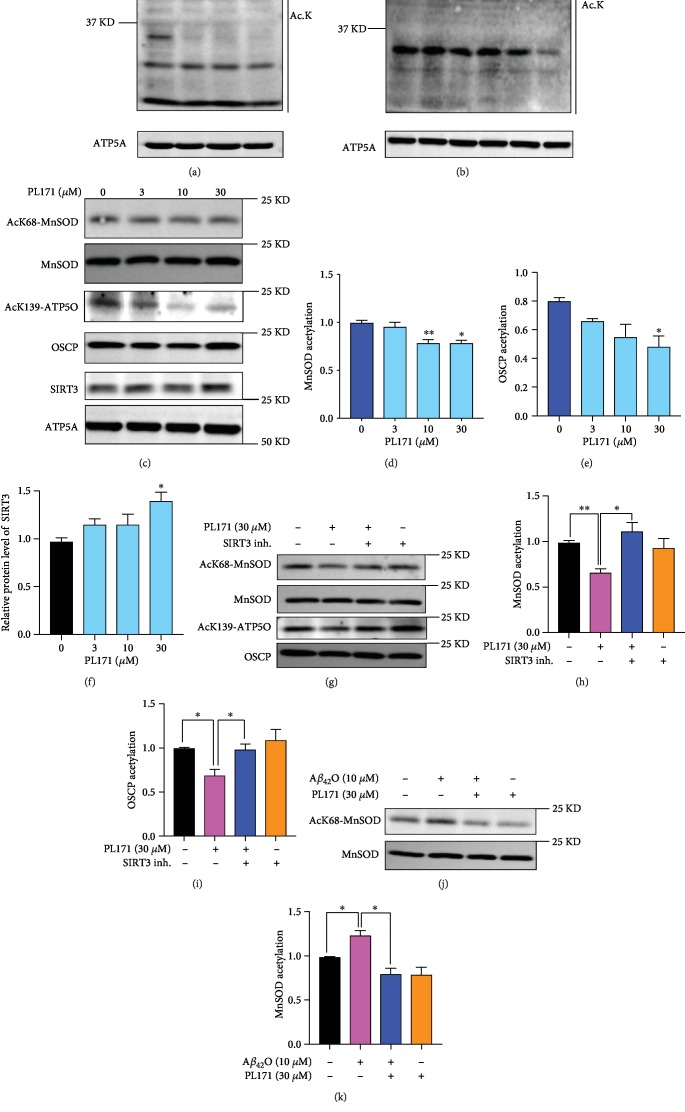
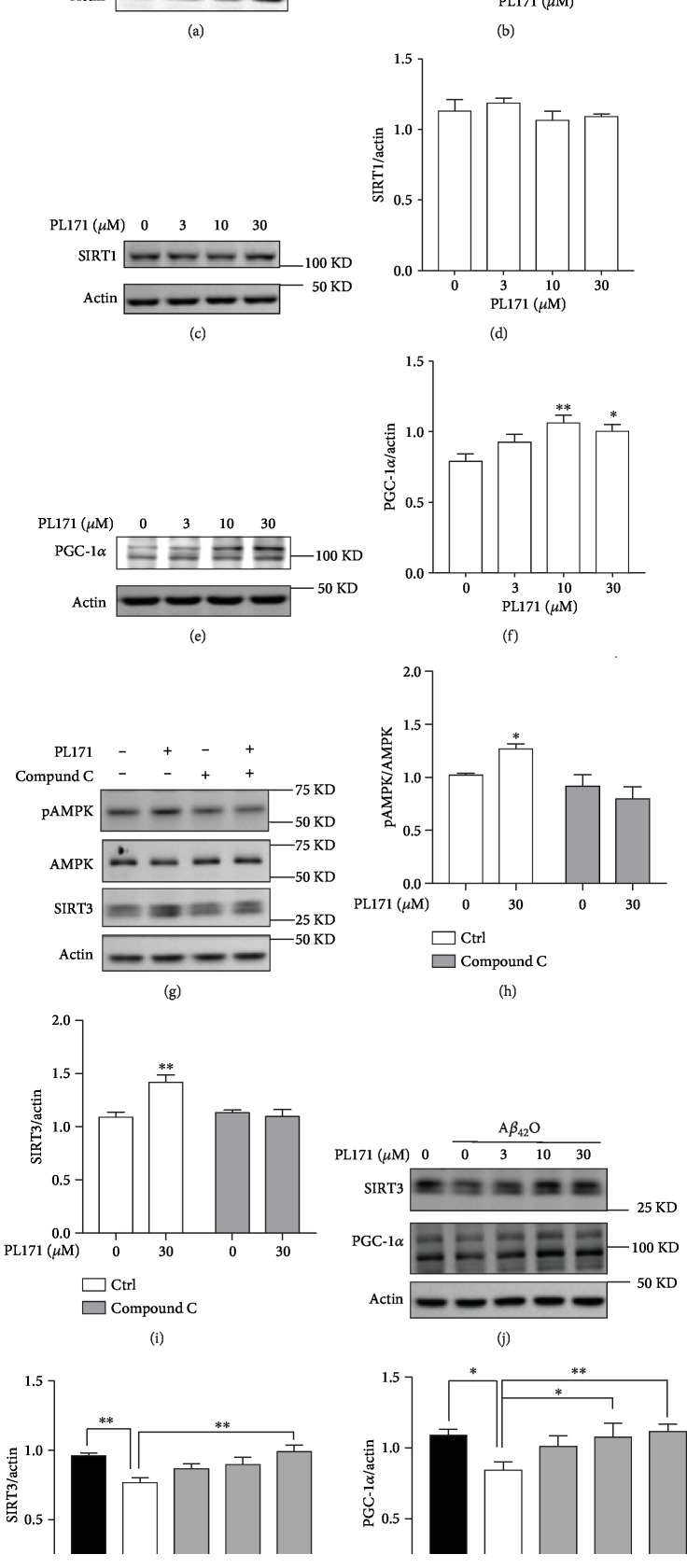
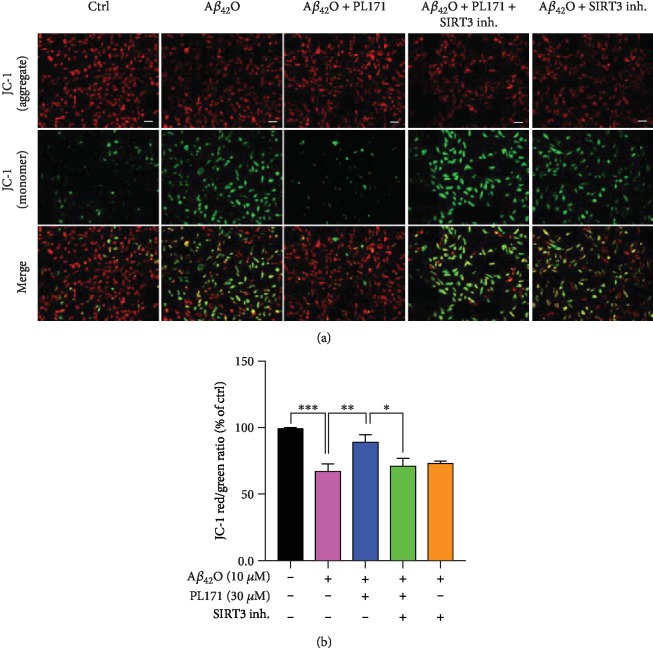
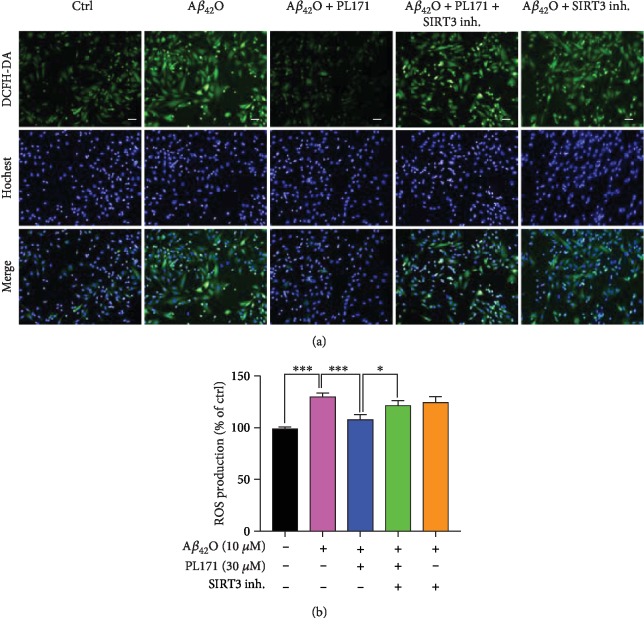
Oxidative stress-induced mitochondrial dysfunction and cell senescence are considered critical contributors to Alzheimer's disease (AD), and oxidant/antioxidant imbalance has been a therapeutic target in AD. SIRT3 is a mitochondrial protein regulating metabolic enzyme activity by deacetylation and its downregulation is associated with AD pathology. In the present study, we showed that a newly synthesized rhamnoside derivative PL171 inhibited the generation of reactive oxidant species (ROS) induced by amyloid- oligomers (A O), major AD pathological proteins. Moreover, the reduction of mitochondrial membrane potential (MMP) and the impairment of mitochondrial oxygen consumption triggered by A O were also prevented by PL171. Further experiments demonstrated that PL171 reduced the acetylation of mitochondrial proteins, and particularly the acetylation of manganese superoxide dismutase (MnSOD) and oligomycin-sensitivity-conferring protein (OSCP), two mitochondrial SIRT3 substrates, was suppressed by PL171. Mechanism studies revealed that PL171 upregulated SIRT3 and its upstream peroxisome proliferator-activated receptor- coactivator 1 (PGC-1) under basal and A O-treated conditions. The inhibition of SIRT3 activity could eliminate the protective effects of PL171. Further, long-term treatment with A O increased the number of senescent neuronal cell, which was also alleviated by PL171 in a SIRT3-dependent manner. Taken together, our results indicated that PL171 rescued A O-induced oxidative stress, mitochondrial dysfunction, and cell senescence via upregulating SIRT3 and might be a potential drug candidate against AD.
氧化应激诱导的线粒体功能障碍和细胞衰老被认为是阿尔茨海默病(AD)的关键致病因素,氧化还原失衡已成为 AD 的治疗靶点。SIRT3 是一种调节代谢酶活性的线粒体蛋白,其下调与 AD 病理有关。在本研究中,我们表明,一种新合成的鼠李糖苷衍生物 PL171 抑制了淀粉样蛋白寡聚体(A O)诱导的活性氧(ROS)的产生,A O 是主要的 AD 病理蛋白。此外,PL171 还防止了 A O 引发的线粒体膜电位(MMP)降低和线粒体耗氧量受损。进一步的实验表明,PL171 降低了线粒体蛋白的乙酰化水平,特别是锰超氧化物歧化酶(MnSOD)和寡霉素敏感性蛋白(OSCP)的乙酰化,这两种线粒体 SIRT3 底物的乙酰化受到 PL171 的抑制。机制研究表明,PL171 在基础和 A O 处理条件下上调了 SIRT3 及其上游过氧化物酶体增殖物激活受体共激活物 1(PGC-1)。SIRT3 活性的抑制可以消除 PL171 的保护作用。此外,长期用 A O 处理会增加衰老神经元细胞的数量,PL171 也能以 SIRT3 依赖的方式减轻这种情况。总之,我们的研究结果表明,PL171 通过上调 SIRT3 来挽救 A O 诱导的氧化应激、线粒体功能障碍和细胞衰老,可能是一种治疗 AD 的潜在药物候选物。