Ripoll-Zarraga Ane Elixabete, Miguel José Luis Franco, Belda Carmen Fullana
Department of Telecommunications and Systems Engineering, Universitat Autònoma de Barcelona, 08193, Bellaterra, Spain.
Financial Management Department, Universidad Pontificia Comillas, 28015, Madrid, Spain.
Health Care Manag Sci. 2025 Jun;28(2):207-233. doi: 10.1007/s10729-025-09702-0. Epub 2025 May 2.
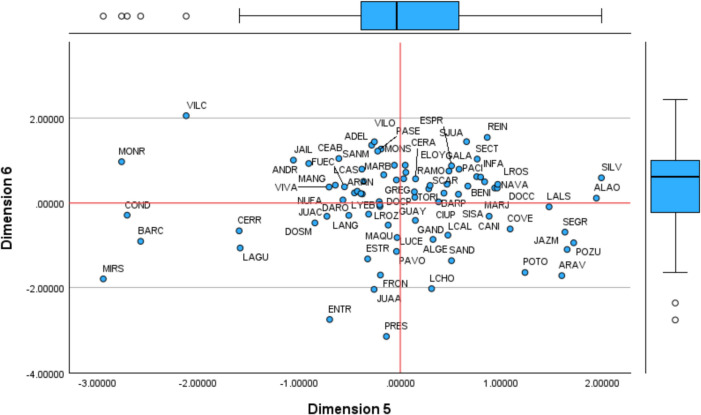
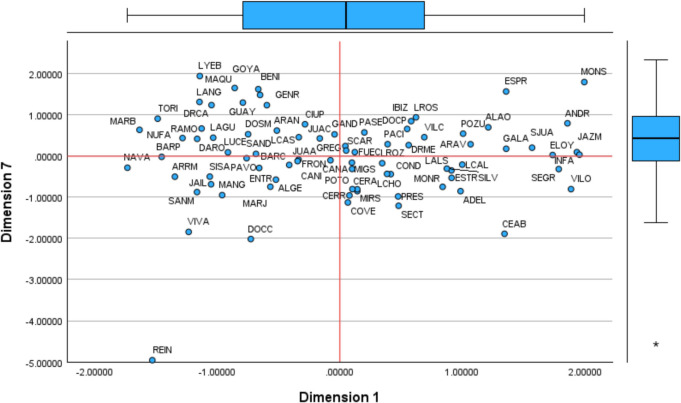
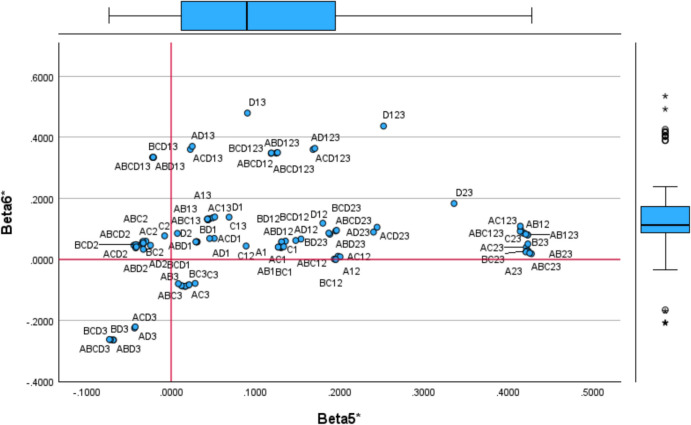
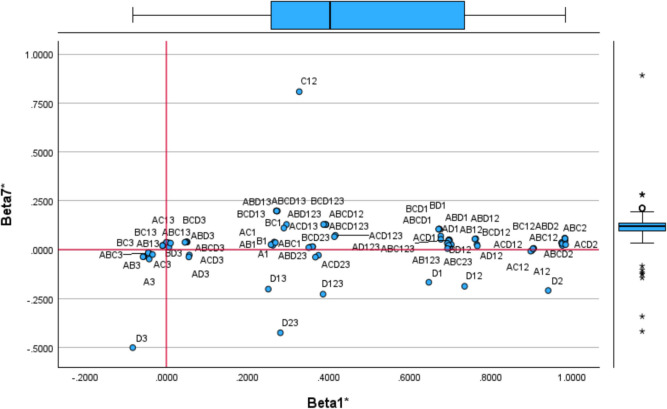
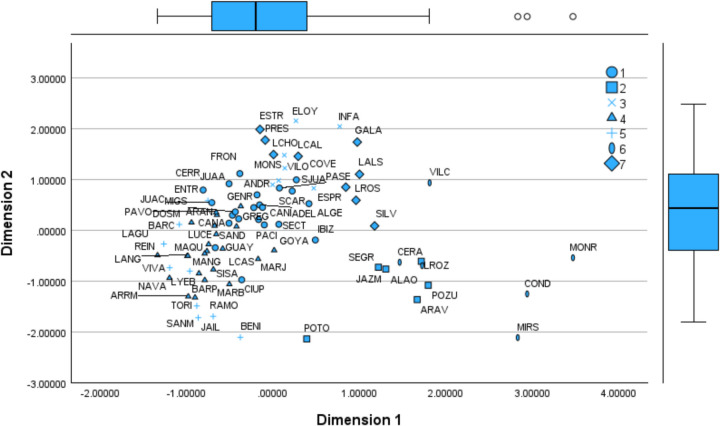
Benchmark efficiency analysis in public health typically focuses on hospitals rather than primary care providers. Data Envelopment Analysis (DEA) is widely used to assess resource efficiency among decision-making units (DMUs). However, traditional DEA struggles to differentiate between efficient units and is sensitive to the selection of inputs and outputs. Methods like super-efficiency and cross-efficiency address some of these limitations but often exclude outliers and may overlook efficiency related to specialisation. DEA Visualisation integrates DEA with multivariate statistical methods allowing for the identification of inefficiency sources and specialisation patterns without losing discriminatory power or removing extreme cases from the sample. This study analyses 82 public primary health centres in Madrid serving senior citizens in 2018. The findings reveal inefficiencies such as a preference for prescribing specific rather than generic drugs, increasing public health costs. Additionally, two extreme cases (outliers or mavericks) were identified as having high infrastructure costs and disproportionate staffing. Redistributing patients from overcrowded centres could enhance efficiency, while centres focused on preventive care showed greater cost-effectiveness, particularly in reducing prescription costs.
公共卫生领域的基准效率分析通常侧重于医院而非初级保健提供者。数据包络分析(DEA)被广泛用于评估决策单元(DMU)之间的资源效率。然而,传统的DEA难以区分高效单元,并且对投入和产出的选择很敏感。超效率和交叉效率等方法解决了其中一些局限性,但通常会排除异常值,并且可能会忽略与专业化相关的效率。DEA可视化将DEA与多元统计方法相结合,能够识别低效率来源和专业化模式,而不会丧失区分能力或从样本中剔除极端情况。本研究分析了2018年马德里为老年人服务的82家公共初级卫生中心。研究结果揭示了一些低效率现象,比如倾向于开特定品牌而非通用型药物,从而增加了公共卫生成本。此外,还识别出两个极端案例(异常值或特立独行的单元),它们的基础设施成本高昂且人员配备不成比例。将患者从过度拥挤的中心重新分配,可能会提高效率,而专注于预防保健的中心则显示出更高的成本效益,尤其是在降低处方成本方面。