Qu Wei-Feng, Zhu Gui-Qi, Yang Rui, Chu Tian-Hao, Guan Zhi-Qi, Huang Run, Tian Meng-Xin, Jiang Xi-Fei, Tao Chen-Yang, Fang Yuan, Gao Jun, Wu Xiao-Ling, Chen Jia-Feng, Zhao Qian-Fu, Wang Yi, Bu Yi-Chao, Zhou Jian, Fan Jia, Liu Wei-Ren, Tang Zheng, Shi Ying-Hong
Department of Liver Surgery, Liver Cancer Institute, Zhongshan Hospital, Fudan University, Key Laboratory of Carcinogenesis and Cancer Invasion of Ministry of Education, Shanghai, China.
Research Unit of Liver Cancer Recurrence and Metastasis, Chinese Academy of Medical Sciences, Beijing, China.
Sci Adv. 2025 May 2;11(18):eads8597. doi: 10.1126/sciadv.ads8597.
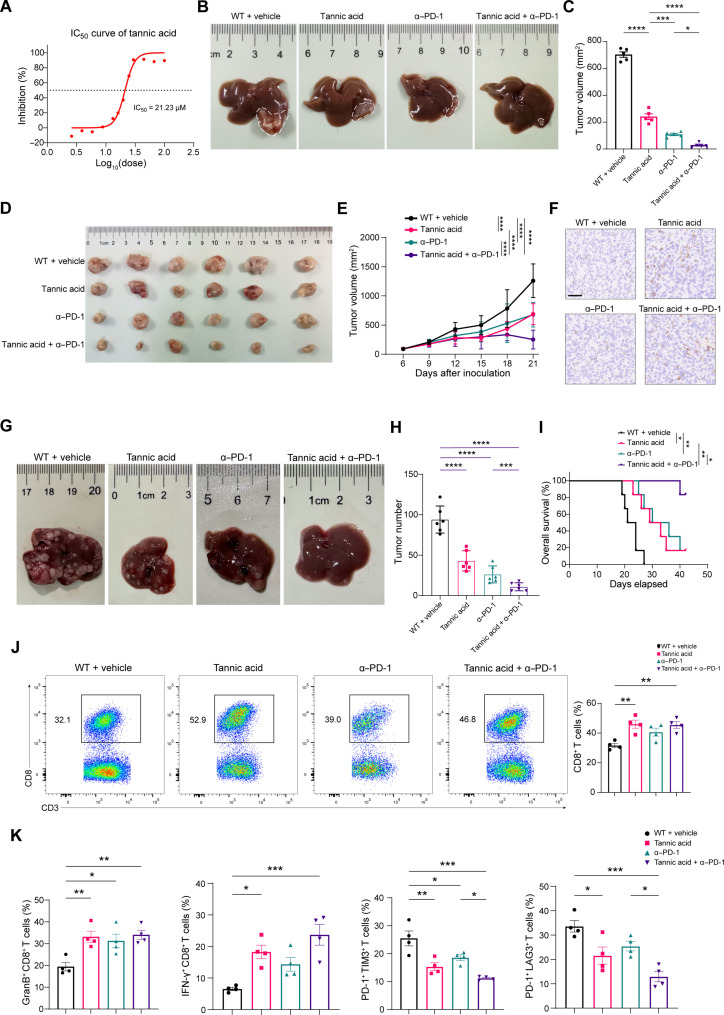
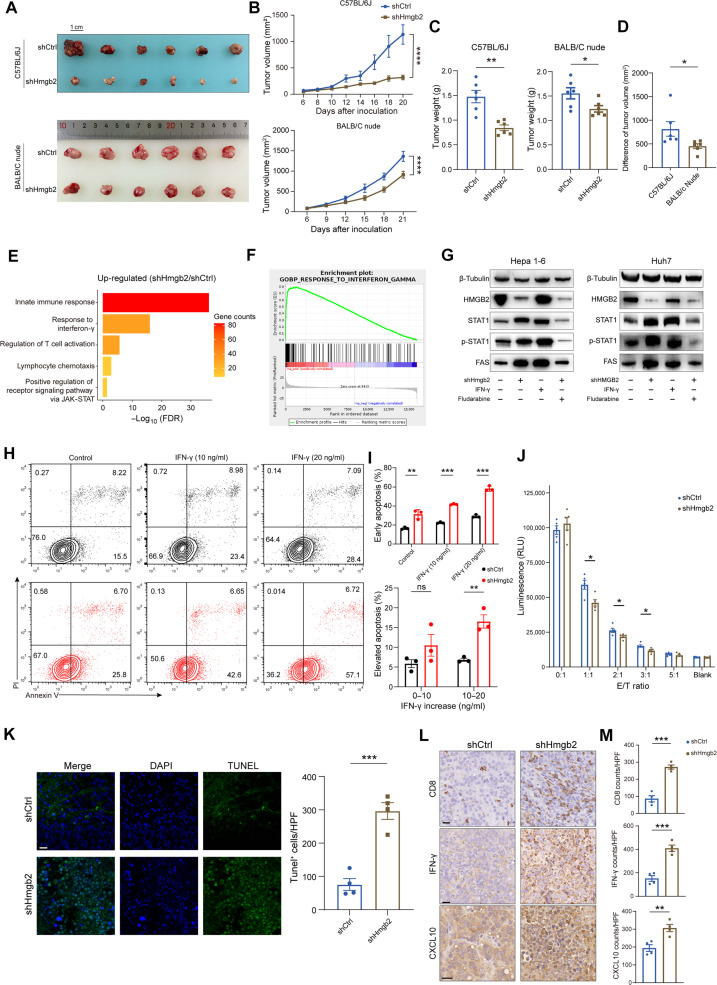
T cell exhaustion is a critical obstacle for durable treatment response in hepatocellular carcinoma (HCC). Developing drugs that control tumor growth and simultaneously bolster immune function is of great significance. Although high-mobility group box 2 (HMGB2) has been reported to be crucial to HCC prognosis, its role in the tumor microenvironment remains unclear. Here, we found HMGB2 CD8 T cells as being associated with immune exhaustion and resistance to anti-PD-1 treatment through single-cell RNA sequencing. Mechanistically, HMGB2 impaired the oxidative phosphorylation in CD8 T cells and inactivated the interferon-γ response in tumor cells, reducing the antitumor effector function. Tannic acid, a specific inhibitor of HMGB2, synergized with PD-1 antibody to attenuate tumor growth and reverse T cell exhaustion. Our findings highlight the unique role of HMGB2 as an immune exhaustion associated molecule. Targeting HMGB2 on both CD8 T cells and tumor cells contributed to promising treatment strategies for HCC.
T细胞耗竭是肝细胞癌(HCC)持久治疗反应的关键障碍。开发既能控制肿瘤生长又能增强免疫功能的药物具有重要意义。尽管已有报道称高迁移率族蛋白盒2(HMGB2)对HCC预后至关重要,但其在肿瘤微环境中的作用仍不清楚。在此,我们通过单细胞RNA测序发现HMGB2与CD8 T细胞的免疫耗竭及抗PD-1治疗耐药相关。机制上,HMGB2损害CD8 T细胞中的氧化磷酸化并使肿瘤细胞中的干扰素-γ反应失活,从而降低抗肿瘤效应功能。鞣酸是HMGB2的特异性抑制剂,它与PD-1抗体协同作用以减弱肿瘤生长并逆转T细胞耗竭。我们的研究结果突出了HMGB2作为免疫耗竭相关分子的独特作用。靶向CD8 T细胞和肿瘤细胞上的HMGB2为HCC带来了有前景的治疗策略。