Rix B, Chauhan R, Masoumi Z, Grönroos E, Brain C E, Ogunbiyi O K, Swarbrick K, Swanton C, Bonnet D, Kurzawinski T R, Izatt L, McDonald N Q, Grey W
ProteoStem Lab, Centre for Blood Research, York Biomedical Research Institute, Department of Biology, University of York, York, UK.
Signalling and Structural Biology Laboratory, Francis Crick Institute, London, UK.
NPJ Precis Oncol. 2025 May 2;9(1):125. doi: 10.1038/s41698-025-00919-4.
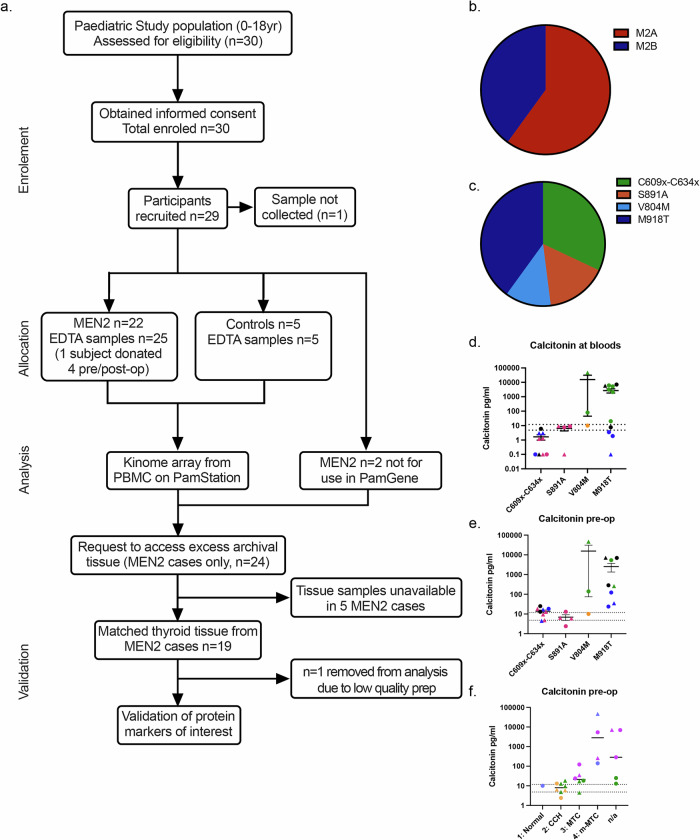
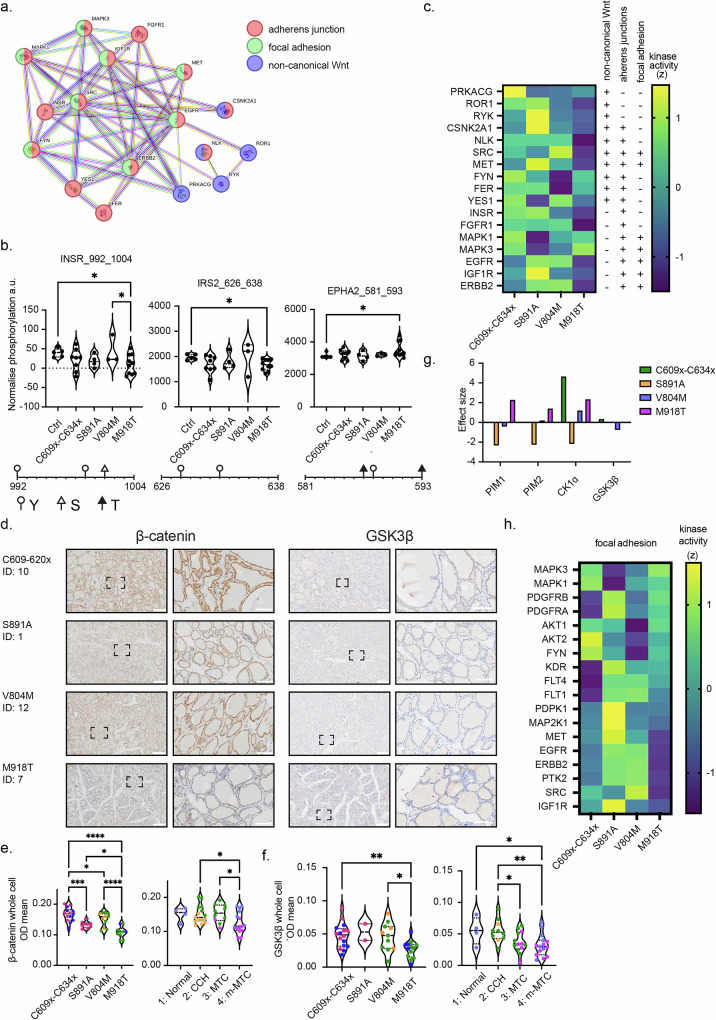
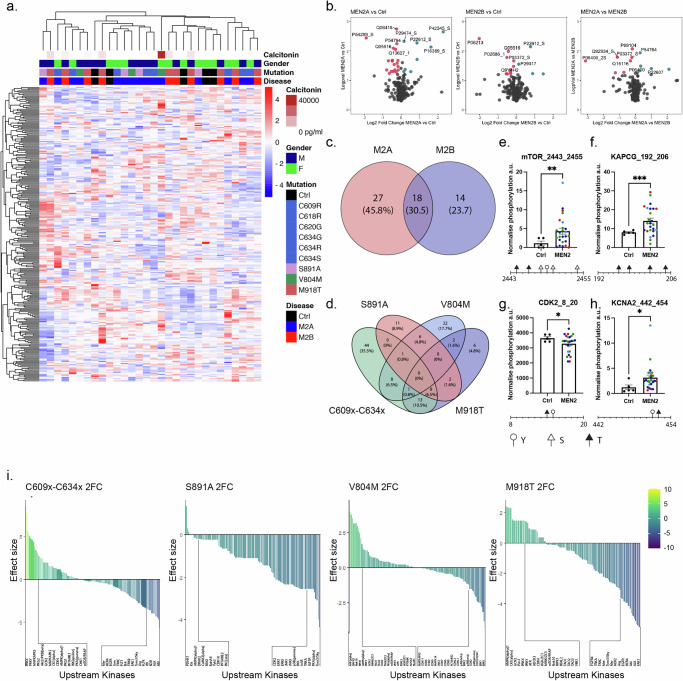
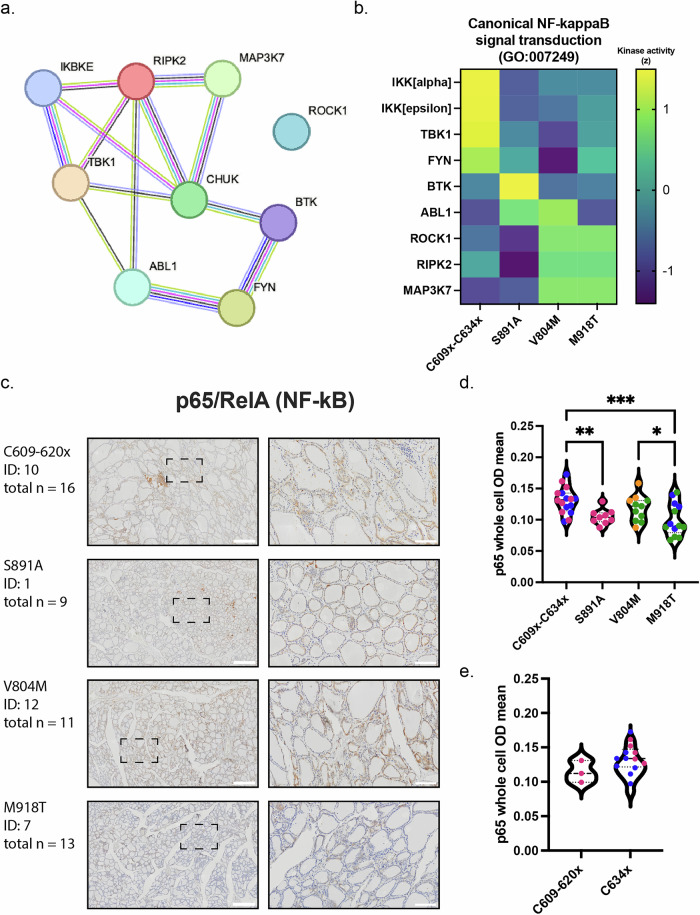
Multiple Endocrine Neoplasia Type 2 (MEN2) is an autosomal dominant disease caused by pathogenic variants in the receptor tyrosine kinase RET, with strong genotype-phenotype correlations. The development and progression of these tumours are not always predictable even within families with the same RET pathogenic variant, demonstrating a need for better understanding of the underlying molecular mechanisms. Precision molecular medicine is not widely used and the standard of care remains prophylactic thyroidectomy. This absence of curative approaches is exacerbated by the lack of novel therapeutic markers/targets. In this study, we investigated the functional kinome of 24 familial MEN2 patients. We identified MEN2 subtype and RET pathogenic variant-specific alterations in signalling pathways including mTOR, PKA, NF-κB and focal adhesions, which were validated in patient thyroid tissue. Overall, our study of MEN2 functional kinomes uncovers novel specific drivers of MEN2 disease and its pathogenic variant subtypes, identifying new potential therapeutic targets for MEN2.
2型多发性内分泌腺瘤病(MEN2)是一种常染色体显性疾病,由受体酪氨酸激酶RET中的致病变体引起,具有很强的基因型-表型相关性。即使在具有相同RET致病变体的家族中,这些肿瘤的发生和发展也并非总是可预测的,这表明需要更好地了解其潜在的分子机制。精准分子医学尚未广泛应用,目前的标准治疗方法仍是预防性甲状腺切除术。由于缺乏新的治疗标志物/靶点,这种缺乏治愈方法的情况更加严重。在本研究中,我们调查了24例家族性MEN2患者的功能激酶组。我们在包括mTOR、PKA、NF-κB和粘着斑在内的信号通路中鉴定出了MEN2亚型和RET致病变体特异性改变,并在患者甲状腺组织中得到了验证。总体而言,我们对MEN2功能激酶组的研究揭示了MEN2疾病及其致病变体亚型的新的特异性驱动因素,确定了MEN2新的潜在治疗靶点。