Detsika Maria G, Sakkou Maria, Triantafyllidou Vassiliki, Konstantopoulos Dimitris, Grigoriou Eirini, Psarra Katherina, Jahaj Edison, Dimopoulou Ioanna, Orfanos Stylianos E, Tsirogianni Alexandra, Kollias George, Kotanidou Anastasia
1st Department of Critical Care Medicine & Pulmonary Services, GP Livanos and M Simou Laboratories, Evangelismos Hospital, National and Kapodistrian University of Athens, Athens, Greece.
Institute for Bioinnovation, Biomedical Sciences Research Center "Alexander Fleming", Vari, Greece.
Commun Biol. 2025 May 2;8(1):690. doi: 10.1038/s42003-025-08066-z.
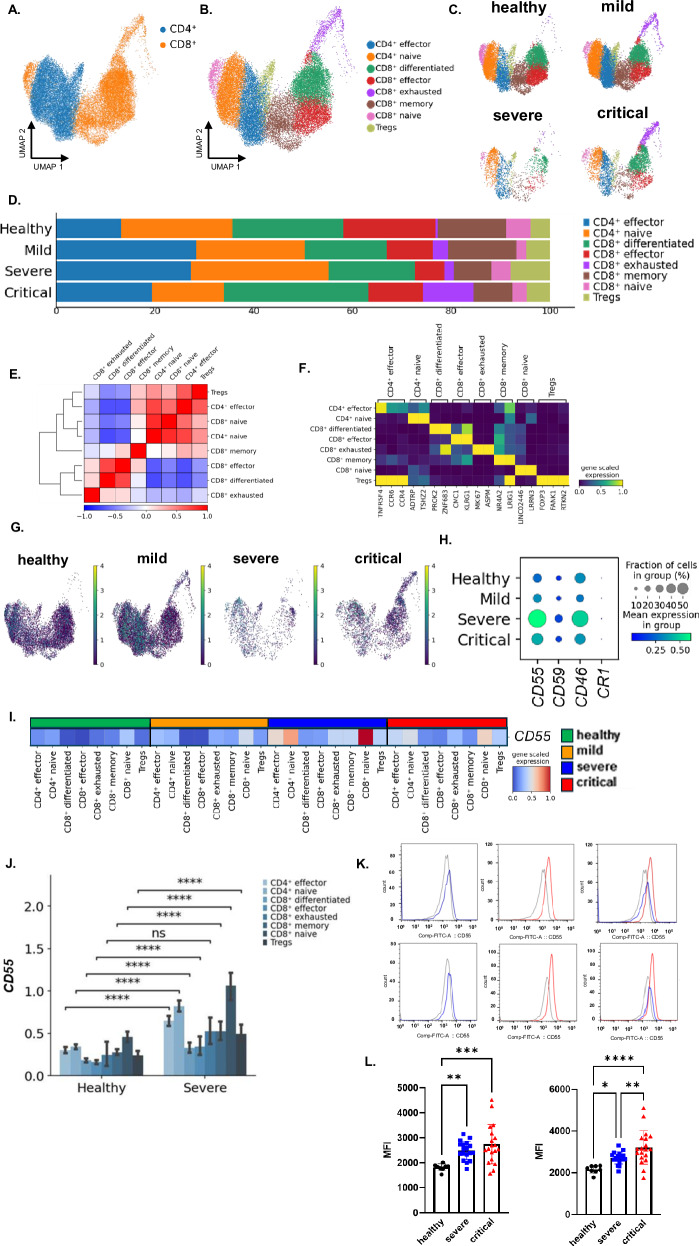
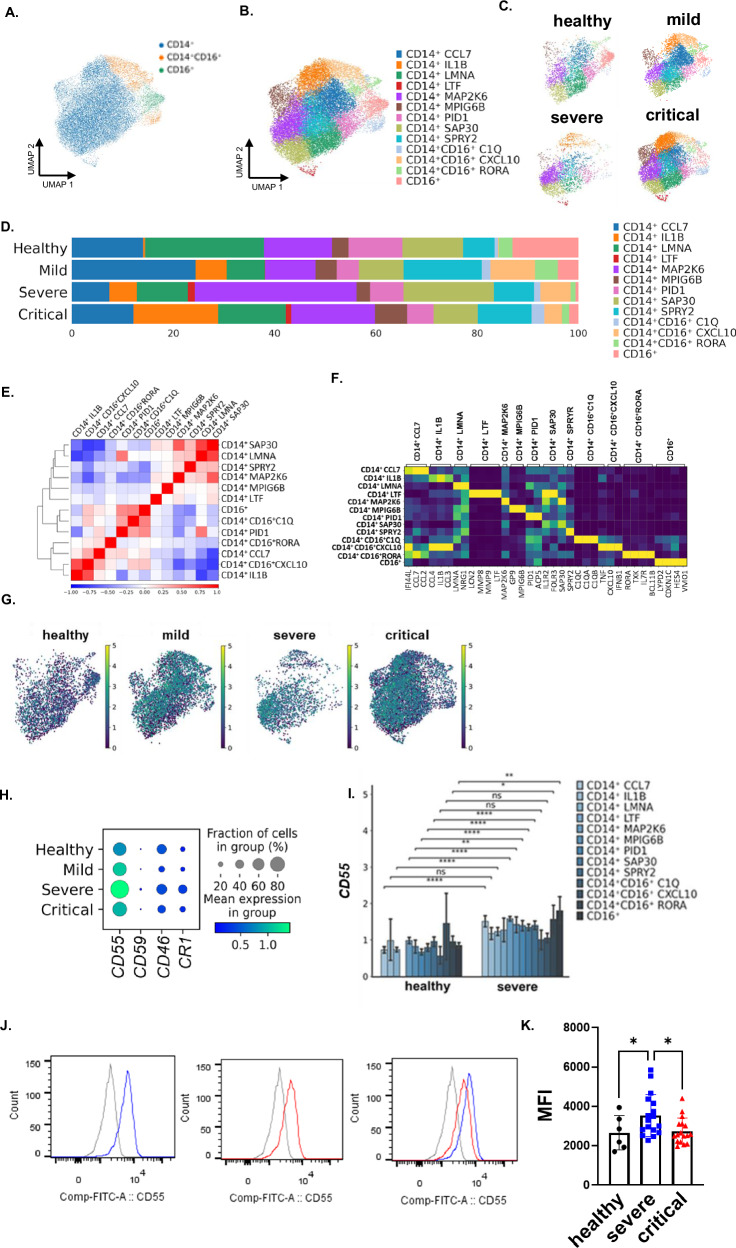
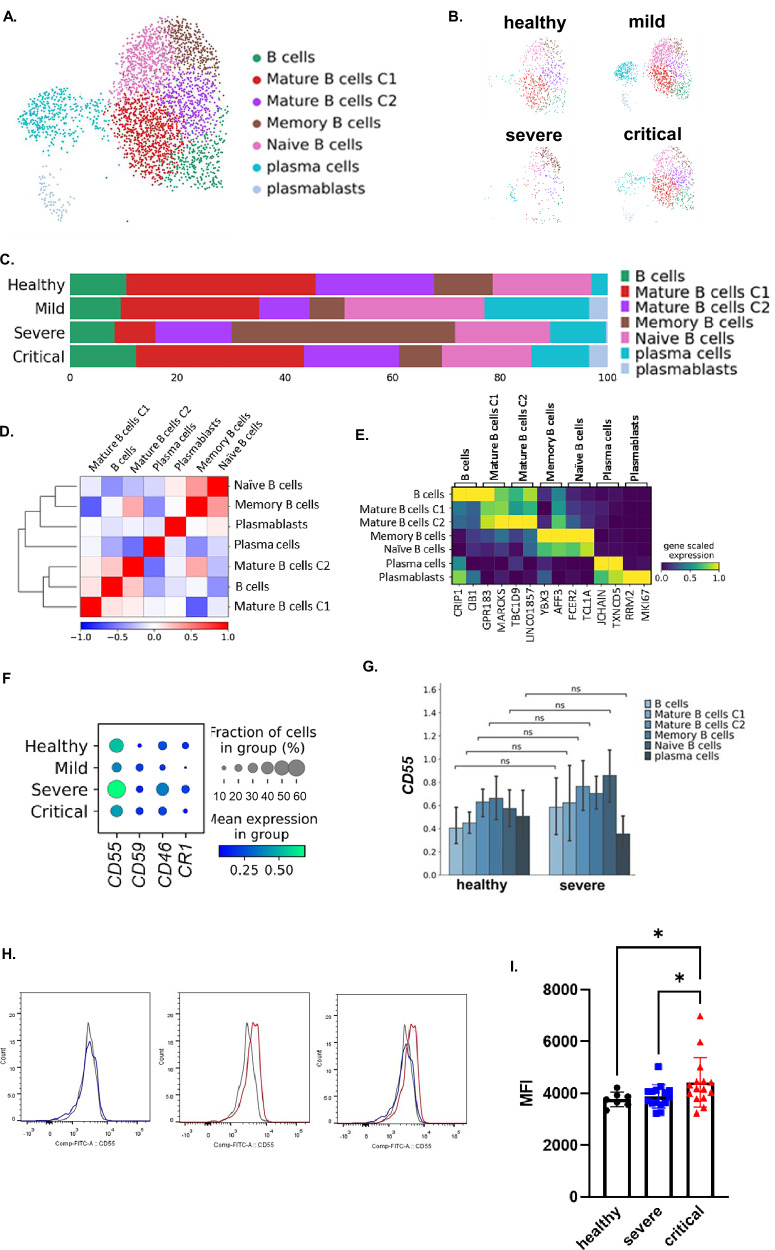
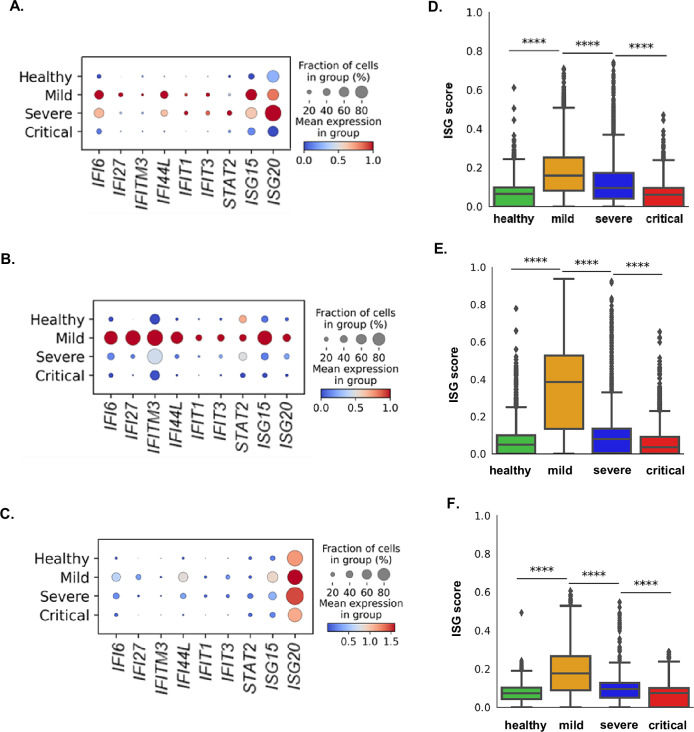
Complement overactivation, has been verified in COVID-19 patients. Complement regulatory proteins, including CD55, control complement overactivation thus eliminating complement deposition and cell lysis. We investigated complement regulatory protein expression in COVID-19 for potential deregulated expression patterns driving disease pathogenesis. Single-cell RNA-seq revealed increased PBMCs CD55 expression in severely and critically ill patients. This increase was also detected upon integrated subclustering analysis of monocyte, T cell and B cell populations. FACS analysis confirmed the significant upregulation of CD55 expression in CD4 and CD8 T cells and monocyte populations of severely and critically ill COVID-19 patients. This upregulation was associated with decreased expression of type-I IFN-stimulated genes (ISGs) in patients with severe and critical COVID-19, indicating a suppressor effect of CD55. Silencing of CD55 in T cells from COVID-19 severely ill patients in vitro and sensitization with SARS-CoV-2 peptides resulted in significantly augmented expression of ISGs and a reversal of their expression to levels similar to control or higher. The present study uncovers, to the best of our knowledge, a novel regulatory effect of CD55 on type-I IFN responses of severely ill COVID-19 patients, thus indicating its contribution to COVID-19 pathogenesis, and identifies a novel mechanistic pathway in the COVID-19 immune response.
补体过度激活已在新冠肺炎患者中得到证实。补体调节蛋白,包括CD55,可控制补体过度激活,从而消除补体沉积和细胞裂解。我们研究了新冠肺炎中补体调节蛋白的表达情况,以寻找可能导致疾病发病机制的失调表达模式。单细胞RNA测序显示,重症和危重症患者外周血单核细胞(PBMCs)的CD55表达增加。在对单核细胞、T细胞和B细胞群体进行综合亚群分析时也检测到了这种增加。荧光激活细胞分选(FACS)分析证实,重症和危重症新冠肺炎患者的CD4和CD8 T细胞以及单核细胞群体中CD55表达显著上调。这种上调与重症和危重症新冠肺炎患者中I型干扰素刺激基因(ISGs)的表达降低有关,表明CD55具有抑制作用。在体外对新冠肺炎重症患者的T细胞进行CD55沉默,并使用严重急性呼吸综合征冠状病毒2(SARS-CoV-2)肽进行致敏,结果导致ISGs的表达显著增加,并使其表达恢复到与对照相似或更高的水平。据我们所知,本研究揭示了CD55对重症新冠肺炎患者I型干扰素反应的一种新的调节作用,从而表明其对新冠肺炎发病机制的影响,并确定了新冠肺炎免疫反应中的一种新的机制途径。